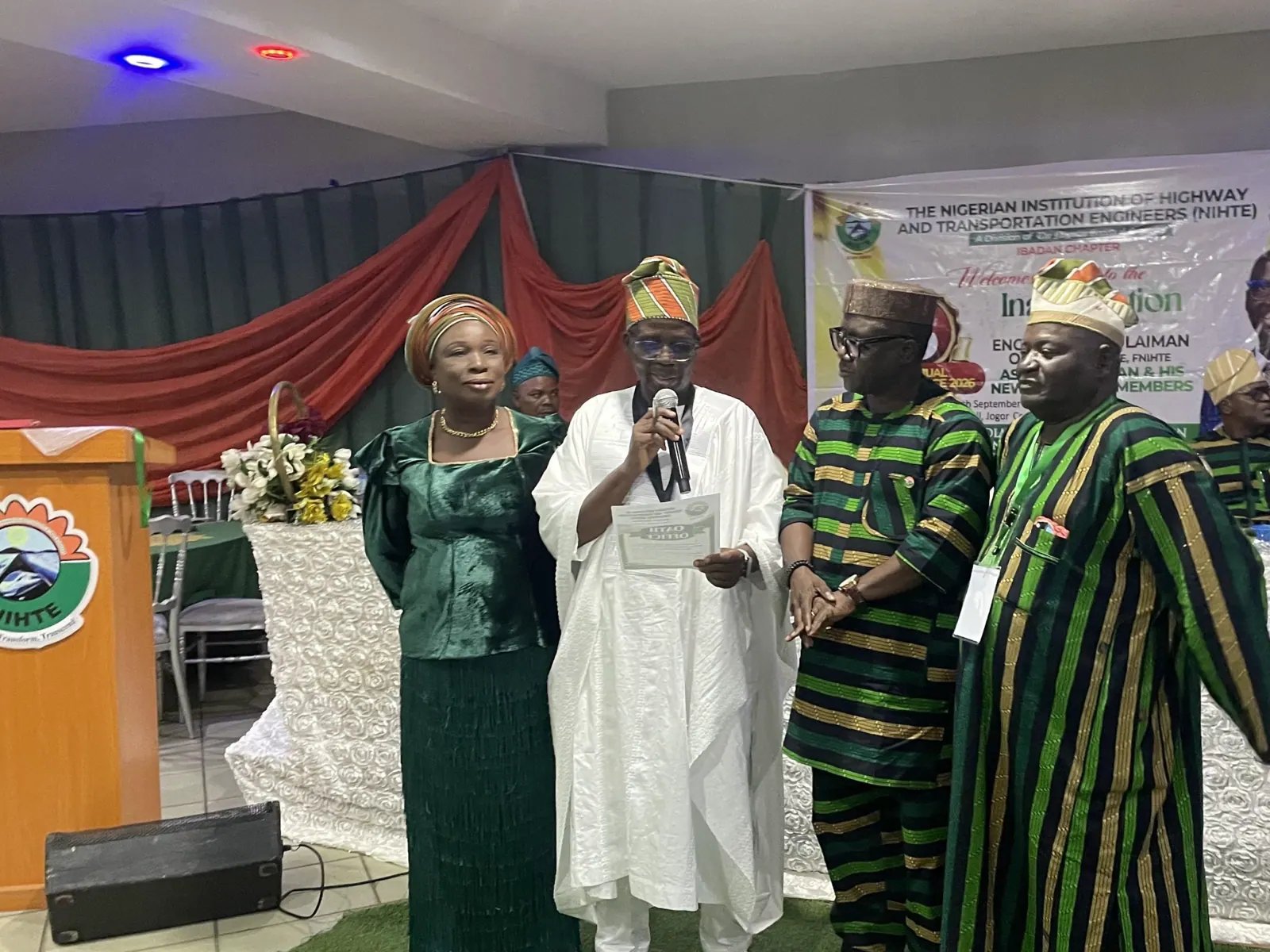
The Nigerian Institution of Highway and Transportation Engineers (NIHTE), Ibadan Chapter, has called for the deployment of artificial intelligence (AI) and intelligent transport systems to strengthen traffic enforcement, improve road safety, and reduce violations across Nigeria. This was made known during the institution's sixth annual conference in Ibadan, where the Chairman of NIHTE, Ibadan Chapter, Lawal Sulaiman Olalekan, was inaugurated as the fourth chairman.
According to Olalekan, AI-powered cameras, automated number plate recognition, and other smart traffic management technologies could help detect violations, improve motorists' compliance with traffic regulations, and generate revenue for governments through penalties. He explained that AI-powered traffic control systems could analyze real-time data from cameras, sensors, and GPS to ease congestion, predict traffic build-ups, and automatically adjust traffic signals.
The inauguration of the new executives was held alongside the conference, themed: "Drivers' Traffic Violations and Their Impact on Highway Performance: Empirical Evidence from AI-Based System in Nigeria". Olalekan said adopting AI and intelligent transport management systems would improve safety, efficiency, and sustainability across the country's road networks. He added that the technology could reduce travel time and fuel consumption while helping to prevent road accidents associated with human error and poor traffic coordination.
Guest lecturer at the event, Dr. Adeolu Dina, of the Department of Transport Management, Olabisi Onabanjo University, Ago-Iwoye, Ogun State, said the limitations of manual traffic enforcement had created gaps in Nigeria's road management system. He noted that countries adopting such technologies had recorded reductions in road violations. Dina urged the government to formulate policies to facilitate the prompt adoption and implementation of AI-powered traffic management systems.
Dr. Dina stressed that road construction alone was insufficient to address transportation challenges without effective enforcement of traffic regulations and improvements in road users' behavior. He said such policies should promote multidisciplinary collaboration, support the development of reliable databases, and establish safeguards for data privacy.
The National Chairman of NIHTE, Dr. Bola Mudashiru, said technology alone would not eliminate traffic violations, stressing that motorists' behavior must also be addressed. He bemoaned some motorists' continued disregard for traffic regulations and the rights of other road users. Mudashiru called on governments, particularly the Oyo State Government, to increase investment in intelligent transport systems, including AI-powered cameras and automated number plate recognition (ANPR) technology.
The newly inaugurated chairman, Olalekan, said his administration would prioritize members' welfare, professional training, project supervision, and technical visits. He also pledged to strengthen collaboration with contractors, researchers, and other stakeholders in the construction industry. The institution's efforts aim to improve road safety and reduce traffic violations across Nigeria.
Key points
- The Nigerian Institution of Highway and Transportation Engineers advocates for AI-powered traffic enforcement to improve road safety and reduce violations.
- The institution suggests that AI-powered systems can detect violations, improve motorists' compliance, and generate revenue for governments.
- The government is urged to formulate policies to facilitate the adoption and implementation of AI-powered traffic management systems.