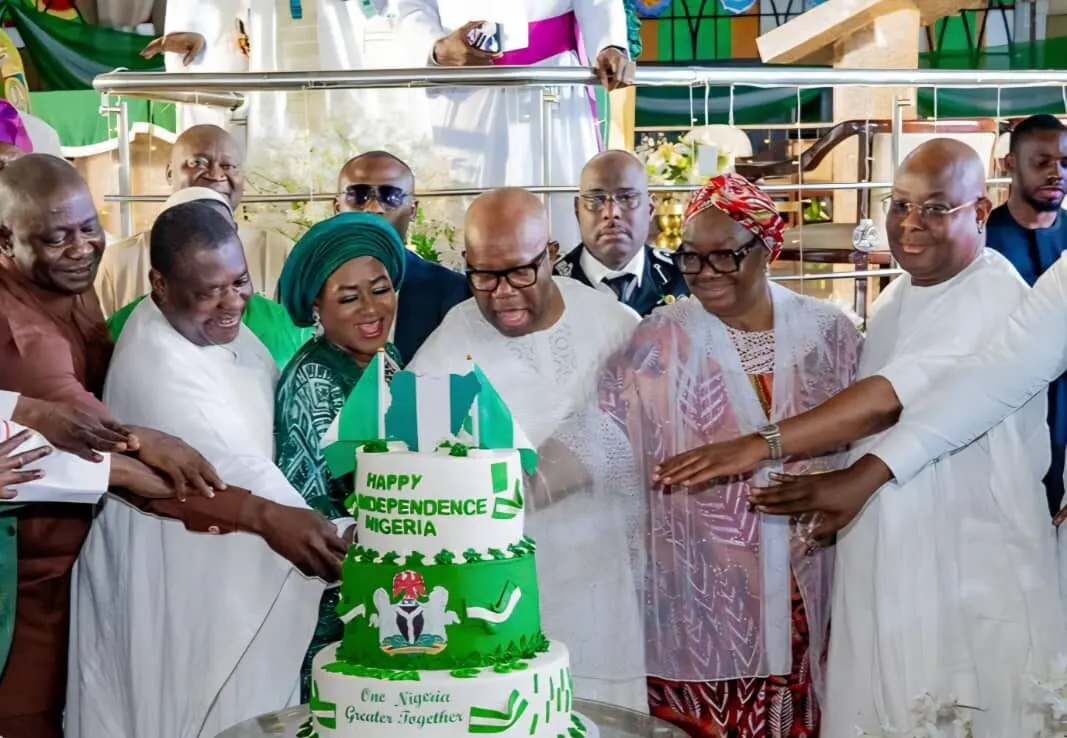
As Nigeria marks its 66th independence anniversary, citizens are lamenting the country's failure to achieve its full potential despite its enormous human and natural resources. A broad cross-section of Nigerians, including civil society activists, politicians, academics, professionals, traders, religious leaders, retired public servants, health experts, and ordinary citizens, have expressed disappointment over the gap between the country's resources and the quality of life available to its citizens.
Many Nigerians believe that the country has departed significantly from the aspirations of its founding fathers, including Nnamdi Azikiwe, Obafemi Awolowo, and Ahmadu Bello. However, some also acknowledge gains recorded in democracy, telecommunications, education, entrepreneurship, technology, and other sectors since independence. The anniversary presents an opportunity not only to celebrate Nigeria's survival as a united country but also to demand a more purposeful leadership capable of translating the country's resources and potential into security, jobs, affordable healthcare, quality education, infrastructure, and improved living standards.
Chief Chekwas Okorie, pioneer Chairman of the All Progressives Grand Alliance (APGA) and National Chairman of Igbo Agenda Dialogue, offered a critical assessment of Nigeria's progress. He argued that while Nigeria had recorded 26 years of unbroken democratic practice, it had experienced 66 years of retrogressive governance. Okorie noted that the Nigerian Constitution identifies the welfare and security of citizens as the primary purpose of government, but successive governments had failed to adequately fulfil that mandate.
Okorie attributed Nigeria's situation to poor leadership, citing the country's failure to make progress in development, welfare, and security. He expressed concern over national disunity, saying the lack of common purpose had weakened the capacity of governments to implement development policies. Okorie also noted that many young Igbo Nigerians had become alienated from the country and recalled that his Igbo Agenda Dialogue had been working to restore confidence in Nigeria among citizens.
Dr. Gbenga Adeoye, a public analyst in Ogun State, offered a measured assessment of Nigeria's progress. He said Nigeria had made progress but at a pace considerably slower than the vision of its early nationalist leaders. Adeoye pointed to the country's human capital achievements, noting that Nigeria had produced more than 130,000 medical doctors, many of whom now contribute to healthcare systems around the world.
Comrade Abayomi Arabambi, National Vice Chairman, Southwest, of the Labour Party, described the anniversary as both a celebration and an opportunity for sober reflection. He recalled that October 1, 1960, marked Nigeria's emergence as a sovereign nation and noted that the economy of the First Republic was largely driven by agriculture. Arabambi cited telecommunications, Nollywood, Afrobeats, technology, sports, and entrepreneurship as areas where Nigerians had achieved international recognition.
Arabambi expressed concern over Nigeria's dependence on crude oil and food imports, inflation, unemployment, and the concentration of political and economic power at the centre. He stressed that the security and welfare of the people shall be the primary purpose of government, as stated in Section 14(2)(b) of the 1999 Constitution. Nigerians are calling for a more purposeful leadership to address the country's challenges and redirect the nation towards sustainable progress and prosperity.
Key points
- Nigerians are demanding an end to hardship, insecurity, and underdevelopment.
- Citizens are calling for better leadership to translate the country's resources and potential into security, jobs, and improved living standards.
- The country's 66th independence anniversary presents an opportunity for sober reflection and a renewed call to action for Nigeria's leaders.