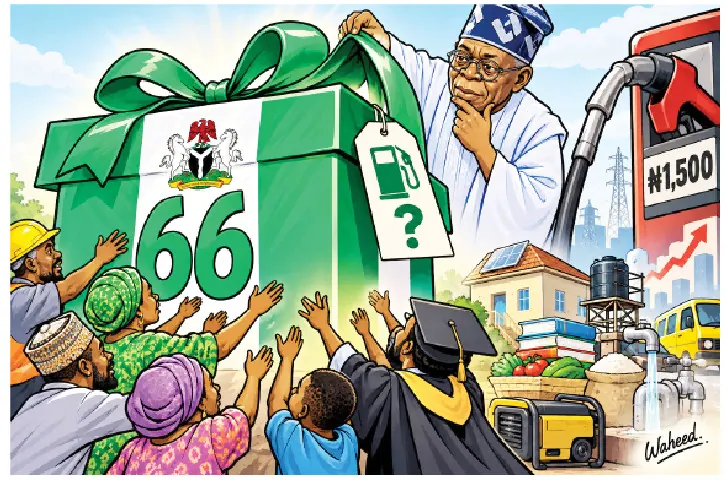
Today, Nigeria commemorates 66 years of independence from colonial rule, but the celebrations are overshadowed by the country's dire economic situation. Citizens are grappling with a relentless economic stranglehold, and the nation is reeling from the impact of high fuel prices, which have skyrocketed to N1,500 per litre. This has led to widespread despair, with many Nigerians struggling to make ends meet.
The removal of fuel subsidies has been a contentious issue in Nigeria, with many arguing that it has exacerbated the economic hardship faced by citizens. The African Democratic Congress (ADC) presidential candidate, former Vice President Atiku Abubakar, has reignited the debate by promising to reinstate the fuel subsidy if elected president in 2027. Abubakar's statement has sparked a strong reaction from the ruling All Progressives Congress (APC) and the presidency.
The APC has dismissed Abubakar's proposal as "voodoo economics," claiming that returning the subsidy would cripple the North, the nation's largest vote bank. APC National Chairman Professor Nentawe Yilwatda has come under criticism for his comments, with many accusing him of attempting to whip up political sentiment. Yilwatda's assertion that returning the subsidy would push northerners back into poverty has been met with skepticism.
The debate over fuel subsidies has highlighted the intense tension between national sovereignty and crushing economic realities in Nigeria. The argument for removing the fuel subsidy was that it would free up resources to address other critical sectors of the economy. However, many Nigerians have questioned what exactly has improved with the removal of the subsidy, citing persistent challenges in power, security, infrastructure, education, and the economy.
Despite the removal of the subsidy, many Nigerians are now pursuing alternative power sources, such as solar, due to the nation's failure to address the recurring challenge of unreliable electricity supply. The federal government has been accused of not doing enough to address the needs of its citizens, with governors having a field day with the resources allocated to states.
The Nigerian government has been criticized for its handling of the economy, with many arguing that it has failed to provide adequate infrastructure and services to its citizens. Nigerians often have to provide basic services for themselves, including electricity, water, and security, due to the government's inability to deliver these essential services.
As Nigeria marks 66 years of independence, citizens are calling for a re-examination of the government's policies and priorities. The country needs to address its economic challenges and find a way to alleviate the suffering of its citizens. The debate over fuel subsidies is likely to continue, with many Nigerians hoping that the government will find a solution to the country's economic woes.
Key points
- The Nigerian government faces pressure to re-examine its policies on fuel subsidies amid rising economic hardship.
- The removal of fuel subsidies has been criticized for exacerbating economic hardship in Nigeria.
- The debate over fuel subsidies has highlighted the tension between national sovereignty and economic realities in Nigeria.