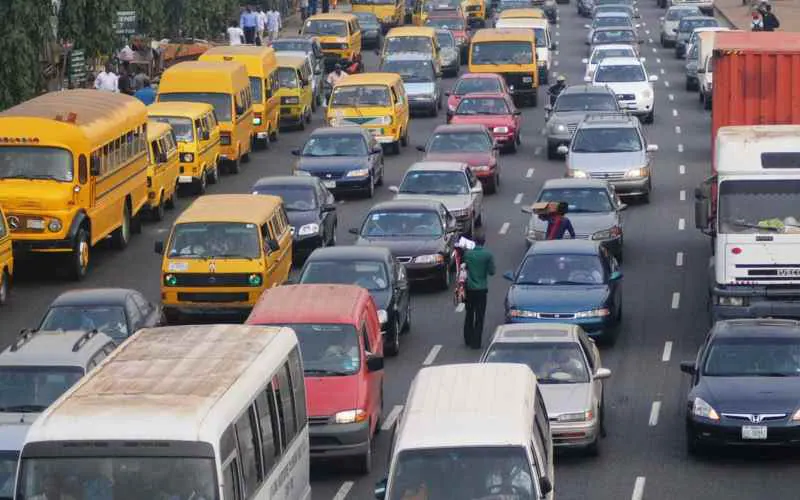
The Lagos-Ibadan Expressway, a major highway in Nigeria, has been under construction for years, with successive administrations committing billions of naira to its development. Despite these efforts, the road remains plagued by gridlocks, accidents, and fatalities. Recently, repairs to the Kara Bridge expansion joints caused significant delays, with motorists spending up to four hours on what should have been a routine journey.
The consequences of these gridlocks are dire, with numerous people suffering medical emergencies, accidents, or other consequences while trapped in traffic. On September 5, three people were killed and 10 others injured in a multiple-vehicle crash on the road. Just 10 days later, another seven-vehicle crash at Kara Bridge brought traffic to a standstill. The Federal Road Safety Corps (FRSC) recorded 9,570 road traffic crashes and 5,421 deaths in 2024, with an average of almost 15 deaths per day.
The problem extends beyond the Lagos-Ibadan Expressway, with other major highways in Nigeria also in deplorable condition. The Benin-Lagos Federal Highway, for instance, is often congested, forcing travelers to turn back and search for alternative routes. This can lead to further accidents and fatalities, which may not be captured in official statistics. The FRSC has described some crashes as avoidable, emphasizing the need for drivers to observe speed limits, maintain their vehicles, and obey traffic rules.
Experts argue that the government must take the road environment seriously, investing in infrastructure and traffic management. This includes providing emergency lanes, protecting broken-down vehicles, and stationing towing equipment around major bottlenecks. The FRSC operates emergency ambulance services and roadside clinics, but these systems must work consistently and visibly where Nigerians need them most.
The economic implications of Nigeria's road crisis are significant, with every hour wasted in traffic translating to lost productivity, spoiled perishable goods, and increased transport costs. The psychological burden of commuting also increases, affecting drivers and passengers alike. With the national economy paying for every kilometer of unnecessary traffic, there is a pressing need for the government to address the issue.
To address the crisis, the government must adopt a holistic approach, incorporating traffic management into road construction and investing in infrastructure. This includes internal roads, which are also crying for attention, particularly in Lagos and Edo states. By providing a conducive environment for Nigerians to work, invest, travel, and live, the government can mitigate the effects of gridlocks and reduce the number of preventable deaths on the country's roads.
Ultimately, Nigerians are calling for an end to the neglect and a sense of urgency from their leaders. With the current pace of road development, it remains unclear when the Lagos-Ibadan Expressway and other major highways will become safe and efficient. Until then, Nigerians will continue to suffer the consequences of preventable gridlocks, with many left to wonder when their leaders will take responsibility for the nation's road crisis.
Key points
- The Lagos-Ibadan Expressway has been under construction for years, with billions of naira committed to its development, yet it remains plagued by gridlocks, accidents, and fatalities.