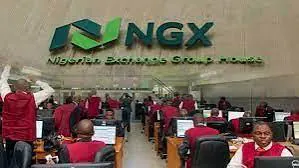
The Nigerian Exchange Group (NGX) has marked 65 years of operation, playing a vital role in wealth creation and economic growth in Nigeria. Despite facing numerous challenges, including the global financial crisis, recession, and fluctuating investor confidence, the NGX has continued to witness tremendous expansion and transformation. The market has grown from a single segment with 13 securities to multiple segments with over 300 securities, including equities, ETFs, fixed income, and mutual funds.
The NGX was founded and incorporated as the Lagos Stock Exchange on September 15, 1960, and started operations officially on August 1, 1961. It rebranded as the Nigerian Stock Exchange in December 1977 and completed its demutualization to become the Nigerian Exchange Group (NGX Group) in 2021. Under both military and civilian administrations, the NGX has evolved to become one of Africa's largest capital markets, facilitating long-term capital formation critical to the nation's economic growth.
According to Chief Research Officer (CRO) of Investdata Consulting Ltd, Mr. Ambrose Omordion, the nation's capital market has witnessed tremendous expansion and transformation since its inception 65 years ago. He noted that the market has maintained steady growth, transforming from a manual call-up transaction system to digital trading, thereby creating opportunities for smooth running of the market. Omordion emphasized the need for ongoing reforms to deepen the capital market, citing the listing of heavyweight companies like MTN Nigeria, Aradel, Airtel Africa, and Seplat Energy.
The market capitalization of listed equities has appreciated by N151.279 trillion in the last eight years, growing from N11.720 trillion in 2018 to N162.999 trillion as of September 28, 2026. The NGX All Share Index has also surged by 221,205.61 basis points or 703.79% to close at 252,636.11 points on September 28, 2026, against 31,430.50 points recorded on December 31, 2018. This growth is a testament to the market's resilience and ability to weather challenges.
Managing Director and Chief Executive Officer of APT Securities and Funds Limited, Malam Garba Kurfi, noted that the NGX has expanded its transaction floors to major commercial cities across Nigeria. He stated that the market started with only 13 securities made up of fixed income and equities but today has over 300 securities, including ETFs, fixed income, and mutual funds. Kurfi emphasized that the market has transformed into different segments, including Premium, Main Board, ETF, Mutual Funds, Fixed Income, and Derivatives.
Despite the growth, Omordion and Kurfi both emphasized the need for continued efforts to deepen the capital market and encourage local investors to participate. Omordion suggested that the NGX should embark on a grassroots literacy campaign to educate people about the benefits of investing in the stock market. Kurfi noted that the market has sustained a growth trajectory in recent years but has witnessed challenges in the past, including the global financial crisis of 2007/2008 and the COVID-19 crisis of 2018/2019.
The NGX continues to play a critical role in Nigeria's economic growth, providing a platform for sustainable capital formation. As the market looks to the future, stakeholders are optimistic that it will continue to evolve and grow, providing opportunities for investors and contributing to the nation's economic development. With the ongoing IPO of Dangote Refinery and other initiatives, the NGX is poised to continue its growth trajectory, attracting more local and foreign investors to the market.
Key points
- The Nigerian Exchange Group (NGX) has marked 65 years of operation, witnessing tremendous growth and transformation despite challenges.
- The market capitalization of listed equities has appreciated by N151.279 trillion in the last eight years, growing from N11.720 trillion in 2018 to N162.999 trillion as of September 28, 2026.
- Stakeholders emphasize the need for continued efforts to deepen the capital market and encourage local investors to participate.