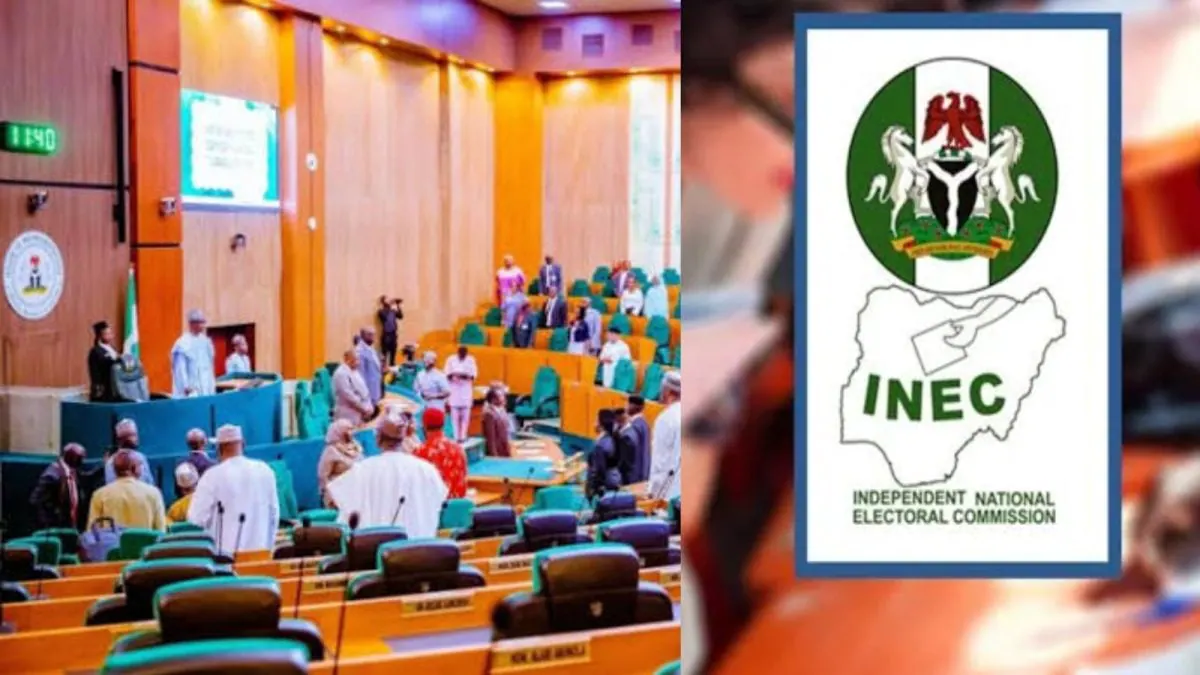
The House of Representatives Committee on Electoral Matters has requested the Independent National Electoral Commission (INEC) to disqualify candidates whose names are not contained in the membership registers of the political parties that nominated them. This move aims to ensure compliance with the Electoral Act 2026, following a recent Supreme Court judgment on party membership registers and candidate nomination. The committee's chairman, Bayo Balogun, made the demand in a letter to INEC.
The Supreme Court recently restored key provisions of the Electoral Act 2026, which had earlier been voided by the Court of Appeal. The apex court upheld INEC's appeal and restored Sections 77(5), 77(6), 77(7), and 84(2) of the Electoral Act. This decision has renewed attention on the membership status of politicians who emerged as candidates in party primaries for the 2027 general elections. The committee wants INEC to enforce the provisions of Section 77 across all registered political parties.
Section 77(5) limits participation in party primaries, congresses, and conventions to members whose names are contained in the membership register submitted to INEC. The provision requires the register to be submitted at least 21 days before the date fixed for the primary, congress, or convention. Section 77(6) prevents a political party from using a different membership register for its primaries, congresses, and conventions after submitting a register to INEC.
The demand is also based on Section 77(7), which provides that a political party that fails to submit its membership register within the stipulated period cannot field a candidate for the election. The provisions became the subject of a major legal dispute after the Zenith Labour Party challenged them before the Federal High Court in Abuja. The party argued that the provisions were inconsistent with the 1999 Constitution and amounted to interference in the internal affairs of political parties.
The Federal High Court dismissed the suit, but the Zenith Labour Party appealed to the Court of Appeal in Abuja. The appellate court allowed the appeal in part and voided the disputed provisions relating to membership registers and party primaries. However, the Supreme Court eventually reversed the Court of Appeal's decision, restoring the Federal High Court judgment that had dismissed the Zenith Labour Party's challenge.
A recent Federal High Court judgment in Gombe has already shown how Section 77 could affect a candidate. The court nullified an APC primary for the Balanga/Billiri Federal Constituency and ordered the party to conduct a fresh exercise after finding that the candidate who emerged from the disputed primary was not listed in the party membership register submitted to INEC within the required period.
The committee's chairman, Bayo Balogun, said strict enforcement of the law would help prevent a situation where candidates who did not meet the statutory requirements are allowed to contest and later become subjects of prolonged litigation. He urged INEC to ensure that political parties comply with the provisions before the 2027 election process advances further. INEC had earlier indicated that it would determine how the Supreme Court judgment affects candidates after obtaining and reviewing the certified true copy of the ruling.
Key points
- The House of Representatives Committee on Electoral Matters has asked INEC to disqualify candidates whose names are not in the membership registers of their parties.
- The Supreme Court restored key provisions of the Electoral Act 2026, including Sections 77(5), 77(6), 77(7), and 84(2).
- INEC is expected to engage political parties and other stakeholders as part of preparations for the 2027 elections.