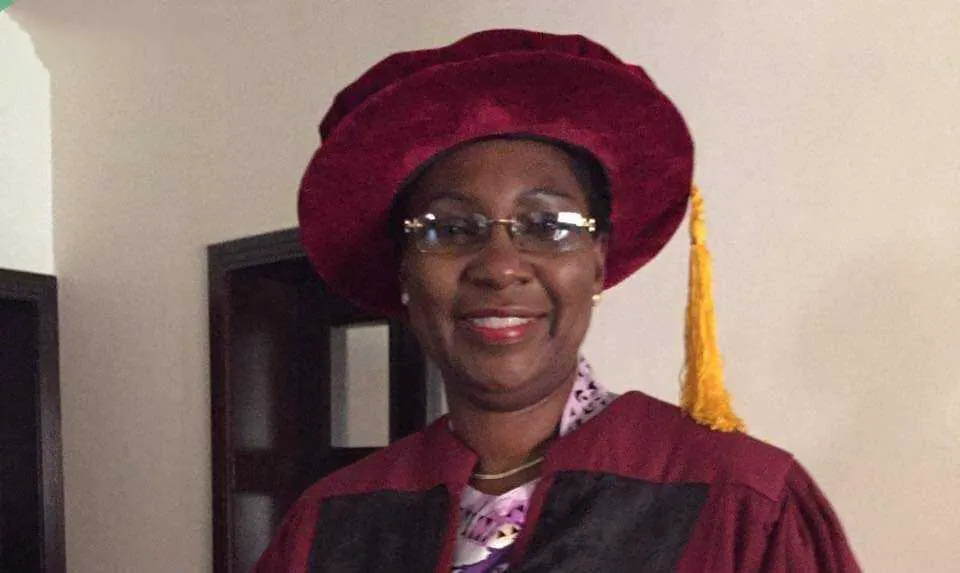
Public universities in Nigeria are struggling to achieve financial self-sustainability, according to Prof. Ibiyemi Olatunji-Bello, the immediate past Vice-Chancellor of Lagos State University (LASU). She stated that these institutions will have to significantly increase school fees and rethink their funding model to become financially independent. Olatunji-Bello made these remarks in an interview, discussing her administration's achievements, funding challenges, and vision for LASU's future.
During her five-year tenure as LASU's ninth vice-chancellor, which ended on September 19, Olatunji-Bello successfully increased the university's internally generated revenue (IGR) from N3 billion to N13 billion. Despite this growth, she emphasized that the institution still relies heavily on government subvention to operate. When she assumed office in 2021, Olatunji-Bello was challenged to increase the university's revenue, and she set a target of N10 billion for the following year.
The former vice-chancellor attributed the significant increase in IGR to the introduction of new programs, digital innovations, and ventures. LASU also generated revenue from diploma programs, partnerships, short-term courses, and over 75 new postgraduate programs. These efforts resulted in a substantial increase in revenue, from N7 billion in the first year to N10 billion, and eventually to N12 billion.
Despite the growth in IGR, Olatunji-Bello acknowledged that financial self-sustainability remains elusive for LASU and other public institutions. She emphasized that universities can achieve financial independence by innovating and improving their institutions, but this requires careful management of funds. The former vice-chancellor highlighted the significant expenses faced by LASU, including a monthly payroll of over N1 billion and an electricity bill of N140 million.
To achieve financial self-sustainability, Olatunji-Bello suggested that public universities may need to increase school fees substantially. She noted that some secondary schools charge over N1 million per term, while university students pay around N100,000 per year. The former vice-chancellor emphasized that maintaining a high-quality educational environment requires significant funding, including expenses for infrastructure, security, and personnel.
Olatunji-Bello also addressed the issue of admission pressure, following LASU's emergence as the most subscribed university by Unified Tertiary Matriculation Examination (UTME) candidates in 2025 and 2026. She explained that the university's admission process is merit-driven, with 70% of admissions based on merit, 10% for Lagosians, 10% at the discretion of the Vice-Chancellor, and 10% for direct entry.
The former vice-chancellor concluded by emphasizing the importance of prioritizing education and encouraging parents to invest in their children's education. She believes that good quality education requires significant funding and that public universities must adapt to changing circumstances to achieve financial self-sustainability. Olatunji-Bello's remarks highlight the challenges faced by public universities in Nigeria and the need for innovative solutions to ensure their financial sustainability.
Key points
- Public universities in Nigeria struggle to achieve financial self-sustainability due to limited funding.
- Increasing school fees may be necessary for public universities to become financially independent.
- LASU's former Vice-Chancellor, Prof. Ibiyemi Olatunji-Bello, emphasizes the importance of prioritizing education and investing in human capital.