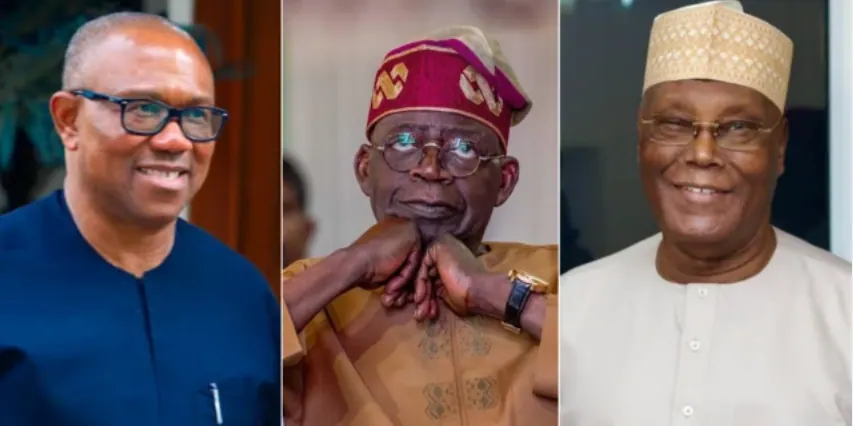
As the 2027 presidential election campaign heats up in Nigeria, candidates are facing increased scrutiny over their past records. President Bola Tinubu, former Vice President Atiku Abubakar, and one-time Anambra State Governor, Peter Obi, are the three leading candidates. Tinubu's administration has been criticized for its decision to remove fuel subsidy, which has led to a cost of living crisis. However, his government has also achieved macroeconomic stability, acknowledged by World Trade Organisation Director General, Dr. Ngozi Okonjo-Iweala.
Tinubu's campaign is focusing on selling his administration's successes to voters, as well as convincing them about the long-term benefits of staying the course. His tenure-defining decision to remove fuel subsidy has had far-reaching effects on the country. Despite the challenges, there have been unprecedented success stories arising from the government's reforms. These successes have been acknowledged by some of Tinubu's fiercest critics, including former Minister of Education, Dr. Oby Ezekwesili.
Atiku Abubakar, a veteran of many presidential campaigns, is using a familiar strategy to challenge Tinubu. He is asking voters if their lives are better off today than they were four years ago. Atiku has promised to restore fuel subsidy, which has struck a populist chord in some places. However, his pledge has also generated pushback from others, including Abia State Governor, Alex Otti, and Aliko Dangote.
Atiku's proposal to restore fuel subsidy has been met with skepticism by some. They argue that it is based on a romantic illusion that petrol prices would magically revert to pre-Tinubu levels. Atiku's record as Vice President under the Olusegun Obasanjo administration has also come under scrutiny. He was one of the most powerful individuals to ever occupy that office and presided over the privatisation of many government-owned assets.
Atiku's past has also been linked to controversy, including the privatisation of government-owned assets. A recent report by a three-member International Chamber of Commerce tribunal threw up Atiku's name in the mix over the truncated Mambilla Power Project. The report alleged that Atiku was involved in a foreign-exchange transaction related to the project.
Peter Obi, the third leading candidate, has not been mentioned in the same breath as Tinubu and Atiku in terms of controversy. However, his campaign is also facing scrutiny over his past record as Governor of Anambra State. Obi's campaign has focused on his achievements in Anambra State, including his efforts to improve infrastructure and education.
The 2027 presidential election campaign is heating up, with candidates facing increased scrutiny over their past records. The three leading candidates, Tinubu, Atiku, and Obi, will need to convince voters that they have the best vision for Nigeria's future. The election is expected to be closely contested, with voters eager to see change.
Key points
- - The three leading candidates, Tinubu, Atiku, and Obi, are facing scrutiny over their past records. - Tinubu's administration has achieved macroeconomic stability, but his decision to remove fuel subsidy has been criticized. - Atiku's proposal to restore fuel subsidy has generated pushback from some, who argue that it is based on a romantic illusion.