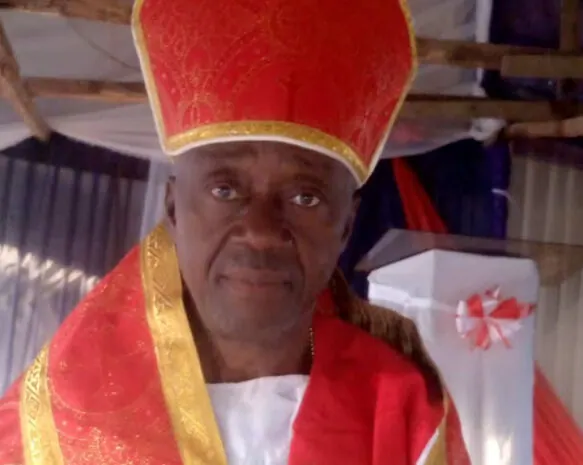
The current presidential election campaigns in Nigeria have been criticized for lacking clear policy direction, with candidates focusing more on slogans and personality than on articulating their party's socio-economic plans. Bishop Herbert Ekechukwu, a church leader and public affairs analyst, expressed dissatisfaction with the tempo and pace of the campaigns, noting that there has been more sloganeering than discussion of policy plans. He attributes this to poor ideological orientation among Nigeria's politicians, who are more grounded in politics of personality than policy.
According to Bishop Ekechukwu, Nigerian elections are often won not on policy but on structure, religion, tribe, and personal connections. He argues that candidates do not think a strong manifesto will win them votes, and that what exists in Nigeria are not political parties but platforms to win elections. This makes inter-party defections highly mobile, and politicians make vague promises that cannot be easily verified or held accountable. Chief Kenneth Udeze, National Chairman of Action Alliance, shares similar concerns, stating that the absence of manifesto-driven campaigns is a worrying deficit in Nigeria's democratic culture.
Udeze argues that when presidential candidates substitute optics, slogans, and ethnic sentiments for clear-cut policy direction, they rob voters of the rational basis for choice. He believes that elections should be a contest of ideas on economy, security, jobs, and restructuring, not a beauty parade of personalities. Without a binding manifesto, accountability becomes impossible after victory, and it shows a lack of ideological depth and respect for the electorate. INEC and the media must compel candidates to debate manifestos, not just market sentiments.
Dr. Victor Mathew, a human rights promoter and security expert, states that Nigerian politics is without any ideology. He notes that political parties pretend to have manifestos without following what is written in them, and that most party manifestos look similar with little or no change. The candidates of various parties just promise what they intend to do because there is no ideological bedrock and superstructure. In advanced democracies, people know what the political parties stand for, and candidates subsume and subordinate their ideas to the party's ideology and manifesto.
Dr. Mathew contrasts Nigeria's political landscape with that of the US and UK, where people stick to one party for life due to clear ideological differences. He believes that Nigeria's democracy is still operating at the surface level, and that the weaponization of poverty by the ruling elite has led to multidimensional poverty, making voters focus on short-term gains rather than idealistic rhetoric. Tola Oresanwo, Director of Administration and Programmes at Centre for Anti-Corruption and Open Leadership, states that most presidential candidates are fixated on ousting the ruling party and the sitting president rather than offering substantive alternatives.
Oresanwo notes that the campaigns revolve around relentless rhetoric about 'flushing out' the incumbent, yet they rarely present detailed, coherent manifestos that spell out concrete policies on the economy, security, infrastructure, or governance reforms. Without clear outlines of what they would do differently, citizens are left to choose based on anger, personality, or vague promises instead of informed comparison. This absence of direction turns elections into personality contests driven by optics and sentiment, weakening democratic accountability.
Dr. Abimbola Ayobami, an Osun State-based public affairs analyst, raises concerns about leadership and direction in Nigeria, stating that a presidential campaign should be built on a clear and practical manifesto that explains what a candidate plans to do and how it will be done. He believes that when campaigns focus mainly on personality, popularity, and sentiment, voters are left to make choices based on appearance rather than policy, weakening accountability. However, Chief Martin Onovo, a seasoned politician and activist, argues that it would not be a fair assessment of the presidential candidates to say that they appear not to be speaking to any clear-cut manifesto or campaign.
Key points
- The lack of clear policy direction in Nigerian presidential campaigns has been criticized by analysts and experts.
- Candidates have been accused of focusing on slogans and personality rather than articulating their party's socio-economic plans.
- The absence of manifesto-driven campaigns is seen as a worrying deficit in Nigeria's democratic culture.