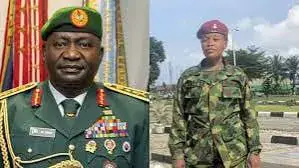
The arrest and detention of ex-Private Ruth Ogunleye by the Nigerian military has sparked widespread outrage and concerns over the institution's culture of impunity. Ogunleye was arrested and transferred to a detention facility in Kaduna State under the orders of General Christopher Gwabin Musa, the Minister of Defence. Her crime was speaking out against systemic sexual violence and accusing senior officers of rape, harassment, and institutional oppression.
The military's actions have been criticized as a reversal of priorities, with terrorists and bandits continuing to wreak havoc across the country while the institution focuses on silencing a single ex-soldier. Ogunleye had used social media to cry out for redress after allegedly being subjected to sexual advances, forced injections, and institutional intimidation by her superiors. Her arrest has been seen as a punitive measure to enforce silence and protect the institution's reputation.
Ogunleye's ordeal is not an isolated incident, but rather a textbook case of how a misogynistic military culture protects its own. She had named her accusers, including Colonel I.B. Abdulkareem, and detailed a narrative of unwanted sexual advances and intimidation. Despite seeking intervention from top brass, including General C.G. Musa, she was met with silence and indifference. The military's internal investigation cleared Colonel Abdulkareem of all wrongdoing and instead labeled Ogunleye as "medically vulnerable."
The military's actions have been criticized as a form of institutional oppression, with Ogunleye being stripped of her career, pathologized, and ultimately locked away. Colonel Abdulkareem remains firmly embedded in the military structure, unbothered and unpunished. The institution's use of medical pathology to silence dissenting voices has been condemned as a cowardly tactic.
Civilian judicial precedents offer a vital mechanism to break the military's monopolization of justice. The domestic military legal framework is hopelessly compromised, and the legalities surrounding Ogunleye's plight must transcend the jurisdiction of courts-martial and military tribunals. The ECOWAS Community Court of Justice has established that state institutions, including armed forces, cannot hide behind internal disciplinary codes to perpetrate human rights violations.
Ogunleye's case has sparked concerns over the military's culture of impunity and the need for accountability. The institution's prioritization of trivialities over substance and fragile officer egos over national defense has been criticized. The war on terror has been politicized, transactionalized, and reduced to a theater of bureaucratic grandstanding, with billions of dollars budgeted and deployed with sparse victories for ordinary citizens.
The case highlights the need for an independent investigation into the military's handling of Ogunleye's case and the broader issue of systemic sexual violence within the institution. The institution's silence on the issue has been deafening, and its actions have only served to embolden perpetrators and silence victims.
Key points
- The Nigerian military's arrest of ex-soldier Ruth Ogunleye has sparked concerns over institutional oppression and silence on systemic sexual violence.
- The military's actions have been criticized as a form of institutional oppression, with Ogunleye being stripped of her career, pathologized, and ultimately locked away.
- Civilian judicial precedents offer a vital mechanism to break the military's monopolization of justice in Ogunleye's case.