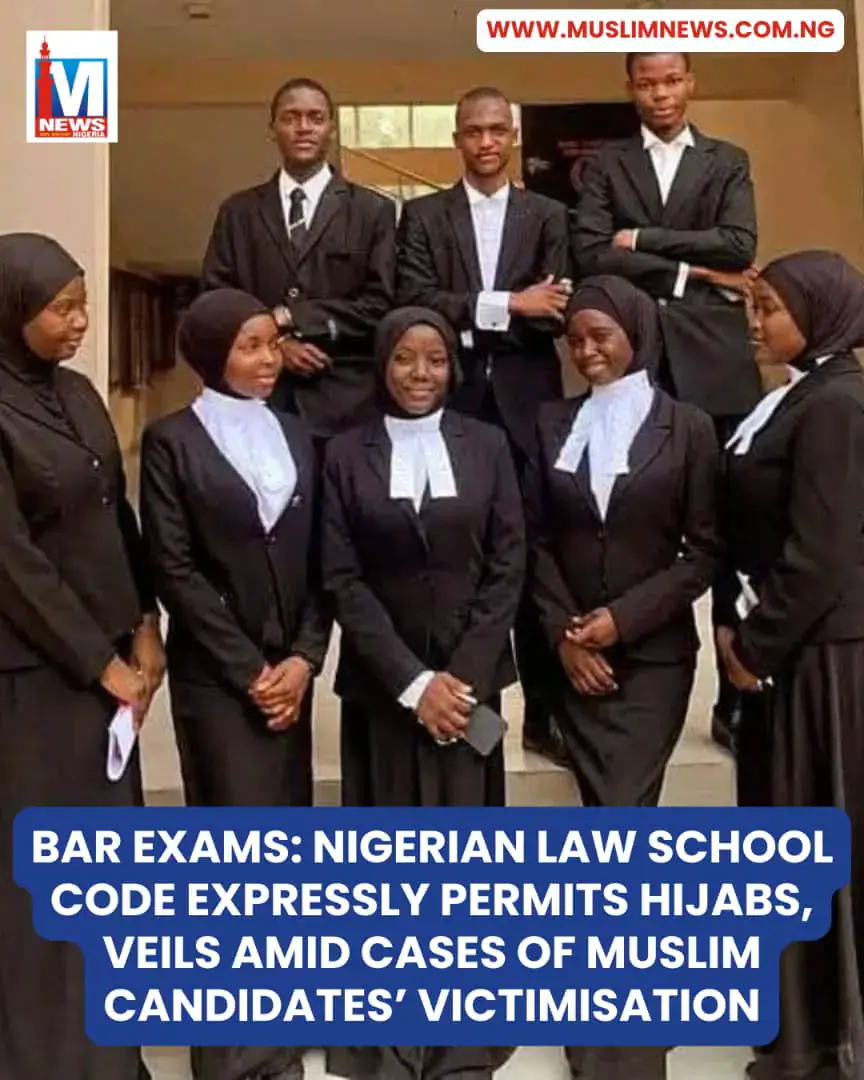
The Nigerian Law School has faced scrutiny over its treatment of Muslim candidates wearing hijabs during the ongoing Bar Final Examinations. Despite its Code of Conduct explicitly listing hijabs and veils as approved attire for female students, several Muslim candidates reported experiencing delays, distress, and uncertainty about sitting subsequent examination papers in their religious attire.
An examination of the Nigerian Law School's Code of Conduct for Students reveals that Part B, Rule 5, titled "Dress Code," expressly recognises hijabs and veils as acceptable attire for female students. The Code lists black or navy blue skirt suits, dresses, and plain black leather shoes as approved items, along with black skull caps, black shoulder-length hijabs, and black shoulder-length veils.
The controversy has sparked concerns about the victimisation of Muslim candidates by some overzealous examination personnel and the apparent contradiction between the institution's prescribed dress code and the reported restrictions imposed on students wearing Islamic head coverings. Muslim News gathered that several female candidates experienced distress and uncertainty about their participation in the examinations.
According to the Code, the dress code for lectures and dinner includes specific guidelines for both male and female students. For female students, the Code permits black or navy blue skirt suits with white camisoles or shirts, black or navy blue dresses with long or three-quarter sleeves, and plain black leather shoes with moderate heels.
The Nigerian Law School's Code of Conduct also outlines penalties for general indiscipline and misconduct, including the use of electronic gadgets and social media during lectures. However, it remains unclear how these rules relate to the reported harassment of Muslim candidates wearing hijabs.
The express recognition of hijab in the Code raises questions about why Muslim women who wear hijab encountered restrictions or humiliation within an institution that explicitly permits the religious head covering. The authorities have not explained any separate examination rule that may be invoked to restrict the use of hijabs during the Bar Final Examinations.
The incident has highlighted the need for clarity on the dress code policy for examinations and the importance of respecting the rights of Muslim students to wear hijabs and veils. The Nigerian Law School has not issued a statement on the matter, leaving many to wonder about the institution's commitment to accommodating diverse cultural and religious practices.
Key points
- The Nigerian Law School's Code of Conduct expressly permits hijabs and veils as approved attire for female students.
- Muslim candidates wearing hijabs reported experiencing delays, distress, and uncertainty about sitting subsequent examination papers.
- The incident has sparked concerns about the victimisation of Muslim candidates and the need for clarity on the dress code policy for examinations.