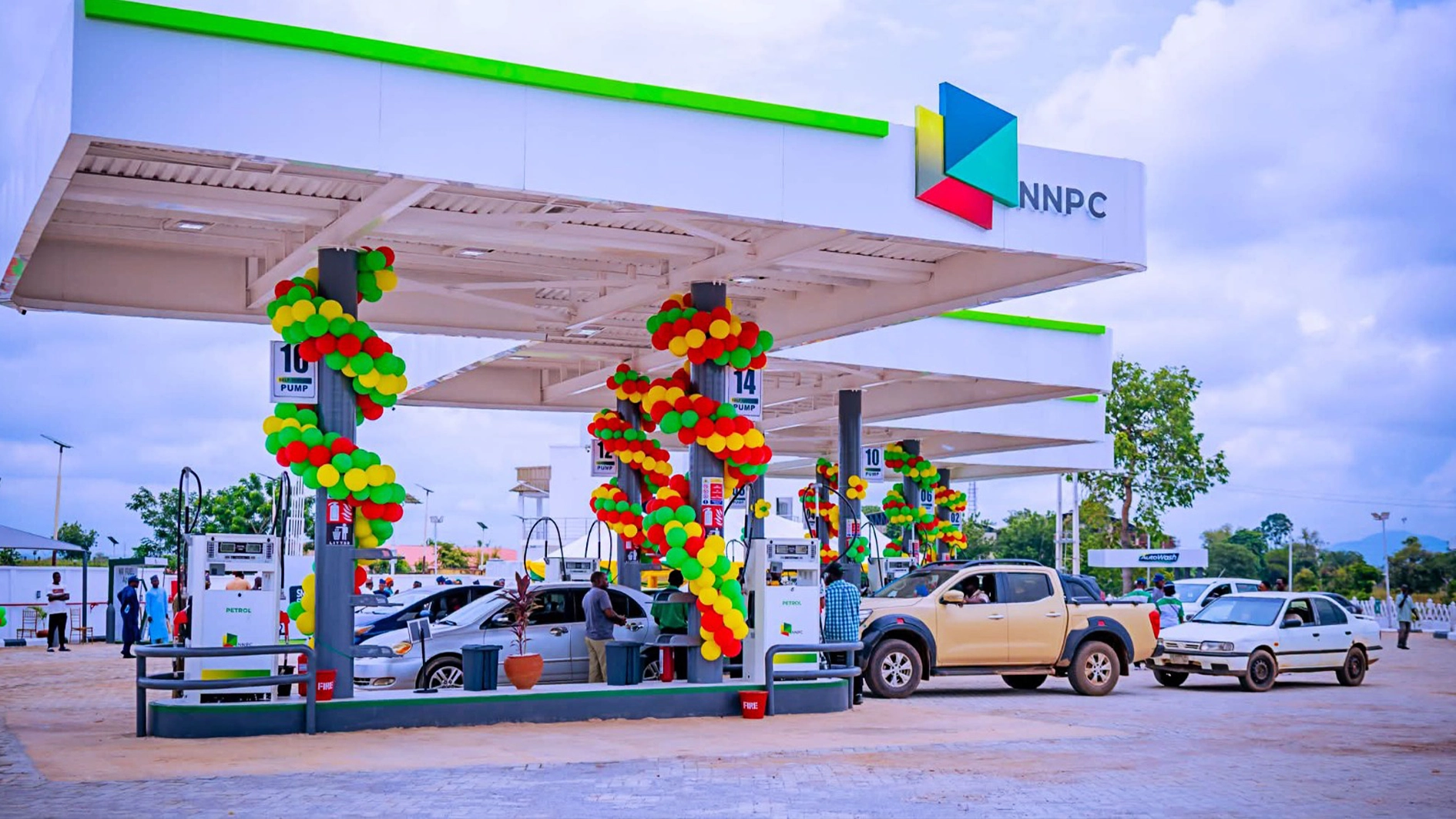
The Nigerian government's 30-day petrol discount plan at NNPC Limited stations has been met with skepticism by various stakeholders. The plan, which targets public transporters nationwide, aims to restrict the price of fuel at N1,350 per litre during the period. However, economists, labour leaders, and opposition leaders have expressed concerns that the measure is inadequate and may not provide significant relief to millions of hard-pressed Nigerian households.
The Minister of Finance and Coordinating Minister of the Economy, Taiwo Oyedele, explained that the proposed ceiling of N1,350 per litre on the ex-gantry or landing cost of petrol is intended to prevent sharp movements in global crude prices and exchange rates from immediately translating into higher petrol costs. He emphasized that pump prices should not have to follow every swing in global crude or the exchange rate.
According to the Nigerian Midstream and Downstream Petroleum Regulatory Authority (NMDPRA), the average pump price in July was N1,271.56, in August it was N1,294.50, while it was N1,378 per litre in September. This puts the three-month moving average at N1,315 per litre, suggesting that the government's discounted price is a significant markup over the historical price path.
The discount plan has also raised questions about its sustainability and accessibility. NNPC Limited's outlets account for only 4% of the number of fuel stations across the country, with 900 outlets out of a total of 22,700 registered filling stations. Stakeholders have warned that without a mechanism to ensure that the savings are passed on to passengers, the intervention could reduce operators' fuel expenses without significantly improving household welfare.
Petroleum economist and Professor Emeritus of Petroleum Economics, Prof. Wumi Iledare, said the intervention would only achieve its objective if the savings were transmitted to passengers. He suggested that the government should disclose the discount per litre, volume of petrol covered, and maximum fiscal exposure, as well as publish the actual cost, volume sold, and financial impact at the end of the 30 days.
Chief Executive Officer, Centre for the Promotion of Private Enterprise (CPPE), Muda Yusuf, described the arrangement as a form of subsidy, although different from the former blanket regime because it is restricted to NNPC stations. Meanwhile, legal practitioner and former President of the Nigerian Bar Association, Olisa Agbakoba, has called for a more structural approach to reducing domestic petrol prices through differential pricing for crude supplied to local refineries.
Agbakoba proposed a crude price differential that could support a petrol price of about N400 per litre, arguing that locally produced crude should not necessarily be priced for domestic refining. The government's intervention is intended as temporary relief while it pursues a longer-term mechanism to provide greater stability for domestic refiners and consumers through forward crude sales.
Key points
- The Nigerian government's fuel discount plan has been criticized for being inadequate and a return to subsidy.
- The plan's sustainability and accessibility have been questioned due to NNPC Limited's limited outlets and lack of mechanism to ensure savings are passed on to passengers.
- Economists and stakeholders have proposed alternative solutions, including differential pricing for crude supplied to local refineries.