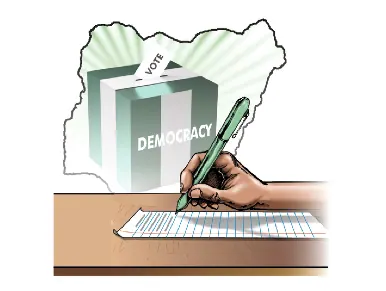
The 22nd All Nigeria Editors Conference, themed "The Ballot, the Media and the Task of Keeping Democracy Alive," recently convened in Enugu, bringing together editors, lawyers, and public intellectuals to scrutinize Nigeria's democratic experience. The conference opened with a critical examination of institutions expected to safeguard the integrity of the ballot and government legitimacy. FOLU OLAMITI argues that Nigeria's democracy appears strong in vocabulary but weak in enforcement. The discussions focused on elections, courts, political impunity, and the future of Nigeria's democratic project.
Mazi Afam Osigwe, SAN, delivered the first major paper, "Election Petitions in the Digital Age: Independence, Evidence, BVAS and the Courts," assessing the complex relationship between technology, election disputes, and judicial intervention. His presentation evaluated the roles of the Independent National Electoral Commission, the judiciary, and the electorate in protecting election credibility. Osigwe's observations highlighted the need for these institutions to work together to ensure the legitimacy of government.
Professor Pat Utomi's brief but unsettling intervention warned that Nigeria's democratic promise is gradually disappearing. His remarks carried a sense of urgency, prompting concerns about what happens when institutions designed to protect democracy lose the people's confidence. Utomi's statement echoed a memory from another Nigeria, recalling Chief Obafemi Awolowo's 1983 concerns about the potential disrespect for the rule of law and the rise of impunity.
Chief Obafemi Awolowo's 1983 comments on the importance of democracy and the rule of law were recalled during the conference. Awolowo expressed fear about the outcome of an election and its implications for Nigeria's democratic order, emphasizing the need to respect the rule of law and avoid impunity. These words resonated with the conference discussions, highlighting the ongoing challenges facing Nigeria's democracy.
Nigeria's democratic journey has been marked by interruptions, including military coups, constitutional suspensions, and authoritarian rule. The country gained independence from Britain 66 years ago, but its democratic experience has been fragile. The conference discussions underscored the need to strengthen democratic institutions and ensure the rule of law.
The conference brought together stakeholders to discuss the challenges facing Nigeria's democracy. The theme, "The Ballot, the Media and the Task of Keeping Democracy Alive," reflected the urgency of the situation. Participants aimed to identify solutions to the problems plaguing Nigeria's democratic project, including electoral reforms, judicial independence, and the role of the media in promoting democratic values.
The 22nd All Nigeria Editors Conference concluded with a call to action, emphasizing the need for collective efforts to protect and strengthen Nigeria's democracy. The discussions highlighted the importance of institutional reforms, civic engagement, and the media's role in promoting democratic accountability. The conference outcome is expected to contribute to the ongoing debate on Nigeria's democratic future.
Key points
- Nigeria's democratic experience appears strong in vocabulary but weak in enforcement.
- The country's democratic journey has been interrupted repeatedly by military coups, constitutional suspensions, and periods of authoritarian rule.
- The conference discussions underscored the need to strengthen democratic institutions and ensure the rule of law.