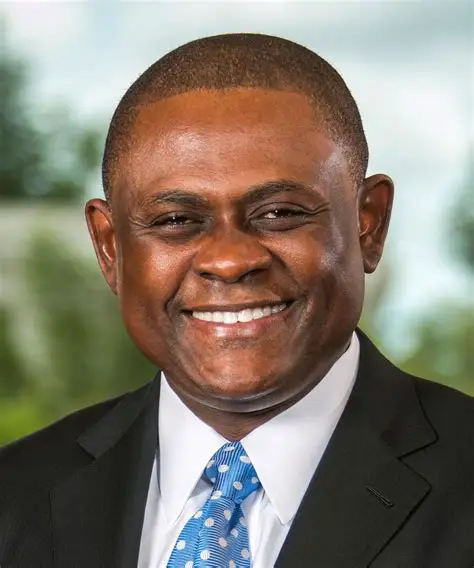
Nigerian-American physician and forensic pathologist, Dr. Bennet Omalu, has gained international recognition for his research into chronic traumatic encephalopathy (CTE), a degenerative brain disease associated with repeated head impacts. Born on September 30, 1968, in Anambra State, Nigeria, Omalu earned his medical degree from the University of Nigeria, Nsukka, in 1990. He later moved to the United States for further training, specializing in forensic pathology and neuropathology at the University of Pittsburgh.
Omalu's defining breakthrough came in 2002 when he examined the brain of Mike Webster, a former Pittsburgh Steelers player, and discovered abnormal accumulations of tau protein associated with neurological damage. His findings, published in the medical journal Neurosurgery in 2005, sparked controversy but helped bring wider scientific and public attention to the potential long-term consequences of repeated head trauma in contact sports. The research has led to further studies and a greater understanding of the condition.
Another Nigerian doctor making a global impact is Prof. Samuel Achilefu, a biomedical engineer and scientist who has developed technologies to help doctors detect and treat diseases, particularly cancer. Born in Northern Nigeria, Achilefu pursued advanced studies in Europe before moving to the United States. He earned a PhD in molecular physical and materials chemistry from the University of Nancy in France in 1991 and later undertook postdoctoral research at the University of Oxford.
Achilefu's work focuses on molecular imaging, nanotechnology, and optical imaging devices that help clinicians identify diseases and monitor biological processes. One of his most widely recognized innovations is a wearable cancer-imaging system, known as cancer vision goggles, which enables surgeons to visualize certain cancerous tissues under near-infrared light during operations. The technology has the potential to improve cancer surgery outcomes and is being investigated for use in different types of cancer.
Dr. Babaseyi Oyesola, a Nigerian physician, has focused on improving access to surgical care in underserved communities. An anaesthesiologist and critical-care physician, Oyesola is associated with CompactOR, a portable operating-room system designed to bring essential surgical equipment to locations with limited medical infrastructure. Born in Nigeria, Oyesola studied at the College of Medicine, University of Lagos, and later worked in the United Kingdom and the United States.
Oyesola's work with CompactOR aims to increase access to surgical care in areas where conventional medical infrastructure is limited. His professional career has taken him to various parts of the world, including the United Kingdom and the United States, where he has worked as a consultant in anaesthesia and critical care and served as a visiting assistant professor at the University of California, Los Angeles.
The contributions of these Nigerian doctors have not gone unnoticed. Dr. Omalu received the American Medical Association's Distinguished Service Award in 2016, while Prof. Achilefu was elected to the United States National Academy of Medicine in 2021 and the National Academy of Engineering in 2025. Their work serves as an inspiration to aspiring medical professionals and highlights the impact that Nigerian doctors can have on a global scale.
Key points
- Nigerian doctors are gaining international recognition for their groundbreaking research and life-saving innovations in medicine.
- Dr. Bennet Omalu, Prof. Samuel Achilefu, and Dr. Babaseyi Oyesola are examples of Nigerian doctors making a global impact in medical research and innovation.
- Their contributions have the potential to improve healthcare outcomes and increase access to medical care in underserved communities.