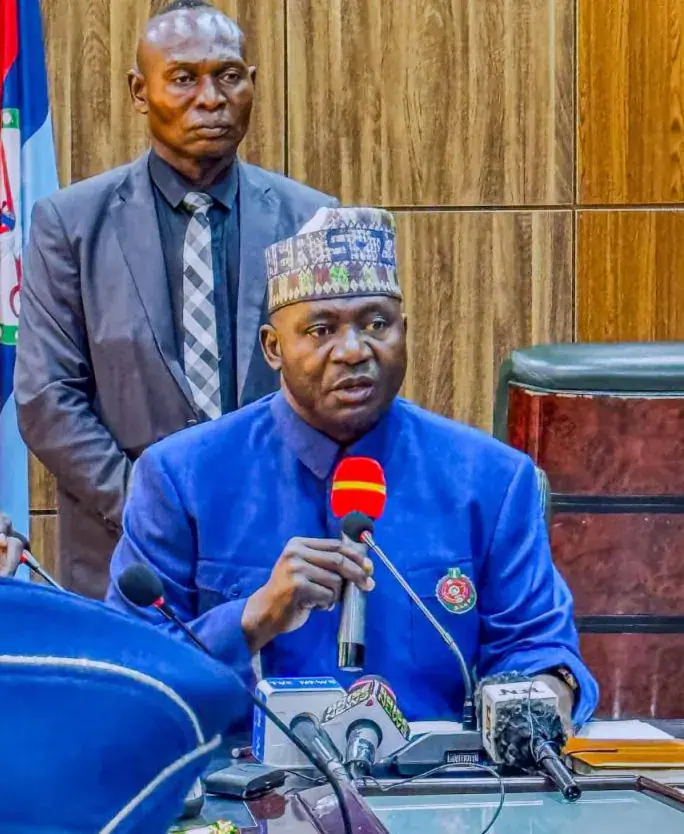
Nigerian Defence Minister General Christopher Musa has called for the immediate integration of the country's universities into its national security architecture. He made this statement while delivering a convocation lecture at Admiralty University of Nigeria in Delta State. Musa emphasized that safeguarding Nigeria's sovereignty and future required a collective effort driven by indigenous intellect, innovation, and patriotic resolve. He stressed that contemporary national security extended far beyond conventional military operations.
Musa outlined six critical areas where Nigerian universities must take the lead in defending and advancing the nation. These areas include Strategic Research and Policy Intelligence, Indigenous Technological Sovereignty, Capital and Executive Capacity, Peacebuilding and National Cohesion, Economic and Human Security, and Strategic Foresight. The minister noted that Nigeria was confronting complex and hybrid threats rooted in socioeconomic vulnerabilities and technological gaps. He added that winning the peace and securing the homeland demanded the full mobilisation of the nation's citadels of learning.
The minister emphasized that security was not the responsibility of the Armed Forces and other security agencies alone, but a sacred national undertaking that required the collective strength of government, institutions, communities, and citizens. Musa explained that a nation may possess formidable military capabilities, yet remain vulnerable if its economy was weak, its technology was externally dependent, and its intellectual capital was underutilised. He urged universities to stand as pillars of strategic intelligence, technological sovereignty, and national resilience.
Musa acknowledged systemic challenges facing the universities, including inadequate research infrastructure, brain drain, weak synergy between academia and security agencies, and limited commercialisation of research. However, he highlighted the federal government's decisive investments to reverse these trends. The Tertiary Education Trust Fund approved ₦4.25 billion for 158 research projects in August 2025 and an additional ₦7.5 billion for 174 research teams in June 2026.
The minister outlined clear policy imperatives requiring federal and state governments to institutionalise university-security frameworks. He also urged university managements to prioritise impact-driven research and campus safety, and security institutions to commission independent academic studies while respecting academic freedom. Musa's policy imperatives aimed to foster a collaboration between universities and security agencies to address the nation's security challenges.
Turning to the graduating class, Musa urged the graduates to reject any sense of entitlement and embrace their degrees as instruments of national service. He emphasised that Nigeria was not merely waiting for them to occupy offices, but was waiting for them to solve problems and contribute to the nation's development. The minister's address was contained in a statement by his Special Assistant on Media, Leah Katung-Babatunde.
The integration of universities into Nigeria's national security architecture is expected to enhance the country's security and intellectual capabilities. The minister's call for collaboration between universities and security agencies is seen as a step towards addressing the nation's complex security challenges. Key initiatives, including increased funding for research projects, aim to support this effort and promote a culture of innovation and patriotism among Nigerian graduates.
Key points
- The Nigerian Defence Minister has called for the strategic integration of universities into the nation's security architecture to safeguard sovereignty.
- The minister outlined six critical areas where universities must take the lead in defending and advancing the nation.
- The federal government has invested ₦11.75 billion in research projects to support the integration of universities into national security efforts.