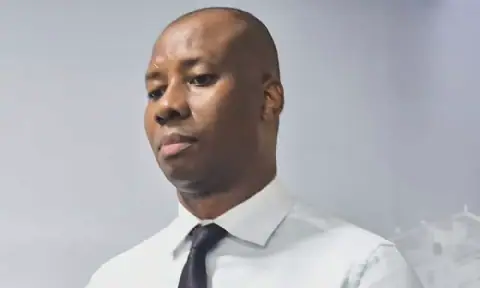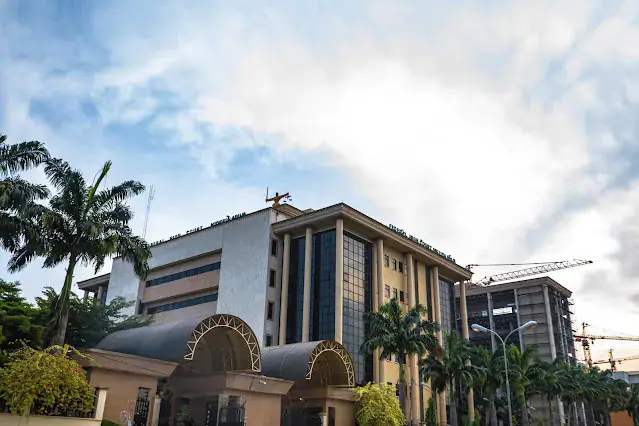
The Federal High Court in Abuja has admitted disputed statements and interrogation recordings in the prosecution of six men accused of planning to overthrow President Bola Tinubu's administration. Justice Joyce Abdulmalik delivered the ruling on Thursday, November 5, rejecting the defendants' allegations that investigators obtained the material through torture, threats, or inducement. The judge allowed the prosecution to rely on the statements and recordings after concluding a separate hearing into how investigators obtained them.
The defendants have pleaded not guilty to the charges, which include treason, terrorism, withholding security information, and money laundering associated with terrorism financing. The charge also names former Minister of State for Petroleum Resources Timipre Sylva, whom the prosecution lists as being at large. The Federal Government arraigned the six defendants on April 22, and Director of Public Prosecutions of the Federation Rotimi Oyedepo, SAN, filed the charge on April 20.
Abdulmalik found no evidence in the recordings to support the allegations of torture and added that the defendants failed to substantiate the allegations of oppression. She consequently admitted the extra-judicial statements, audio-visual recordings, flash drives, and certificates of compliance. The exhibits also included an external drive from the Special Investigation Panel and its accompanying compliance certificate.
The defence had challenged the circumstances surrounding the interrogations, raising concerns about prolonged detention, access to legal representation, and the provision of an interpreter. Counsel argued that the Administration of Criminal Justice Act (ACJA), 2015, required a lawyer's presence when investigators recorded confessional statements. However, Abdulmalik relied on the Evidence Act, 2011, and a Supreme Court decision to reject that interpretation.
The judge held that the absence of counsel did not prevent the admission of an audio-visual statement where the evidence established that the defendant made it voluntarily. She also dismissed the argument concerning the length of the defendants' detention and rejected the sixth defendant's objection about the absence of an interpreter, noting that investigators recorded his statement in Hausa.
Among the recordings played during the proceedings was an account attributed to Zekeri Umoru, a Julius Berger Nigeria Plc employee working in the Maintenance Department at the Presidential Villa. Umoru described discussions about cutting electricity to the Villa to assist the alleged operation and alleged that Colonel Mohammed Ma'aji, the suspected organiser, offered him money to recruit people working within the Villa.
The trial will continue on December 7 and 10, with the judge fixing the dates for the continuation of the trial at noon. The prosecution has called four witnesses, including an army officer identified by the codename "AAA" for security reasons, who presented the recordings before the court began examining their admissibility. The defendants began presenting their evidence on June 25 and subsequently concluded their defence in the separate admissibility hearing.
Key points
- The Federal High Court in Abuja has admitted disputed statements and interrogation recordings in the trial of six men accused of planning to overthrow President Bola Tinubu's administration.
- The judge, Justice Joyce Abdulmalik, rejected the defendants' allegations that investigators obtained the material through torture, threats, or inducement.
- The trial will continue on December 7 and 10, with the prosecution having called four witnesses and the defendants having concluded their defence in the separate admissibility hearing.
Reporting sources
- Court admits statements in coup trial · Prime 9ja Online