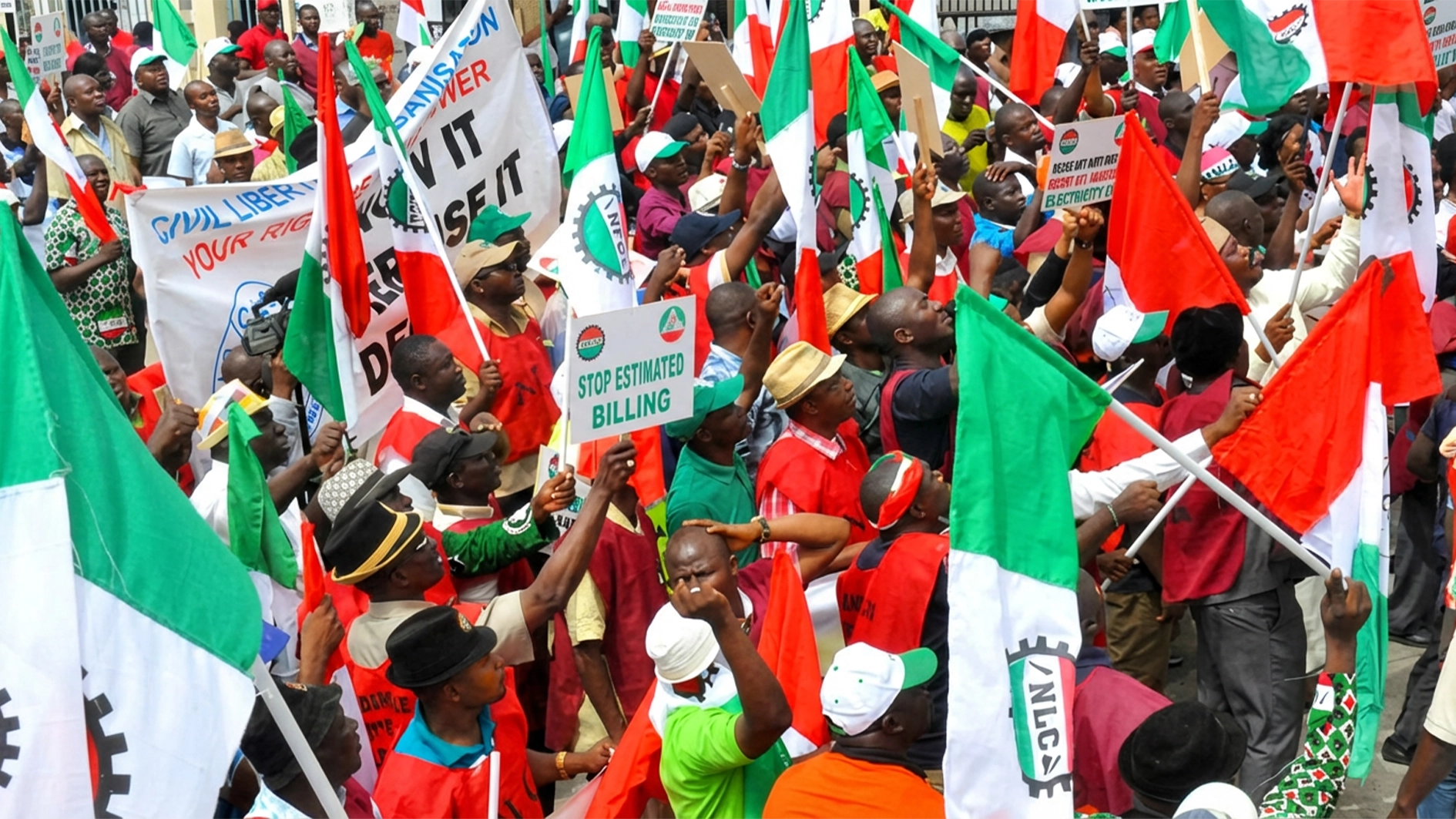
The Joint National Public Service Negotiating Council (JNPSNC) has advised the Federal Government to engage with its leadership, warning that failure to address workers' demands could trigger a total strike in the coming weeks. The council's warning comes after a three-day warning strike that ended recently, with workers expressing dissatisfaction over rising fuel prices, declining purchasing power, and delayed negotiations for a new national minimum wage due in 2027.
Many Federal Government workers have continued to express concern over high income taxes deducted from their salaries monthly through the Pay As You Earn (PAYE) model. Civil servants have demanded an immediate reduction in the PAYE deducted from their monthly salaries, lamenting that the large amount of tax deducted from their pay has reduced their purchasing power due to rising prices of goods and services.
The JNPSNC has put compliance with the warning strike at about 65 per cent nationwide, with full compliance recorded in Akwa Ibom, Oyo, Osun, Kaduna, Sokoto, and Gombe states. The council's National Secretary, Gbenga Olowoyo, said strategic meetings had commenced to sensitise public servants nationwide to the "next struggle" if the government fails to respond to the issues raised.
The President of the Nigeria Labour Congress (NLC), Joe Ajaero, has alleged that President Bola Tinubu's administration is aloof and disconnected from NLC. Ajaero said the congress's attempts to engage the government failed, with the NLC writing to Tinubu between May and December 2025 but receiving no response. This prompted the congress to announce a nationwide protest.
The Federal Government has begun a six-week review of Nigeria's tax reforms to address implementation gaps, ambiguities, and unintended consequences. The exercise will review key areas of the tax regime, including VAT thresholds, withholding tax, capital gains treatment, and multiple taxation, with recommendations expected to be included in the Finance Bill 2027.
The Minister of Finance and Coordinating Minister of the Economy, Taiwo Oyedele, said the implementation of the new laws exposed areas requiring clarification, refinement, and further reforms. Oyedele noted that the real test begins when the law meets the economy, as businesses interpret it, administrators implement it, investors respond to it, and citizens experience it.
The JNPSNC demands remain the reduction and stabilisation of fuel prices, an upward review of public servants' salaries and allowances, and the immediate constitution of a tripartite committee to negotiate the 2027 national minimum wage. If the demands are not met, civil servants have hinted at an indefinite strike, which could have significant implications for the country's economy and public services.
Key points
- The Nigerian government faces pressure from civil servants to address welfare demands, including reducing income taxes and improving salaries.
- The Joint National Public Service Negotiating Council (JNPSNC) has warned of a potential indefinite strike if the government fails to engage with its leadership and address workers' demands.
- The Federal Government has begun a review of Nigeria's tax reforms to address implementation gaps and unintended consequences, which could lead to changes in the tax regime.