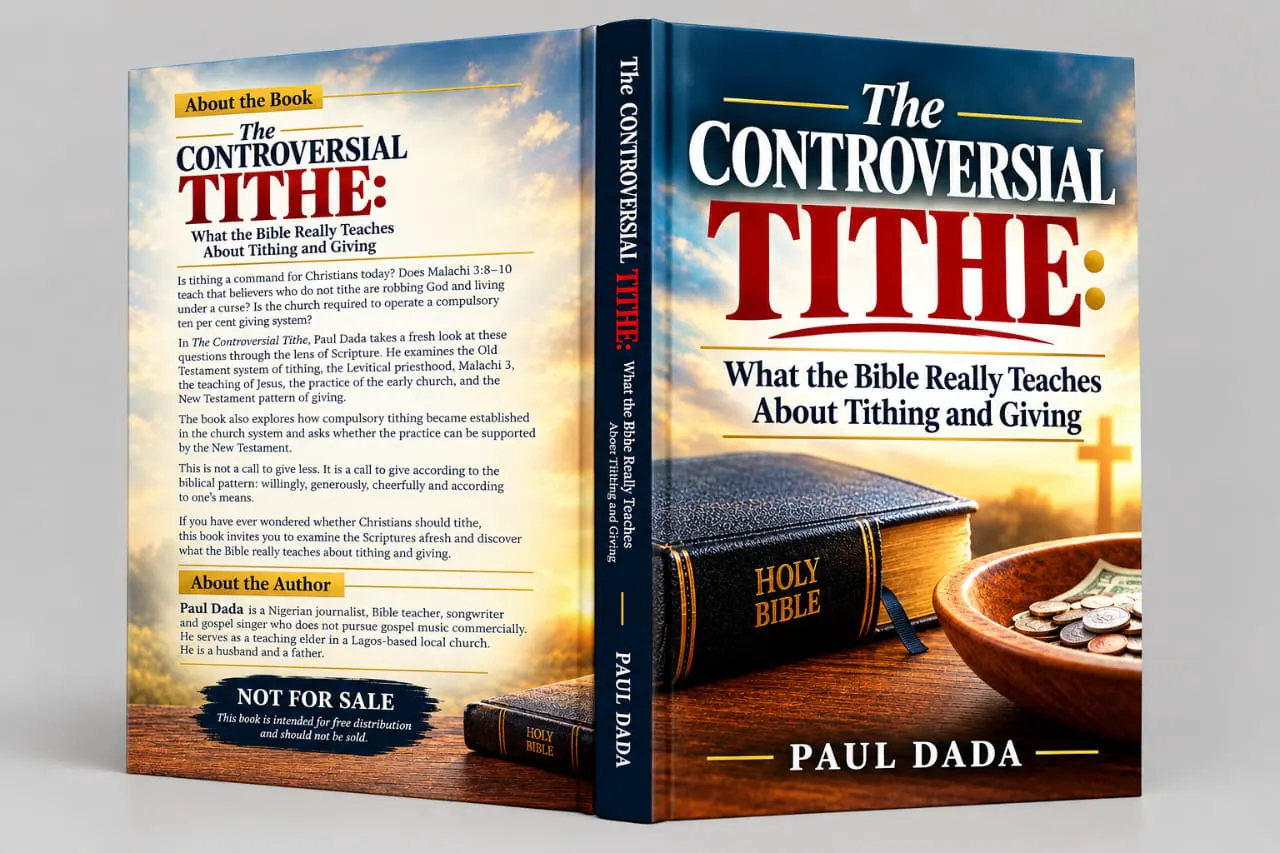
Nigerian journalist and Bible teacher Paul Dada has published an ebook criticising the practice of compulsory tithing in churches. The 56-page book, titled The Controversial Tithe: What the Bible Really Teaches About Tithing and Giving, examines tithing from its references in the Old Testament through the teachings of Jesus and the practice of the early church. Dada argues that the New Testament does not impose a compulsory 10 per cent giving requirement on Christians.
The book begins by examining the tithes associated with Abraham and Jacob before considering the detailed provisions on tithing under the Mosaic Law. It subsequently examines Jesus' references to tithing in the Gospels, including his criticism of the Pharisees for their emphasis on tithing while neglecting "the weightier matters of the law". This critical look at biblical teachings on tithing aims to provide a biblical and historical examination of one of the most debated financial practices in contemporary Christianity.
Dada devotes a chapter to Malachi 3:8-10, a passage frequently cited in Christian teaching on tithing. He argues that the passage must be understood within its original covenantal and historical context and questions its application as a source of obligation or fear for Christians under the New Covenant. This nuanced understanding of the passage challenges common interpretations used to justify compulsory tithing.
The author also examines the development of compulsory tithing in church history, tracing its gradual institutionalisation and later developments in Christian traditions. This historical analysis provides context for the current practice of compulsory tithing in many churches. Dada's work encourages readers to re-examine their understanding of tithing and giving in light of biblical teachings.
A key aspect of Dada's argument is the distinction between rejecting compulsory tithing and rejecting Christian giving. He argues that Christians are called to give generously, willingly and sacrificially, while also maintaining that ministers and other faithful Christian workers should receive material support. This approach prioritises voluntary giving over compulsory tithing.
The final chapter draws on Dada's experience in his local church, where members give voluntarily in response to identified needs rather than through a compulsory tithing system. This practical example illustrates an alternative approach to giving in churches, one that prioritises voluntary generosity over compulsory tithing. The book concludes by urging readers to examine teachings about tithing against the New Testament rather than accepting them simply because they have become established practices within churches.
The Controversial Tithe: What the Bible Really Teaches About Tithing and Giving is available for free download on Selar and WordPress. The book offers a thought-provoking critique of compulsory tithing and encourages readers to engage with biblical teachings on giving. By challenging established practices, Dada's work contributes to a nuanced understanding of Christian giving.
Key points
- The book argues that the New Testament does not impose a compulsory 10 per cent giving requirement on Christians.
- Dada examines tithing from its references in the Old Testament through the teachings of Jesus and the practice of the early church.
- The author encourages readers to examine teachings about tithing against the New Testament rather than accepting them simply because they have become established practices within churches.