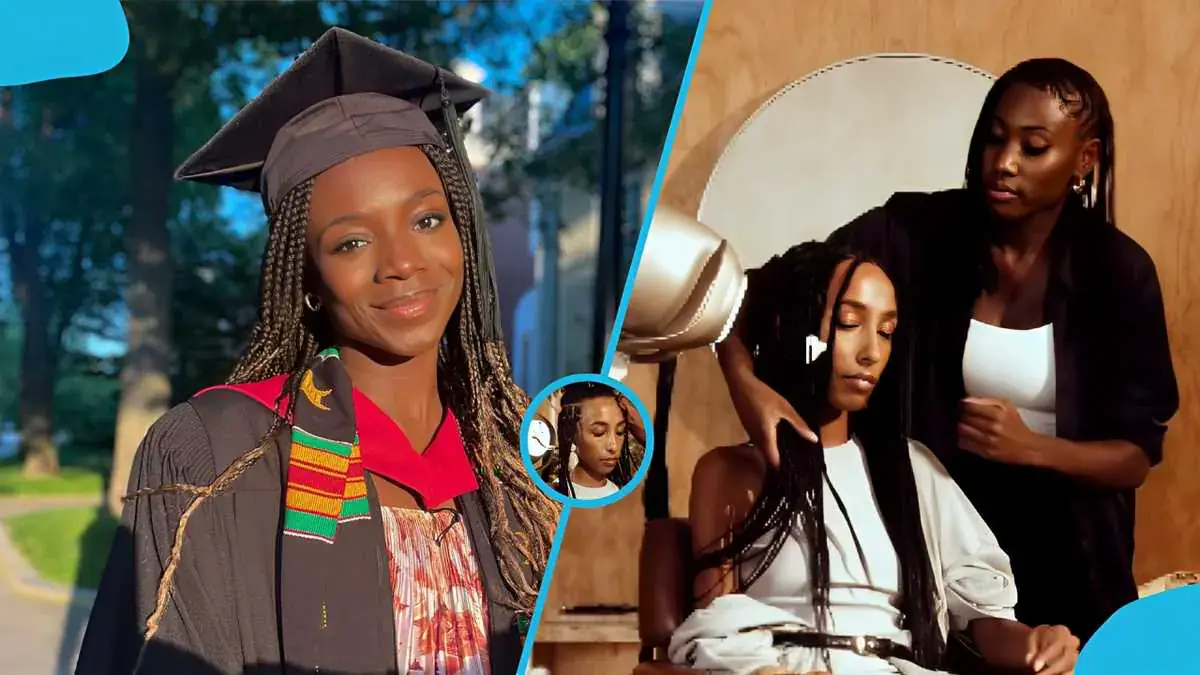
A Nigerian-American engineer, Yinka Ognbiyi, has developed a hair-braiding robot that is helping stylists complete braids up to five times faster. The robot, called Halo, was built by HaloBraid, a hair technology startup founded by Ognbiyi. Ognbiyi, a biomechanical engineer, holds a joint master’s degree in engineering and business administration from Harvard University. She co-founded the company with David Afolabi. HaloBraid describes Halo as the “world’s first patented braid-assist robot,” designed to help stylists rather than replace them.
The idea for the robot came to Ognbiyi during the COVID-19 lockdown, when salons were closed. Stuck in a London flat, she spent four days braiding her own knotless braids. Before venturing into beauty technology, she had built smart kitchen appliances and Internet of Things devices. Explaining her motivation, Ognbiyi said that her goal was to give people back their time. Typical braiding appointments take six to 12 hours, cost between $200 and $300 and are repeated every six to eight weeks.
Halo is a collaborative robot, meaning it works beside the stylist. First, the stylist parts the hair, sections it and creates the anchor knot that starts each braid. The robot then takes over the repetitive weaving down the length of the braid, which accounts for about 80% of the physical work. After that, the stylist detaches the robot to seal, trim and style the ends. HaloBraid says the process is up to five times faster than human hands and can cut appointment times by about half.
HaloBraid has raised $7 million in seed funding to bring the robot to market. Seven Seven Six, the venture capital firm founded by Reddit co-founder Alexis Ohanian, led the round. AlleyCorp and Bling Capital also backed the startup. More than 7,000 salons have reportedly joined a waitlist to use the technology. The company plans to roll out the robot through salon partnerships this fall, though no price has been announced.
Many social media users have praised Ognbiyi for the innovation. Some have expressed excitement and relief that the robot could make braiding easier and faster. Others have noted that the robot could be a game-changer for people who regularly get braids. The reaction on social media has been overwhelmingly positive, with many users congratulating Ognbiyi on her achievement.
Ognbiyi's achievement has been recognized as a significant innovation in the beauty industry. Her robot has the potential to revolutionize the way people get braids, making it faster, easier, and more efficient. With over 7,000 salons on the waitlist, it is clear that there is a high demand for this technology. As the company prepares to roll out the robot, it will be interesting to see how it is received by the public.
The development of Halo is a testament to the power of innovation and entrepreneurship. Ognbiyi's experience and skills as a biomechanical engineer and business administrator have enabled her to create a product that has the potential to transform the beauty industry. With the support of investors and the interest of salons, HaloBraid is poised for success.
Key points
- The hair-braiding robot, called Halo, was developed by Nigerian-American engineer Yinka Ognbiyi and her company HaloBraid.
- The robot helps stylists complete braids up to five times faster and has a waitlist of over 7,000 salons.
- HaloBraid has raised $7 million in seed funding to bring the robot to market.