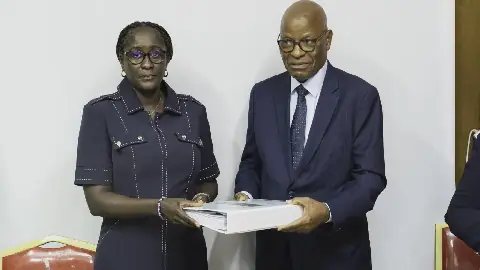
Nigeria's Minister of Industry, Trade and Investment, Jumoke Oduwole, has clarified that the country's estimated $50 billion investment figure represents announcements and commitments made by prospective investors rather than capital already deployed in the economy. The minister made this statement during a television interview, where she explained that the investment announcements were generated largely through President Bola Tinubu's international engagements and the government's investment promotion efforts.
As of January 2025, the administration had recorded about $50 billion in investment announcements arising from more than 80 Memoranda of Understanding signed by ministries, departments and agencies with prospective investors and partners across countries including Brazil, France and the United Kingdom. Oduwole acknowledged that the government's responsibility was to ensure that such announcements progressed beyond agreements and translated into actual economic activity.
Some of the announced investments had already progressed into different stages of implementation, citing projects in fertiliser, petrochemicals, manufacturing and other sectors. Among the examples, she identified an $8 billion investment by Indorama in the fertiliser and petrochemical industries and a $1.5 billion commitment by Coca-Cola. Additionally, the healthcare manufacturing company Vestagard had commenced activities in Lagos free zones and was expected, when operating at full capacity, to manufacture malaria-treated nets for both the Nigerian market and export to other African countries.
Oduwole explained that converting investment commitments into operating projects could take considerable time, particularly where the investments involved patient capital and long-term projects. She stressed that Nigeria's objective was to attract partners capable of developing complete mineral value chains within the country instead of allowing valuable resources to be extracted and exported in their raw form.
On the country's emerging partnership with the United States on critical minerals, the minister stressed that the framework should not be interpreted as an agreement under which Nigeria would surrender ownership or control of its mineral resources. She explained that Memoranda of Understanding and similar frameworks represented expressions of intent and provided a basis for further negotiations rather than automatically creating legally binding obligations.
Oduwole disclosed that the Federal Government was engaging state governments, including those of Nasarawa, Zamfara, Niger and Kaduna, on opportunities arising from the development of critical minerals. She linked formal mining operations to employment generation and said the development of the sector could provide opportunities for young people in mineral-producing communities.
The minister also said the government was working with international development partners to reduce the risks associated with investments in Nigeria's mining industry. With the World Bank, the government had done some de-risking, and businesses were now ready to come and invest in Nigeria, in Nigerian mines, brownfield, actually.
Key points
- Nigeria will not cede critical minerals without value-addition terms.
- The country has recorded $50 billion in investment announcements.
- Nigeria aims to develop complete mineral value chains within the country.