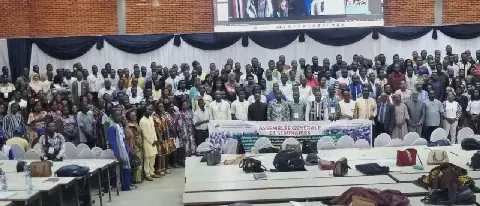
The Federal Government of Nigeria has made significant progress in its fight against cervical cancer, vaccinating over 18 million adolescent girls against the Human Papillomavirus. This represents about 76 per cent of the country's target population. The Director of Disease Control and Immunisation at the National Primary Health Care Development Agency, Dr Rufai Garba, disclosed this at a strategic policy roundtable in Abuja. The meeting aimed to accelerate cervical cancer elimination in Nigeria through public and private sector collaboration.
Nigeria introduced the HPV vaccine into its national immunisation programme in October 2023, initially targeting 7.7 million girls aged nine to 14 in the first phase. The rollout was supported by Gavi, UNICEF, WHO, and other partners, with vaccination subsequently expanded nationwide. According to Dr Garba, vaccination alone will not be sufficient to eliminate cervical cancer. He stressed the need for a comprehensive approach that includes screening, early diagnosis, treatment, and follow-up.
The World Health Organization's global elimination strategy sets a 90-70-90 target: 90 per cent of girls fully vaccinated against HPV by age 15, 70 per cent of women screened by ages 35 and 45, and 90 per cent of women with pre-cancer or invasive cancer receiving appropriate treatment. Recent international estimates show that Nigeria continues to carry a substantial cervical cancer burden, with 13,676 new cases and 7,093 deaths recorded in 2023.
Dr Garba said Nigeria recorded about 12,000 new cervical cancer cases annually, with nearly 8,000 women dying from the disease each year. He identified the difficulty of getting healthy nine-year-old girls into health facilities for preventive vaccination as one of the challenges facing the programme. The agency has adopted school-based vaccination, outreach campaigns, and other public health initiatives to improve access and coverage.
Dr Garba also called for stronger adolescent-friendly health services, including safe spaces where young people can access preventive healthcare without fear of judgment. He urged journalists to investigate reports of private health facilities charging patients for HPV vaccines supplied free of charge by the government. The agency monitors stock levels and consumption through a logistics dashboard, allowing vaccines to be redistributed to states with higher demand.
The Director of External Affairs for Sub-Saharan Africa at MSD, Vuyo Mjekula, called for stronger private-sector participation in Nigeria's efforts to eliminate cervical cancer. She said an integrated approach was needed to sustain gains in vaccination and expand access to screening and treatment. Mjekula disclosed that MSD had supported catch-up HPV vaccination for girls up to age 20 who were not covered when Nigeria introduced its national programme.
Mjekula said private-sector involvement could help mobilise additional resources, improve service delivery, and reduce fragmentation across existing programmes. She advocated integrating preventive healthcare into routine maternal and reproductive health services so women could access screening and other interventions during regular healthcare visits. MSD has invested over $44m in Nigeria through its MSD for Mothers initiative, supporting civil society organisations working in maternal healthcare.
Key points
- Nigeria has vaccinated over 18 million adolescent girls against Human Papillomavirus.
- The country aims to eliminate cervical cancer through a comprehensive approach that includes vaccination, screening, and treatment.
- Private-sector participation is crucial to sustaining gains in vaccination and expanding access to screening and treatment.