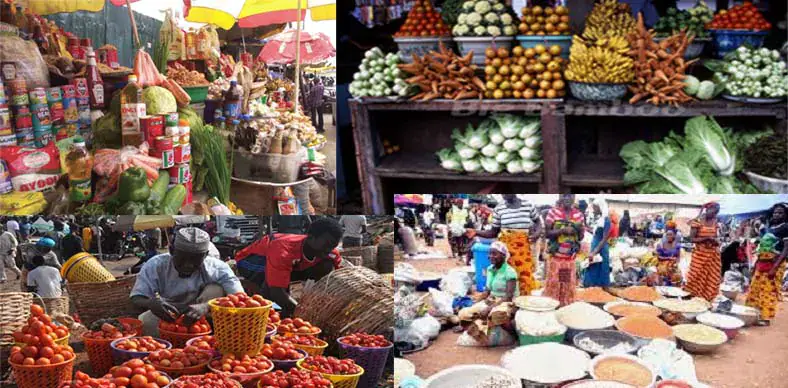
Agricultural stakeholders in Nigeria are calling for urgent interventions to strengthen domestic food production, improve strategic food reserves, reduce post-harvest losses, and protect vulnerable households from rising food prices. They express concern over Nigeria's vulnerability to another global food supply shock. The stakeholders, in separate interviews, said the country must urgently strengthen its agricultural production capacity, expand irrigation, improve storage and distribution infrastructure, and introduce targeted social protection measures.
Dr. Biodun Onalaja, Chairman and Chief Executive Officer of Hyst Global Business Limited, said the World Bank's warning should serve as a wake-up call for Nigeria to address structural weaknesses in its agricultural and food distribution systems. He cited the World Bank's October 2026 Commodity Markets Outlook, which predicts global food commodity prices could rise by approximately 18 percent cumulatively between 2025 and 2027. Onalaja identified dependence on rain-fed agriculture, insecurity in farming communities, high costs of agricultural inputs, inadequate storage facilities, and rising transportation costs as major obstacles requiring urgent government attention.
Onalaja recommended that the Federal Government accelerate investment in irrigation infrastructure, particularly in northern agricultural communities, to reduce dependence on seasonal rainfall and expand dry-season farming. He also advocated for affordable agricultural financing arrangements to enable smallholder farmers to access fertilisers, improved seedlings, pesticides, and mechanised farming services. Onalaja further called for strengthened security arrangements around farming communities and major agricultural corridors through intelligence-driven operations, community participation, and improved coordination among security agencies and state governments.
Prince Oyewumi Oyedele Oyetunde, Editor-in-Chief of Farmers Choice Magazine, called for the establishment of a National Food Security Emergency Preparedness Programme to strengthen Nigeria's capacity to respond to potential disruptions in global food supply chains. He identified eight priority areas for government intervention, including the establishment of strategic grain reserves, increased domestic food production, expanded irrigation, improved livestock and animal feed security, reduction of post-harvest losses, agricultural security, food import contingency planning, and protection of vulnerable households.
Oyetunde urged the Federal Government to audit existing government silos, determine actual grain stock levels, and establish emergency reserve targets to ensure that the country could respond effectively to possible supply shortages. He also advocated for increased production of maize, rice, sorghum, millet, soybean, and cowpea through improved seeds, fertilisers, mechanisation, and affordable agricultural credit. Oyetunde stressed that food security interventions must extend beyond crop production to include livestock production, animal health, and feed manufacturing.
Austine Gbenga Adeniba, the COO of Eliakim Integrated Services Limited, warned that Nigeria's preparedness for another global food supply shock remained low, citing the country's 30 percent reliance on imported food, post-harvest losses estimated at between 20 and 40 percent, insecurity in farming belts, and heavy dependence on rain-fed agriculture. He called for the expansion of solar-powered dry-season irrigation, deployment of farm security units in major agricultural production belts, and distribution of agricultural inputs to farmers.
The stakeholders' concerns are based on warnings that worsening El Niño conditions, declining global grain production, and disruptions to international supply chains could threaten global food security in 2027. They emphasized the need for increased investment in climate-smart agriculture, affordable financing for smallholder farmers, improved security in farming communities, and stronger collaboration between government, private investors, and agricultural research institutions to prevent millions of households from bearing the burden of another food crisis.
Key points
- Nigeria's agricultural sector faces major obstacles, including dependence on rain-fed agriculture and inadequate storage facilities.
- Stakeholders recommend increased investment in climate-smart agriculture and affordable financing for smallholder farmers.
- The country must strengthen its strategic national food reserves and improve food storage and distribution systems.
Reporting sources
- FG Urged To Act Fast To Avert Looming 2027 Food Crisis · Independent Nigeria