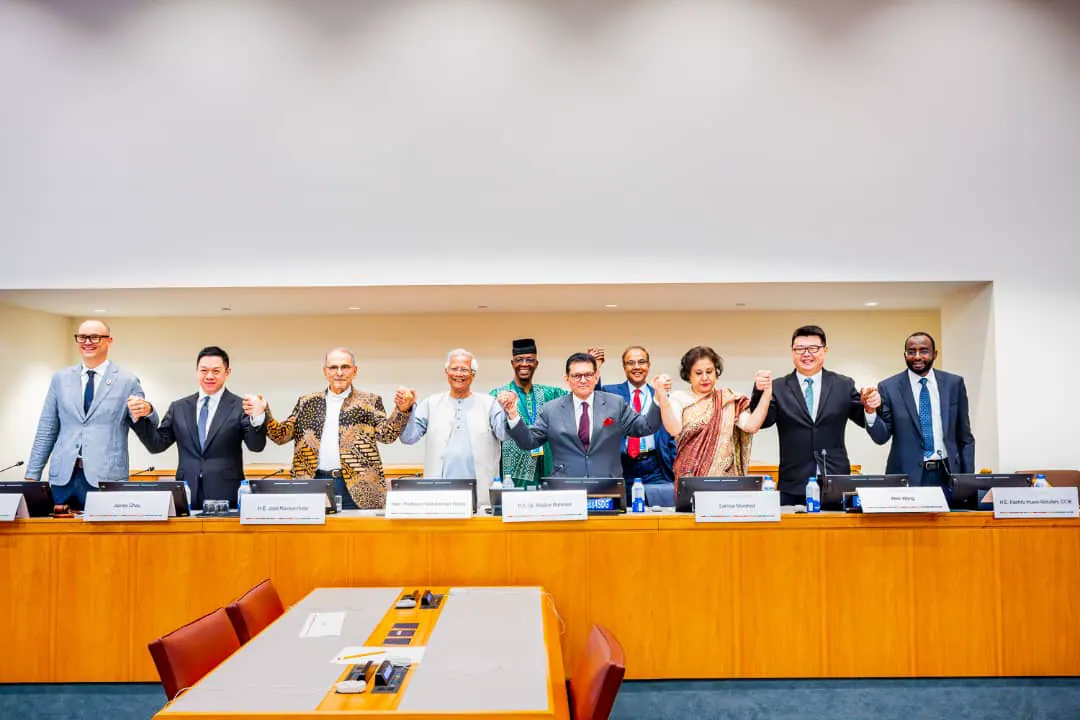
Nigeria has introduced a four-pillar framework to build an inclusive artificial intelligence economy. The framework, unveiled by Kashifu Inuwa Abdullahi, director-general of the National Information Technology Development Agency (NITDA), consists of Connect, Skill, Compute, and Create. This approach aims to move beyond access to AI tools and focus on infrastructure, talent, and local capacity needed for Nigerians to participate in the emerging AI economy.
The Connect pillar seeks to expand digital infrastructure required for AI adoption, including through Project BRIDGE, which is part of Nigeria's effort to extend broadband and fibre infrastructure. The second pillar, Skill, focuses on developing human capabilities required to use and build AI systems, including programmes like DL4ALL and 3MTT. This is crucial as access to AI tools does not automatically translate into participation in the AI economy without the necessary skills.
The Compute pillar addresses the infrastructure required to develop and operate sophisticated AI systems, linking it to Nigeria's efforts to strengthen sovereign cloud and AI capabilities. The fourth pillar, Create, focuses on enabling entrepreneurs and innovators to develop commercially sustainable solutions to local problems. This ecosystem approach recognizes that people need connectivity, skills, computing infrastructure, and an enabling environment to turn applications into businesses and public-value solutions.
Abdullahi emphasized that the ultimate measure of AI adoption should not be the number of people using AI tools but whether the technology produces tangible improvements in people's lives. He illustrated this point with the example of a Nigerian farmer who can use an AI-enabled agronomist to interpret weather and soil conditions, identify crop problems, and connect to markets. This distinction has significant economic implications for Nigeria.
Nigeria's AI strategy also prioritizes digital sovereignty, ensuring that AI systems understand Nigerian data, context, and nuances, operate within Nigerian law, and reflect national culture and values. However, Abdullahi stressed that sovereignty should not mean technological isolation, and Nigeria should remain open to global investment, AI models, and international partnerships. This balancing act is crucial for countries developing AI ecosystems.
Abdullahi called on global technology companies to invest in computing infrastructure, transfer knowledge, develop African talent, support datasets and languages, and work with local innovators and researchers. He emphasized that accountability remains human, and governments and companies must ensure that AI systems are deployed with appropriate safeguards, particularly where automated systems can influence decisions with significant consequences for citizens.
The four-pillar framework reflects Nigeria's commitment to developing an inclusive AI economy, and Abdullahi's remarks highlight the need for a collaborative approach to AI development. The high-level global dialogue on technology, innovation, and social business, attended by global leaders, including Khalilur Rahman and José Ramos-Horta, underscores the importance of international cooperation in shaping the future of AI.
Key points
- Nigeria's four-pillar framework for an inclusive AI economy focuses on connectivity, skills, computing capacity, and value creation.
- The framework aims to move beyond access to AI tools and focus on infrastructure, talent, and local capacity needed for Nigerians to participate in the emerging AI economy.
- Nigeria prioritizes digital sovereignty in its AI strategy while remaining open to global investment and partnerships.