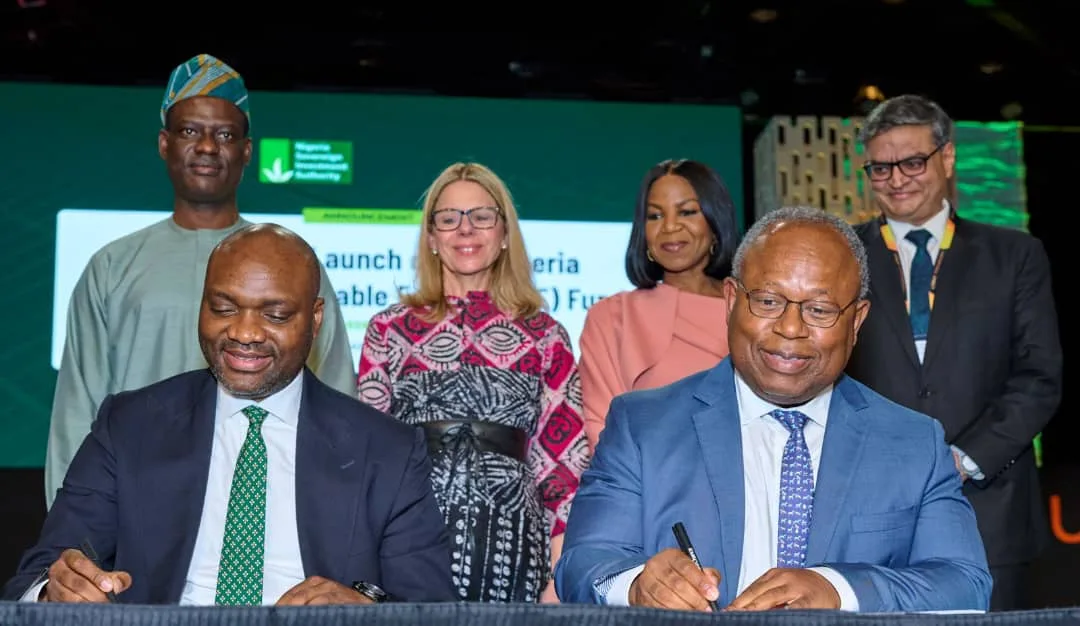
The Federal Government of Nigeria, through the Nigeria Sovereign Investment Authority (NSIA), has launched a $300 million investment fund aimed at expanding off-grid electricity and distributed renewable energy projects across the country. This initiative, jointly managed by the NSIA and Africa50, seeks to mobilize public and private capital for mini-grids, standalone solar systems, and other decentralized electricity projects. The fund's launch was announced on the sidelines of the United Nations General Assembly.
The Nigeria Distributed Renewable Energy Fund is expected to address Nigeria's persistent electricity supply deficit, which has forced millions of households and businesses to rely on generators and alternative sources of power. The fund is aligned with Nigeria's energy-access objectives and Mission 300, an initiative seeking to provide electricity access to 300 million people across Africa by 2030. According to the NSIA, the fund represents a crucial step towards mobilizing the capital required to expand off-grid and distributed renewable energy solutions.
The fund will support projects such as mini-grids and standalone solar systems as Nigeria attempts to close its electricity access gap while increasing investment in cleaner energy sources. The Managing Director and Chief Executive Officer of NSIA, Aminu Umar-Sadiq, described the commercial launch as a signal to investors about the potential of Nigeria's renewable energy market. He emphasized that the fund's launch marked a major development milestone, demonstrating Nigeria's commitment to renewable energy.
The World Bank is providing an initial $25 million contribution to the fund through the International Development Association, representing about 8.3 percent of the targeted $300 million fund. The Managing Director of Operations at the World Bank Group, Anna Bjerde, said the investment vehicle was intended to combine development finance with private capital to expand electricity access. She added that the World Bank's contribution reflected its commitment to bridging funding sources and delivering real connections to people and communities across the continent.
The fund is structured to use public and development financing to attract additional private-sector investment, rather than relying solely on government resources. This approach aims to address one of the major constraints facing renewable-energy developers, particularly the difficulty of securing sufficient long-term financing for projects serving communities and businesses outside conventional electricity infrastructure. The partners expect the fund to provide an important foundation for scaling distributed renewable energy solutions across the country.
The Chief Executive Officer of Sustainable Energy for All (SEforALL) and Special Representative of the United Nations Secretary-General for Sustainable Energy for All, Damilola Ogunbiyi, said the fund would support Nigeria's electricity-access ambitions while contributing to Mission 300. He emphasized that the commercial launch of the Nigeria Distributed Renewable Energy Fund was a significant step towards delivering Nigeria's electricity access ambitions and advancing the objectives of Mission 300.
The Director General of the International Solar Alliance, Ashish Khanna, said the Nigerian initiative was the first country-level demonstration linked to a wider continental financing platform under Mission 300. He added that the financing structure could help mobilize capital more efficiently, develop domestic renewable-energy markets, and provide a template for other African countries. The partners expect the fund to grow beyond its initial deployment and provide a financing model that can be replicated in other African markets.
Key points
- The Nigeria Distributed Renewable Energy Fund aims to mobilize public and private capital for mini-grids, standalone solar systems, and other decentralized electricity projects.
- The fund is expected to address Nigeria's persistent electricity supply deficit, which has forced millions of households and businesses to rely on generators and alternative sources of power.
- The World Bank is providing an initial $25 million contribution to the fund through the International Development Association.