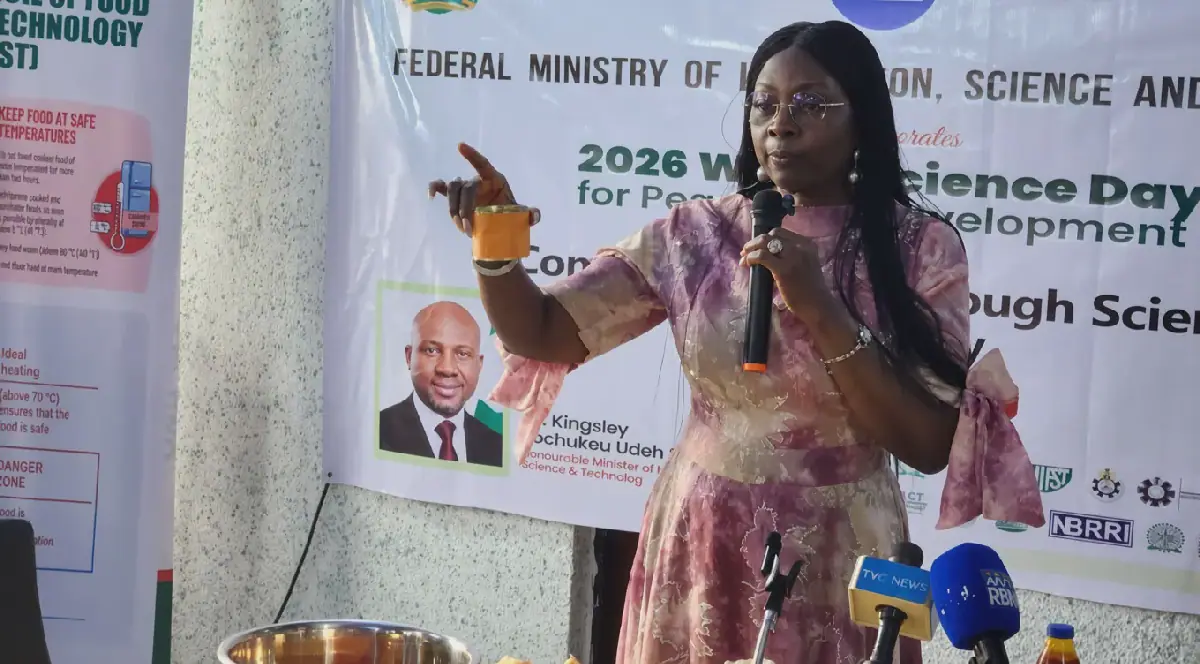
The Federal Government of Nigeria has announced a multi-pronged action plan to address food contamination and harmful food-handling practices. These practices are blamed for 50 million foodborne illnesses and 53,000 deaths in the country annually. The Minister of Innovation, Science and Technology, Dr. Kingsley Tochukwu Udeh, revealed this in Abuja, stating that unsafe food has become a growing public health threat requiring urgent intervention and stricter enforcement.
According to the World Health Organisation (WHO), 866 million people worldwide suffered foodborne illnesses in 2021, resulting in 1.52 million deaths, including 143,000 children under five. The global economic burden of foodborne illnesses is estimated at $310 billion. Dr. Udeh noted that unsafe food can cause over 200 diseases, ranging from diarrhea to cancer. He cited recent tragedies in Nigeria, including the deaths of five family members in Kogi State and 49 fatalities in Ondo State due to food contamination.
The Minister warned that the government will work with the Ministry of Justice and the Attorney-General to prosecute offenders involved in food contamination and adulteration. Convicted persons risk jail terms of between six months and two years. Dr. Udeh commended the Registrar of the Nigerian Council of Food Science and Technology (NiCFoST), Mrs. Veronica Ezeh, for her efforts to eliminate unsafe and adulterated food products from the country.
Mrs. Ezeh identified dangerous practices contributing to food contamination, including the use of calcium carbide to ripen fruits artificially and the application of dichlorvos on beans and grains. She also mentioned the use of paracetamol to tenderize meat and the treatment of cassava with detergents and bleaching agents. These practices can lead to serious health conditions, such as liver cirrhosis, kidney diseases, cancer, and damage to other vital organs.
The government's action plan includes strict enforcement of Sections 243–245 of the Criminal Code Act and the creation of a Food Science and Technology professional cadre across federal, state, and local governments. The plan also involves promoting modern technologies for food safety, mandatory sealing and packaging of food products, and stakeholder conferences. Furthermore, there will be stronger collaboration among regulatory agencies and the adoption of NiCFoST's Food Safety Procedure Manual.
Mrs. Ezeh called for the employment of more food science and technology professionals to strengthen food safety surveillance and enforcement. She noted that over 3,000 graduates are produced annually in the country and should be engaged by the three tiers of government. This move aims to enhance food safety measures and prevent foodborne illnesses.
The government's efforts to tackle food contamination and adulteration are crucial in reducing the high number of foodborne illnesses and deaths in Nigeria. The prosecution of offenders and the promotion of food safety practices will help mitigate the risks associated with unsafe food. Key to this initiative is the collaboration between regulatory agencies and the engagement of food science and technology professionals.
Key points
- Convicted food adulterators risk six months to two-year jail terms.
- Nigeria records 50 million foodborne illnesses and 53,000 deaths annually.
- The global economic burden of foodborne illnesses is estimated at $310 billion.