The Federal Government of Nigeria has set an ambitious target to grow the country's livestock sector from its current estimated value of $32 billion to $92 billion within the next five years. This move is part of a broader effort to unlock opportunities across the livestock value chain and boost the nation's economy. The government believes that the sector could contribute as much as 10 per cent to the nation's Gross Domestic Product (GDP).
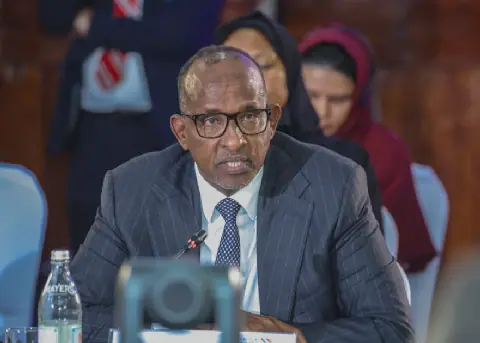
The Minister of Livestock Development, Idi Mukhtar-Maiha, announced this target during the presentation of a book titled, Guide to Self-Employment and Sustainable Retirement Plan Through Livestock Production, written by Dr. Gabriel Ugwu. Mukhtar-Maiha was represented by his Special Adviser, Prof. Eustace Iyayi, who emphasized the government's commitment to drawing attention to livestock as a viable avenue for employment, livelihood, and investment.
The establishment of the Federal Ministry of Livestock Development by President Bola Tinubu has brought greater focus to the sector and exposed its numerous economic opportunities. According to Iyayi, the government needs to generate significant activities across the livestock value chain to achieve its economic objectives. He noted that there are opportunities spanning production, processing, marketing, and other areas.
To achieve its target, the government is driving the transformation through the Nigerian Livestock Growth Acceleration Strategy, which has been approved by the National Economic Council. The strategy has 10 pillars, including production and market access, animal health and disease control, feed and fodder, water resources, infrastructure, peace-building, youth and women, finance and insurance, and data and information management.
The government has also digitalized the 417 grazing reserves in the country and launched a ranching policy as part of efforts to modernize the livestock sector. Iyayi urged people still in active service to begin preparing for retirement by investing in productive ventures, such as livestock production, which can provide additional income and economic security for retirees.
Experts, including Chigozie Anyiro, Task Team Leader of the Livestock Productivity and Resilience Support Project (L-PRES) at the World Bank, have described Nigeria's livestock sector as a sleeping economic giant with significant potential for wealth creation and employment. Anyiro noted that the sector contributed more than $32 billion annually to the national economy and supported the livelihoods of more than 30 million Nigerians.
The book, Guide to Self-Employment and Sustainable Retirement Plan Through Livestock Production, and the accompanying knowledge platform are seen as timely initiatives that can provide practical guidance for young graduates, professionals, farmers, and retirees seeking to establish sustainable livelihoods through livestock production. The platform is expected to provide an independent research hub capable of bridging the gap between scientific knowledge and practical challenges faced by farmers.
Key points
- Nigeria aims to grow its livestock sector from $32bn to $92bn in five years.
- The sector could contribute up to 10% to the nation's GDP.
- The government has digitalized 417 grazing reserves and launched a ranching policy to modernize the sector.