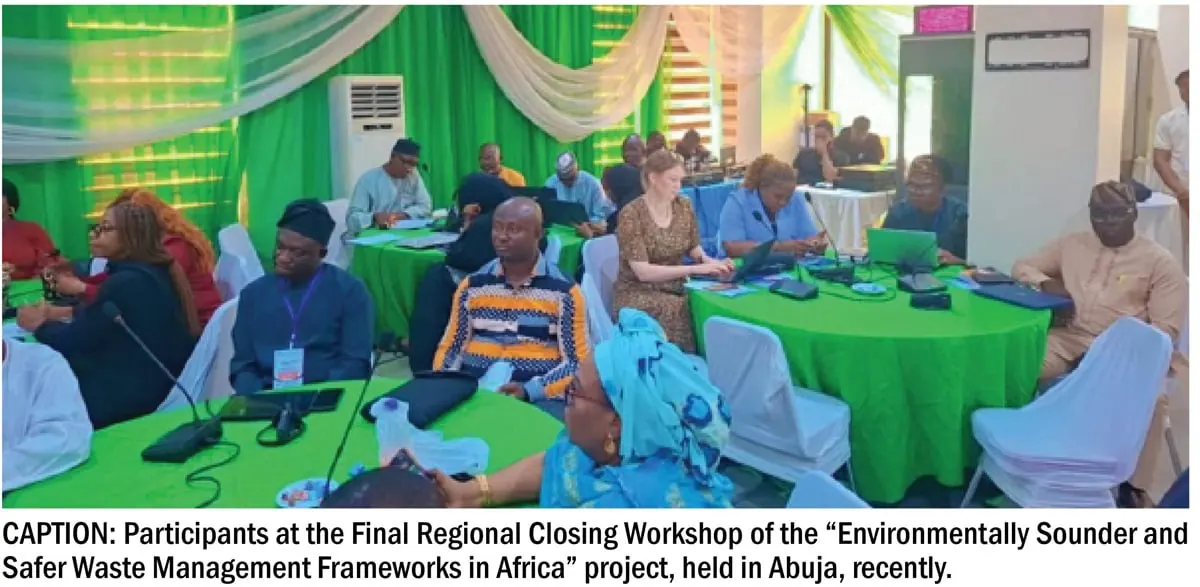
Nigeria, Sierra Leone, and Guinea-Bissau have urged for stronger laws, institutions, and sustainable financing to tackle Africa's growing waste-management crisis. This call was made at the Final Regional Closing Workshop of the "Environmentally Sounder and Safer Waste Management Frameworks in Africa" project in Abuja. The workshop, hosted by the National Environmental Standards and Regulations Enforcement Agency (NESREA), was funded by the United Nations Development Account (UNDA) and led by the United Nations Environment Programme (UNEP).
The project aimed to strengthen national and regional systems for environmentally sound and safer waste management. NESREA Director-General, Professor Innocent Barikor, emphasized that Africa can no longer treat waste management as a peripheral environmental issue. He noted that inadequate infrastructure, insufficient funding, and limited public awareness are major obstacles to effective waste management in many African countries. The project recommendations will help strengthen legislative and institutional frameworks while promoting the inclusion and protection of informal waste workers.
The workshop provided an opportunity for policymakers, regulators, development partners, and representatives of participating countries to review the project's findings and agree on pathways for implementation. Professor Barikor said the initiative is consistent with Nigeria's drive towards a circular economy and resource efficiency. He stressed that improved waste management can deliver economic, social, and environmental benefits simultaneously. The NESREA boss urged participants to ensure that the project's recommendations translate into concrete and sustainable actions.
Deputy Minister of Environment of Sierra Leone, Mrs Yeama-Mimi Sobba-Stephens, commended UNEP for its technical leadership and support. She noted that the project is particularly relevant to Sierra Leone, where rapid urbanization, population growth, and inadequate infrastructure are putting increasing pressure on waste-management services. Sobba-Stephens said the initiative has enabled Sierra Leone to examine waste management as part of an integrated waste-governance system. The country has identified the need for a comprehensive and harmonized legal framework covering the entire waste hierarchy.
The project's recommendations are expected to provide a basis for participating countries to strengthen their legal and institutional systems, improve protection for waste workers, and build more sustainable approaches to managing waste. Legal Specialist, UNEP Law Division, Valentina Ricca, said the initiative was designed to help participating countries strengthen their waste-management systems and address challenges confronting informal workers. The project began in 2023 and was concluded this year, implemented by UNEP's Law Division in partnership with the UN-Habitat waste-management team.
Sobba-Stephens highlighted the role of informal waste workers in collection, sorting, recycling, and maintaining community cleanliness. However, she noted that many of the workers continue to operate without adequate recognition, occupational health and safety protection, social protection, and appropriate equipment. She called on UNEP and regional partners to sustain technical exchanges, peer learning, and resource mobilization to support implementation of the project's recommendations.
The project's findings and recommendations will inform policy and legislative reforms, strengthen institutional capacity, ensure gender inclusion, protect the rights of children, and improve overall waste management outcomes. The participating countries aim to shift from systems largely centered on waste collection and dumping towards circular economies in which materials can remain in productive use for as long as possible. The initiative's success will depend on the implementation of the project's recommendations and the commitment of the participating countries to address the waste-management crisis.
Key points
- The three countries call for stronger laws and funding to address Africa's growing waste-management crisis and transition to a circular economy.
- The project recommendations will help strengthen legislative and institutional frameworks while promoting the inclusion and protection of informal waste workers.
- Improved waste management can deliver economic, social, and environmental benefits simultaneously.