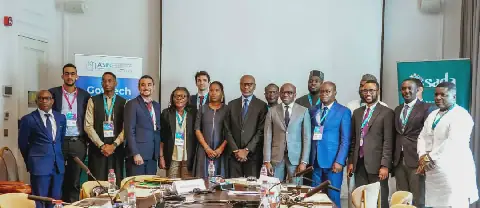
The Central Bank of Nigeria Governor, Olayemi Cardoso, has stated that Nigeria's support for the proposed ECO currency is contingent upon a specific rule: those who finance the currency must also have a say in its governance. Cardoso made this statement at the ministerial session of the 6th meeting of the ECOWAS Presidential Task Force in Abidjan on November 20, 2026. He emphasized that the decisions made today will shape the future of the Monetary Union for decades to come.
Cardoso's comments suggest that Nigeria, as the largest economy in the region, bears a significant burden and should have a substantial role in decision-making. He noted that larger economies should be considered as playing a significant role due to the risks and systemic importance they represent in the sub-region. This statement comes as the ECOWAS bloc prepares to introduce the ECO currency, expected to start in 2027.
The ECOWAS Council of Convergence had requested the Presidential Working Group to meet urgently in September. The group now comprises 12 members, following the departure of Burkina Faso, Mali, and Niger in January 2025. The Guinea government secured a seat in July. A summit is scheduled for December to discuss the future of the ECO currency.
In response to concerns about Nigeria's intentions, the country's government has denied any desire for domination, emphasizing its commitment to solidarity and equity. According to Cardoso, Nigeria has demonstrated and will continue to demonstrate its solidarity and fairness, respecting the sovereignty of other member states.
The proposed ECO currency aims to promote economic integration and cooperation among ECOWAS member states. The introduction of a single currency is expected to facilitate trade, investment, and economic growth in the region. However, the governance structure of the currency remains a critical issue, with Nigeria pushing for proportional representation.
ECOWAS member states have been working towards a monetary union for several years. The bloc has made significant progress, including the establishment of a single market and a customs union. The introduction of the ECO currency is seen as a crucial step towards deeper economic integration.
The outcome of the December summit will be crucial in determining the future of the ECO currency and the governance structure of the Monetary Union. Nigeria's conditions for support will likely be a key point of discussion, as member states seek to balance the interests of larger and smaller economies.
Key points
- Nigeria demands proportional representation in ECO governance.
- ECO currency introduction expected to start in 2027.
- ECOWAS bloc comprises 12 members following changes in 2025.