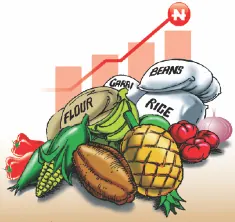
A recent survey conducted by Enhancing Financial Innovation & Access (EFInA) in collaboration with the National Bureau of Statistics (NBS) has highlighted a significant change in borrowing behavior among Nigerians. The 2026 Access to Financial Services in Nigeria (A2F) Survey, which covered 18,679 adults across the 36 states and the Federal Capital Territory (FCT), found that consumption borrowing has increased, while credit channeled into farming, starting a business, or capital expenditure has decreased. This shift has implications for the country's economic growth and financial stability.
The survey revealed that about 45.8 per cent of formal credit users reported some or serious repayment stress, while 83.8 per cent experienced ongoing financial stress. This distress is concerning, as it indicates that many individuals are struggling to repay their loans. The increase in consumption borrowing, which rose from 31.7 per cent in 2023 to 41 per cent in 2026, is a major contributor to this stress. This type of borrowing is often used to cover basic essentials such as food, rent, school fees, and medical bills.
According to the Governor of the Central Bank of Nigeria (CBN), Mr. Olayemi Cardoso, inflation remains a major obstacle to meaningful financial inclusion. Inflation erodes purchasing power and savings, while increasing borrowing costs. This makes it challenging for individuals to access affordable credit and for businesses to invest in productive activities. The survey's findings suggest that the macroeconomic pressures and rising cost of living are forcing consumers to utilize credit to meet daily household necessities rather than for economic expansion.
The survey also found that formally employed adults earning under N200,000 monthly are highly concentrated among those borrowing for consumption. This group is particularly vulnerable to financial shocks, as they have limited disposable income and savings. The primary drivers of consumption borrowing include rent, emergency medical bills, and school fees. This highlights the need for targeted interventions to support low-income earners and improve their financial resilience.
A similar report, the Direct Nigeria Consumer Credit Insight 2025, also revealed that most Nigerians borrow for basic living essentials rather than for business expansion. This suggests that the trend of consumption borrowing is not unique to the 2026 A2F Survey and that it is a persistent issue in Nigeria. The report's findings underscore the need for policymakers to address the underlying challenges driving this trend.
The structural reforms introduced by the President Bola Tinubu government since May 2023 have stabilised the macroeconomic fundamentals. However, the consequences of these reforms have been severe for most ordinary Nigerians. The side effects of the reforms have increased the vulnerability of Nigerians, particularly low-income earners, who are struggling to cope with the rising cost of living. The government and policymakers must consider the impact of their policies on the most vulnerable members of society.
The increasing trend of consumption borrowing has significant implications for Nigeria's economic growth and financial stability. As more individuals borrow for consumption rather than productive activities, it can lead to a decrease in investment and economic expansion. This, in turn, can exacerbate poverty and inequality, creating a vicious cycle that is challenging to break. Therefore, it is essential for policymakers to develop targeted interventions to support low-income earners, improve financial inclusion, and promote productive borrowing.
Key points
- Consumption borrowing in Nigeria has increased from 31.7 per cent in 2023 to 41 per cent in 2026, driven by macroeconomic pressures and rising cost of living.
- About 45.8 per cent of formal credit users reported some or serious repayment stress, while 83.8 per cent experienced ongoing financial stress.
- Low-income earners, particularly formally employed adults earning under N200,000 monthly, are highly concentrated among those borrowing for consumption.