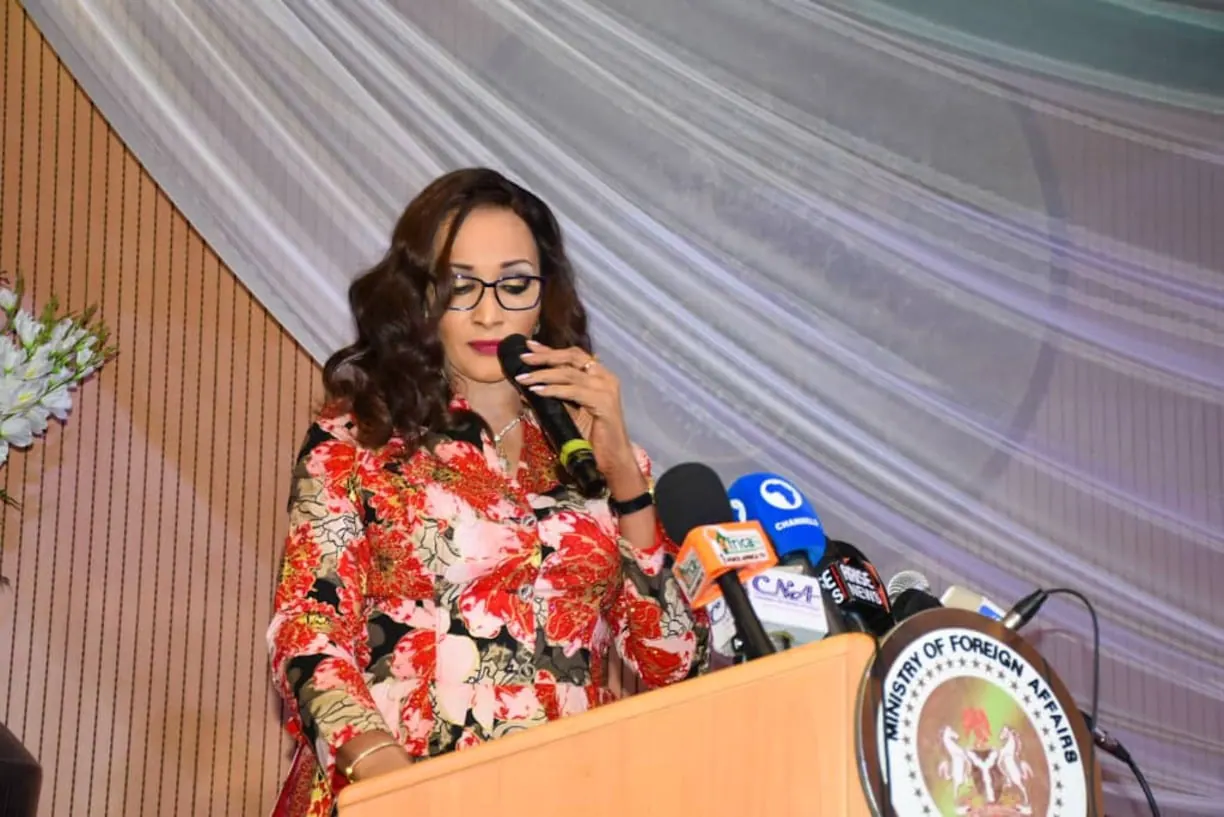
Nigeria's Minister of Foreign Affairs, Ambassador Bianca Odumegwu-Ojukwu, has called for predictable and sustainable financing, stronger coordination, and improved early-response mechanisms to strengthen the African Union's peace and security architecture. This call was made during the Consultative Forum on Strengthening the Functional Performance of the African Union Peace and Security Architecture in Abuja. The forum aims to implement the African Union Assembly's Decision 967 of February 2026.
The Minister highlighted Nigeria's concerns about the spread of terrorism from the Sahel towards the coastal states of West Africa, as well as across the Lake Chad Basin, Horn of Africa, Great Lakes, and northern Mozambique. Terrorist groups are increasingly deploying drones, illicit financial flows, and links with organised crime and illegal artisanal mining to expand their operations. The minister also warned that intense geo-strategic competition and the weakening of multilateralism were placing additional pressure on Africa's peace and security efforts.
Odumegwu-Ojukwu noted that while the AU's peace and security architecture remained one of the most ambitious regional systems globally and had delivered significant results, gaps persisted between its aspirations and realities on the ground. She stated that the AU's presence remained weak in some conflict hotspots, while counter-terrorism efforts were often fragmented, reactive, and underfunded. The minister urged African countries to build a more resilient, better-resourced, and self-reliant peace and security architecture anchored on African leadership.
The two-day forum focuses on mediation, dialogue, and preventive diplomacy; early warning and response; counter-terrorism; and peace support operations. On early warning and mediation, the minister said prevention remained cheaper, faster, and more humane than responding after violence had erupted. She called for the Continental Early Warning System to provide the Peace and Security Council with short, timely, and decision-oriented briefs containing concrete response options.
Nigeria supports the establishment of a mediation coordination mechanism to clarify the respective roles of the AU, Regional Economic Communities, and Regional Mechanisms, and the United Nations. This would prevent conflicting mediation efforts and ensure that parties to disputes could not exploit duplicated mediation tracks. The minister proposed a vetted roster of African mediators and technical experts who could be deployed within days.
On counter-terrorism and preventing violent extremism, Odumegwu-Ojukwu said African countries must prioritise addressing local grievances, youth unemployment, and community resilience. She warned that weak oversight and loosely defined counter-terrorism laws could erode public confidence and fuel terrorist recruitment. The minister also called for stronger support for national infrastructures for peace and the African Peer Review Mechanism to address governance deficits that often underpin conflicts.
The minister expressed hope that the forum would produce practical and implementable recommendations that could be readily embraced by AU member states. She thanked the African Union Commission, delegates, and partners for their participation and expertise. The forum aims to address the challenges facing the AU's peace and security architecture and provide a way forward for the continent.
Key points
- Nigeria calls for predictable funding to strengthen the African Union's peace and security architecture.
- The African Union's peace and security architecture faces gaps between aspirations and realities on the ground.
- Nigeria urges African countries to build a more resilient, better-resourced, and self-reliant peace and security architecture.