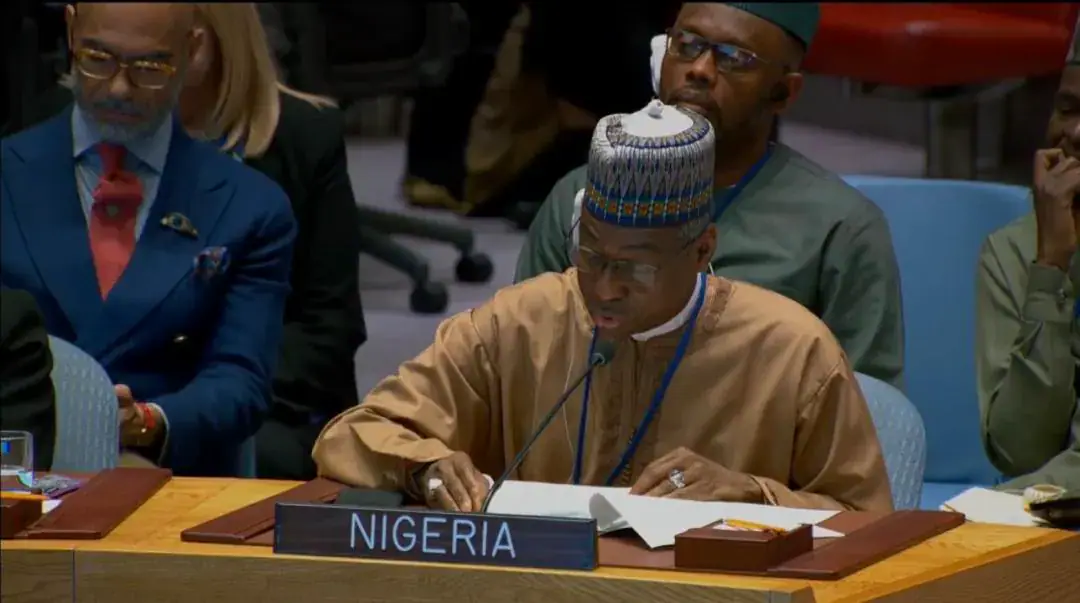
Nigeria has emphasized the need for greater and more meaningful participation of women in peace negotiations. The country's Permanent Secretary in the Ministry of Foreign Affairs, Ambassador Dunoma Umar Ahmed, made this call at the United Nations Security Council Open Debate on Women, Peace and Security. The debate was held on October 27, 2026, at the UN Headquarters in New York. Ambassador Ahmed expressed concern over the continued exclusion of women from UN-led peace processes.
Despite global commitments to gender inclusion, women remain underrepresented in peace processes. According to Ambassador Ahmed, women accounted for only five per cent of lead negotiators and 14 per cent of mediators across 57 negotiation processes in 2025. Furthermore, only 10 peace agreements explicitly referenced women. This underrepresentation is concerning, given the critical role women play in peacebuilding.
Conflict-related sexual violence has increased significantly since 2024, with a more than twofold rise in reported cases. Ambassador Ahmed described this situation as particularly alarming in Africa, where conflicts in the Sahel, Lake Chad Basin, Sudan, and the Great Lakes region continue to threaten peace and security. The impact of these conflicts on women and girls has been devastating.
Nigeria has experience with the devastating impact of terrorism, abductions, and displacement on women and girls, particularly in the North-East. However, Ambassador Ahmed highlighted the critical contributions of women to peacebuilding as community mediators, first responders, and members of security forces. Women's participation is essential for sustainable peace.
Nigeria has implemented measures to protect women and girls, including the National Action Plan on the United Nations Security Council Resolution 1325 and the Violence Against Persons (Prohibition) Act. The country has also reaffirmed its commitment to regional frameworks, such as the ECOWAS Regional Action Plan and the African Union Continental Results Framework on Women, Peace and Security.
To strengthen implementation, Nigeria has called for the institutionalization of women's participation in peace negotiations, predictable funding for national and local action plans, and increased support for women-led organizations in conflict-affected communities. The country also stressed the need to preserve gender expertise in peace operations and ensure survivors of conflict-related sexual violence have access to justice and support.
Nigeria has reaffirmed its commitment to working with the United Nations Security Council, the African Union, and other international partners to translate Resolution 1325 into measurable outcomes. Ambassador Ahmed emphasized that sustainable peace in Africa cannot be achieved without the full and meaningful participation of women and girls. The country will continue to advocate for women's inclusion in peace processes.
Key points
- Nigeria calls for greater participation of women in peace negotiations.
- Women remain underrepresented in peace processes, despite global commitments to gender inclusion.
- Conflict-related sexual violence has increased significantly since 2024.