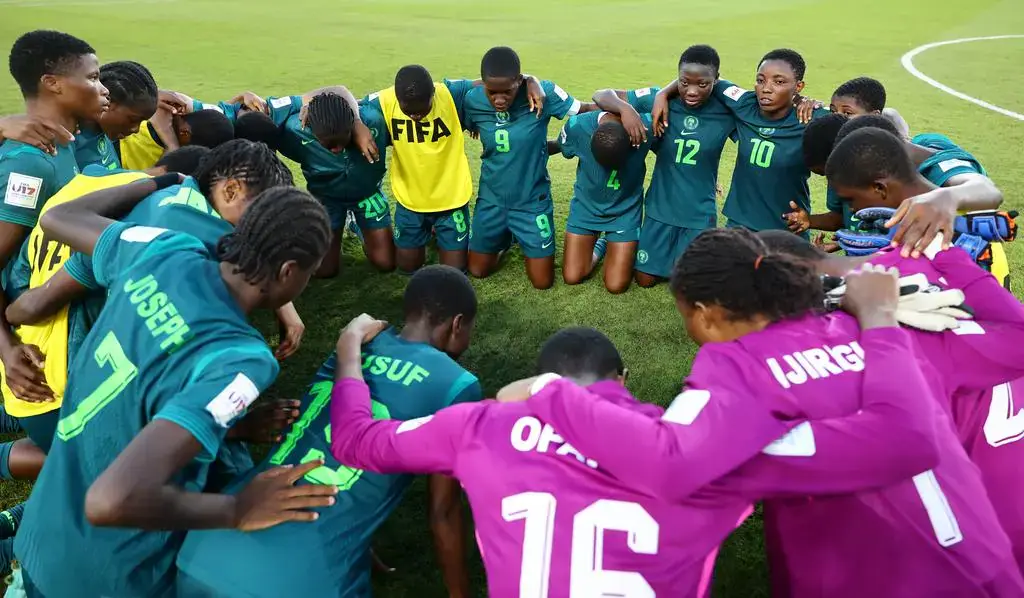
The Nigerian women's youth football team, known as the Flamingos, has made history by reaching the final of the FIFA U-17 Women's World Cup in Morocco. With just 90 minutes separating them from an extraordinary piece of history, the young girls have given the country something it badly needs: hope, pride and a glimpse of the future of women's football. Their journey to the final has been impressive, with five wins and one loss in six games.
The Flamingos' road to the final was not smooth, as they suffered an opening-day defeat to Poland. However, they regrouped and fought their way back, treating the defeat as a lesson and correcting their mistakes. This response deserves enormous credit, as it shows the team's determination and resilience. Local coach Hakeem Busari has been instrumental in the team's transformation, adjusting his approach and making substitutions that have produced a side that looks increasingly confident and dangerous.
Busari's influence on the team has been significant, as he has understood the young Nigerian players, identified their weaknesses and built a team that can challenge the world's best. The players have also stayed grounded despite the growing attention, understanding that reaching the final is an achievement, but winning it is the assignment. There is a maturity about this group that goes beyond their age, with five different players winning Player of the Match awards in six games.
The Flamingos do not depend on one superstar to rescue them, as different players have stepped forward when the occasion demanded it. This is a hallmark of a united team, and it reflects well on Nigeria's grassroots and club football. Robo Queens, Heartland Queens and Confluence Queens now have players recognised on one of FIFA's biggest youth stages, and the wider ecosystem that produced them must be strengthened and sustained.
Nigeria is 90 minutes from becoming the first African nation to win the FIFA U-17 Women's World Cup, a landmark for the continent and a defining moment for Nigerian football. This would carry symbolic weight, as a team coached by a Nigerian and built on players developed in the domestic game challenges the assumption that international success must depend on foreign expertise.
However, the wider picture is not all positive, as the Super Falcons' failure to qualify for next year's FIFA Women's World Cup remains a painful disappointment. The Nigeria Football Federation must understand that the work does not end with the final whistle in Rabat, and the team deserves continuity. The technical crew should be supported, the players tracked, and the best of them integrated into long-term development plans.
The Flamingos will take the field on Saturday, November 7, 2026, at Pitch 3 of the Mohammed VI Football Complex in Rabat, with kick-off at 7:30 pm Nigerian time. The expectations are enormous, but they should not become a burden. Nigeria wants the trophy, and Nigeria wants these girls to finish what they have started, playing with the same courage, organisation, discipline and freedom that brought them this far.
Key points
- The Nigerian women's youth football team has reached the final of the FIFA U-17 Women's World Cup, 90 minutes from making history as the first African nation to win the title.
Reporting sources
- Nigerian women’s youth football: 90 minutes from history · The Nigerian Observer