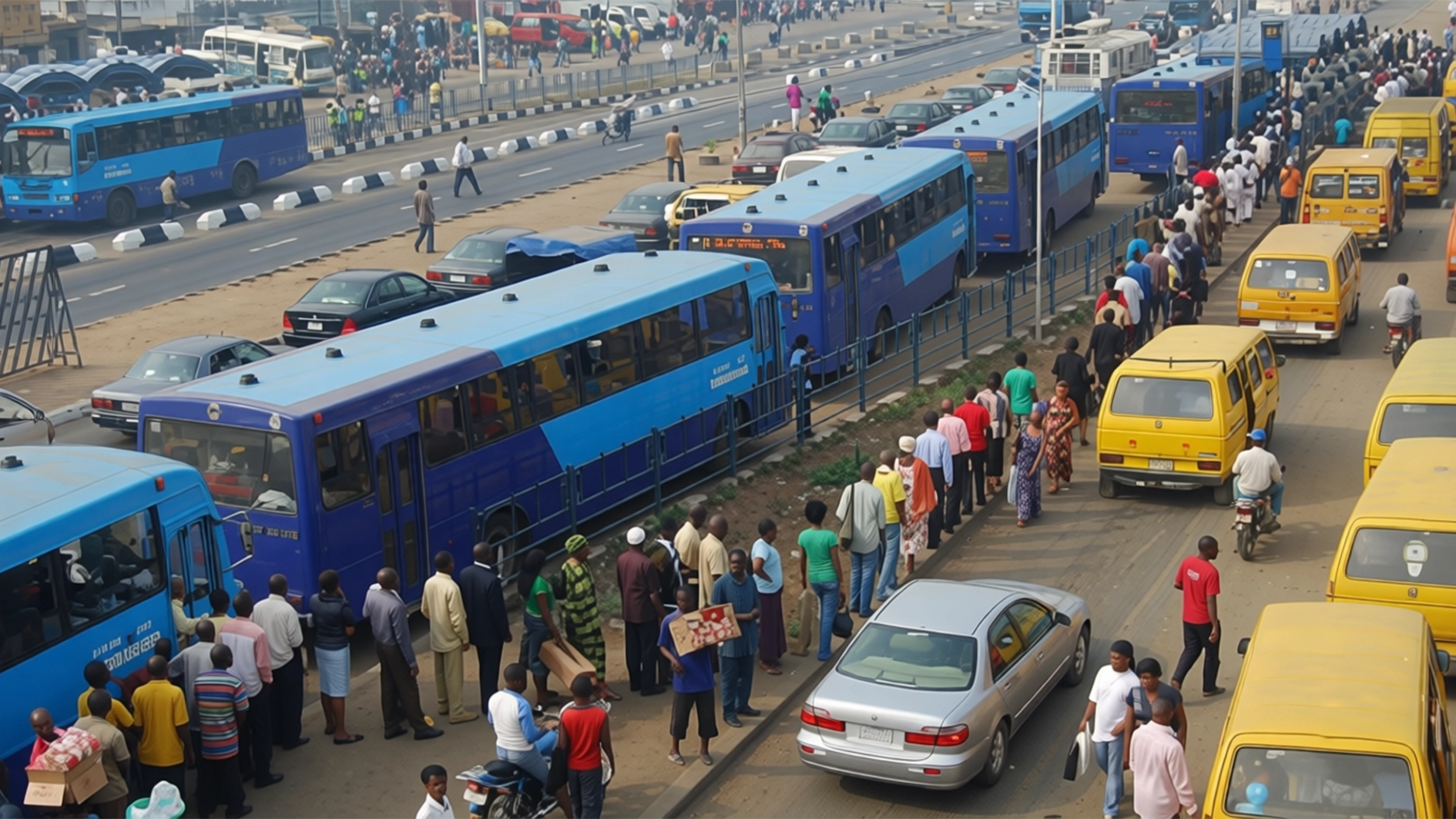
The Nigerian government had promised to slash transport costs by October 1st, 2026, but the deadline has passed without significant progress. The country's transport sector has been a major driver of inflation and household spending since the removal of the petrol subsidy three years ago. According to the National Bureau of Statistics (NBS), transport costs increased by 77 per cent between 2023 and 2024.
In August 2026, President Bola Tinubu announced that a joint federal and state committee would implement measures to bring down transport costs by leveraging CNG and electric vehicles. The President claimed that the government had already invested significantly in the energy transition through the Presidential CNG Initiative, with over 120,000 vehicles converted nationwide.
Despite the government's efforts, the reality on the ground is that the CNG intervention has delivered barely 12 per cent of what was promised. There are currently only 90 functional CNG refuelling stations nationwide, and the $2 billion investment promised to deliver around 120,000 conversions at 400 conversion centres remains far short of the one million vehicles targeted.
The cost of retrofitting personal and commercial vehicles is still high, despite government intervention. Additionally, there are poor distribution networks and limited gas transport trucks to support the system. Several states have launched CNG schemes, but the deployment of CNG buses is too few to make an impact.
Lagos, one of the country's most populous states, has deployed just 20 CNG buses since November 2024. Other states are still at the policy stage and have yet to establish CNG filling stations. The government's failure to deliver on its promises has led to criticism that it is more focused on rhetoric than action.
The opposition has argued that the government has not prioritized the welfare of Nigerians, and that its policies have exacerbated the country's economic challenges. Atiku Abubakar, candidate of the African Democratic Change (ADC), had proposed redesigning the fuel subsidy policy to alleviate its impact on citizens.
To address the country's transport challenges, the government needs to match its words with action and prioritize the welfare of Nigerians. The safety aspects of CNG must also be taken seriously, and the government should invest in education and training for users to ensure that the technology is used effectively.
Key points
- The Nigerian government's efforts to reduce transport costs have fallen short, despite investing in CNG and electric vehicles.
- The country's transport sector has been a major driver of inflation and household spending since the removal of the petrol subsidy.
- The government needs to prioritize the welfare of Nigerians and match its words with action to address the country's transport challenges.