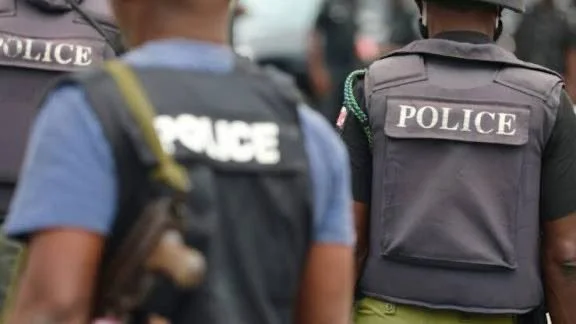
The State Police Bill, transmitted to state assemblies by the National Assembly on 16 September 2026, has seen a slow response from many state legislatures. Only four states - Edo, Osun, Oyo, and Rivers - have passed the bill into law. The slow pace of adoption has raised concerns about the willingness of state assemblies to implement the bill.
The Speaker of the Delta State House of Assembly (DSHA), Hon Dennis Guwor, who chairs the Conference of Speakers of State Legislatures of Nigeria, explained that the delay is due to the need for thorough consultation. According to Guwor, the state assemblies received the police bill and are following the due legislative process.
In an interview, Guwor assured that the Delta House of Assembly's position would be made public after consultation with key stakeholders. He emphasized that the interest of Deltans remains a top priority, hence the need for due diligence. This approach is being adopted by several state assemblies to ensure that the bill is thoroughly examined.
Not all state assemblies have been forthcoming with information about their progress on the bill. In Kwara, efforts to obtain information from the clerk of the House, Alh AbdulKareem Olayiwola Ahmed, and the House leader, Hon. AbdulKadir Oba Magaji, were unsuccessful. An official who wished to remain anonymous stated that the House would reconvene on Tuesday to discuss the bill.
In contrast, the Kano State House of Assembly has commenced consideration of the State Police Bill. The Chief Press Secretary to the Speaker, Kamaluddeen Shawai, stated that copies of the bill had been circulated to all members for study and analysis. The bill is expected to undergo its second reading on 12 October 2026.
The Kano State House of Assembly's Speaker, Jibril Isma’il, emphasized the state's commitment to addressing security challenges through proactive legislation. He noted that although Kano remains relatively peaceful, strengthening the state's security architecture is necessary to sustain peace and address emerging security threats.
Other state assemblies, such as Imo, have also received the bill and are preparing to discuss it. The Clerk of the Imo State House of Assembly, Mrs Chinelo Emeghara, stated that lawmakers had resumed and would discuss the bill. The slow pace of adoption has raised concerns, but it appears that many state assemblies are taking a cautious approach to implementing the bill.
Key points
- Only four Nigerian states have passed the State Police Bill into law since its transmission by the National Assembly in September 2026.
- Many state assemblies are taking a cautious approach to implementing the bill, citing the need for thorough consultation and examination.
- The bill aims to strengthen state security architecture and address emerging security threats.