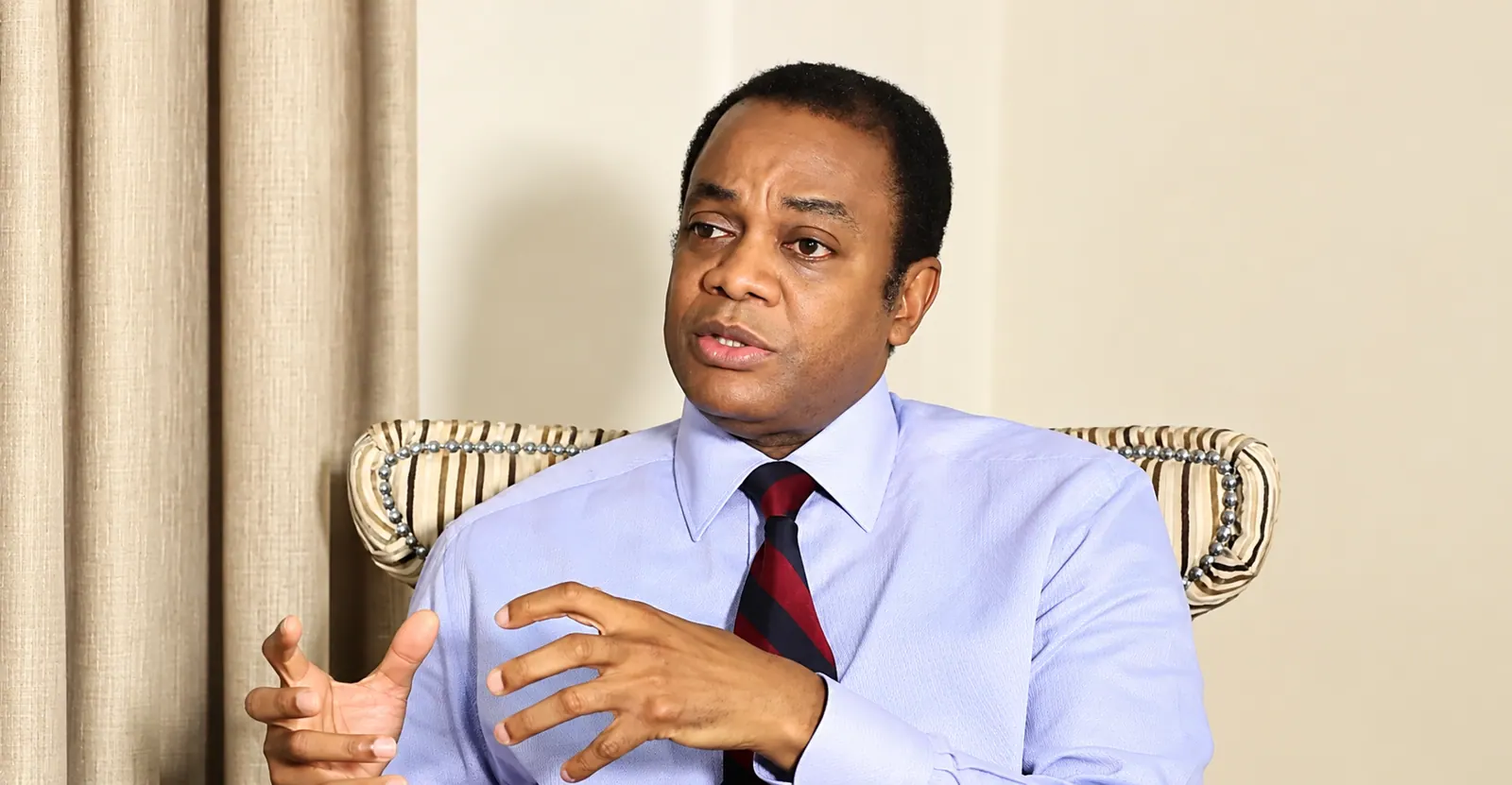
Former Cross River State governor and presidential candidate of the Peoples Redemption Party (PRP), Donald Duke, has expressed concerns over Nigeria's economic growth, stating that the country's spending has remained stagnant despite a significant increase in population. According to Duke, Nigeria's population has more than tripled since the administration of former President Shehu Shagari, from 76 million to approximately 230 million. He noted that the country's annual budget has remained around $25 billion, the same amount spent during Shagari's era.
Duke argued that the comparison between Nigeria's current spending and that of the Shagari era shows that government expenditure and productive capacity have failed to keep pace with population growth. He emphasized that the economy has not grown, and in fact, has shrunk, as $25 billion in 1979 or 1980 is not equivalent to $25 billion today. The former governor attributed the consequences of this failure to unemployment, poverty, insecurity, and increasing desperation among Nigerians.
Duke stated that government's fundamental responsibility is to create an environment in which citizens can be productive while ensuring security and public order. He emphasized that the essence of government is to ensure the utmost productivity of citizens within a safe and orderly environment. Duke also linked economic deprivation to ethnic, religious, and regional tensions, arguing that citizens increasingly resort to identity politics because they believe it can give them an advantage in accessing scarce opportunities.
The former governor noted that Nigeria needs a national development vision capable of aligning public expenditure, infrastructure, education, and economic policy with increased productivity. He questioned the priority accorded to the Lagos-Calabar Coastal Highway, arguing that the government should consider the opportunity cost of committing substantial resources to the project when other pressing needs remain. Duke cited the large number of out-of-school children and Nigerians living in poverty as areas requiring more urgent government attention.
Duke expressed concerns over the country's high number of out-of-school children and the large population of poor people, stating that building a fancy road from Victoria Island to Calabar is not a priority. He emphasized that Nigeria's central economic challenge is to make its growing population productive rather than allow scarcity and deprivation to deepen social divisions. The former governor maintained that the real task is to make Nigerians productive.
According to Duke, the country's economic growth has been hindered by decades of failure to expand the economy and productivity in step with its rapidly growing population. He argued that citizens increasingly resort to identity politics because they believe it can give them an advantage in accessing scarce opportunities. Duke emphasized that Nigeria needs to address the issue of productivity to alleviate poverty, insecurity, and social tensions.
Duke concluded that Nigeria's economic challenges can be addressed by making its people productive and ensuring that government expenditure and productive capacity keep pace with population growth. He emphasized that the government should prioritize the needs of its citizens, particularly in areas such as education and poverty reduction. The former governor's comments highlight the need for Nigeria to re-evaluate its economic growth strategy and prioritize the needs of its growing population.
Key points
- Nigeria's population has grown from 76 million to 230 million since the Shagari era, but the country's annual budget remains around $25 billion.
- Duke attributes the consequences of Nigeria's economic stagnation to unemployment, poverty, insecurity, and increasing desperation among Nigerians.
- The former governor emphasizes the need for a national development vision to align public expenditure, infrastructure, education, and economic policy with increased productivity.