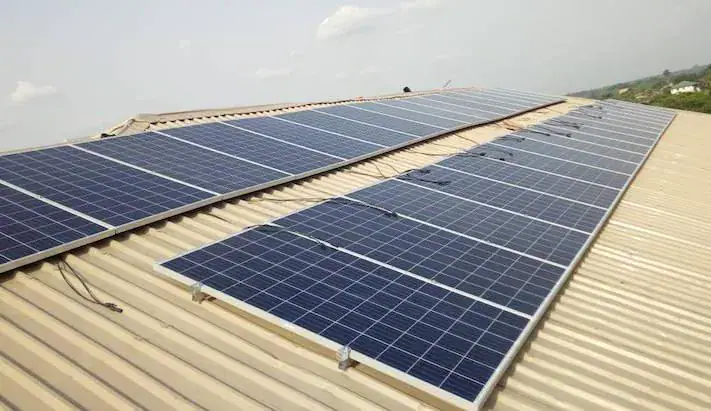
Kelvin Okechukwu, CEO of Panama Hotel and Suites, has seen a significant reduction in diesel expenses after switching to solar energy. His hotel's monthly diesel expenditure dropped from N10 million to between N6 million and N7 million, saving almost N3 million. Although the hotel's solar installation provides electricity for only 8-10 hours daily, the reduction in fuel expenses has brought relief. This experience reflects a growing trend in Nigeria, where businesses and households are investing in solar energy to escape unreliable electricity supply and rising generator costs.
Nigeria's solar energy sector has experienced significant growth, with annual installations increasing from 15 megawatts (MW) in 2019 to 123MW in 2024. Operational solar capacity has reached approximately 620MW, with the country leading West Africa and ranking as Africa's second-largest commercial and industrial solar market after South Africa. The Africa Solar Industry Association (AFSIA) projects that operational and ongoing solar projects could exceed 200MW in 2026, with 89MW already operational and another 115MW under construction. Nigeria's mini-grid capacity has also reached 132MW, representing about 31 per cent of Africa's total.
Industry experts attribute the growing adoption of solar energy to the high cost of alternative electricity and the national grid's inability to provide reliable power. For businesses relying on generators, diesel purchases, maintenance, and repairs have become significant operating expenses. Benjamin Clarke, Director of Operations at AFSIA, notes that the national grid's inability to meet businesses' electricity needs is a major reason for the shift to solar. Yischai Beinisch, CEO of Daystar Power Group, adds that economic benefits, rather than environmental concerns, drive the growing demand for solar energy.
However, Daniel Adeyemi offers a different perspective, suggesting that Nigerians' increasing reliance on alternatives reflects a tendency to seek immediate relief instead of addressing the causes of national problems. This raises questions about whether the growing adoption of privately generated electricity could weaken public pressure on authorities to fix the country's longstanding electricity problems. Despite this, government policies are creating opportunities for renewable energy development, including new mini-grid regulations and net-billing regulations.
The Nigerian Electricity Regulatory Commission introduced new mini-grid regulations in April 2026, increasing the capacity limit for isolated mini-grids to 5MW and interconnected mini-grids to 10MW. The commission also introduced net-billing regulations, allowing eligible renewable energy users to receive credits for surplus electricity supplied to distribution networks. The $750 million Distributed Access through Renewable Energy Scale-up (DARES) programme, supported by the World Bank, aims to provide new or improved electricity access to 17.5 million Nigerians through mini-grids and standalone solar systems.
Lagos State is also addressing its electricity deficit after assuming regulatory control over its electricity market. With electricity demand estimated at approximately 12,000MW against supply historically below 1,000MW, the state is seeking investments to expand electricity generation. Olamide Niyi-Afuye, CEO of the African Mini-grid Developers Association, emphasizes that electricity access should go beyond connecting people to power and focus on the economic activities reliable electricity could support, such as agricultural processing and cold storage.
Improvements in solar technology are supporting the industry's expansion, with JinkoSolar's Tiger Neo 3 modules offering efficiency of up to 24.8 per cent. Solar investments are moving beyond small household installations, with projects including a 1MW solar installation with battery storage at the Oyo State Secretariat and a 2.5MW solar photovoltaic system with 4.8 megawatt-hours of storage at the National Theatre in Lagos. Despite growth, challenges persist, including high initial installation costs and dependence on imported equipment.
Key points
- Nigeria's solar energy sector has seen significant growth, with annual installations increasing from 15MW in 2019 to 123MW in 2024.
- The country's operational solar capacity has reached approximately 620MW, with a projected 200MW in 2026.
- Government policies, including new mini-grid regulations and net-billing regulations, are creating opportunities for renewable energy development.
Reporting sources
- Why solar is winning Nigeria’s blackout economy · Business Day