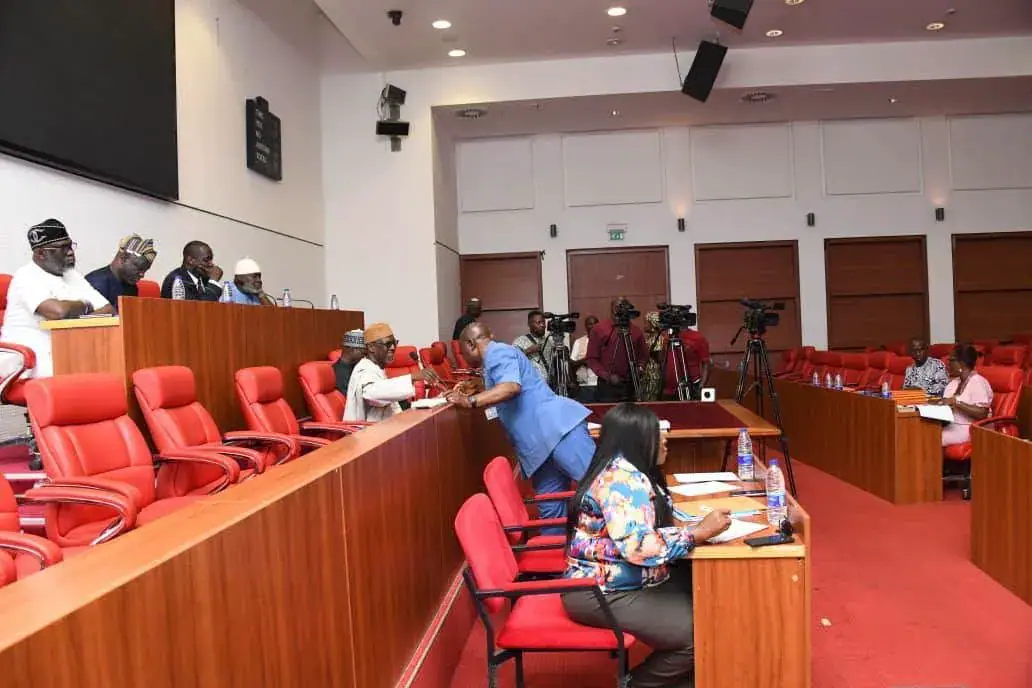
The Nigerian senate committee on gas resources has raised concerns over the inadequate supply of liquefied petroleum gas (LPG) to the domestic market. Chairman Agom Jarigbe stated that the shortfall could undermine efforts to reduce cooking gas prices in Nigeria. The committee aims to identify reasons for the inadequate supply and ensure that cooking gas prices decrease. Jarigbe emphasized that with adequate supply, prices will naturally go down. The committee is working to address the issue and make LPG more available to Nigerians.
Industry operators cited the ratio of propane to butane as a reason for exporting LPG. Jarigbe mentioned that operators export LPG with an 80-20 ratio of propane to butane, but for local consumption, the ratio could be reversed to 20% propane and 80% butane through blending. The committee is investigating this claim and its impact on domestic LPG supply. According to Jarigbe, the committee is determined to get to the root of the issue and make LPG more affordable for Nigerians.
Caroline Niagwan, deputy comptroller-general of the Nigeria Customs Service (NCS), presented data on LPG exports. In 2024, 190.8 metric tonnes of LPG were exported, while in 2025, 32.8 metric tonnes were exported. The cumulative volume of LPG exports for the two-year period stood at 223.699 metric tonnes. Niagwan also stated that there were no records of LPG exports at Escravos in 2026, as exports require clearance certificates.
Niagwan explained that for LPG exports to be recorded, an export clearance certificate must be sent to the NCS by the federal ministry of industry, trade and investment. The exporter must also make a declaration on the automated system. The NCS only had records of LPG exports for 2024 and 2025. The approved export volumes for LPG stood at 400 metric tonnes for the Nigerian National Petroleum Company Limited (NNPC) and 386.4 metric tonnes for Chevron.
Enorense Amadasu, a representative of the Nigerian Upstream Petroleum Regulatory Commission (NUPRC), stated that the offshore facility was originally designed for LPG export. The facility operates under a joint venture between the Nigerian government, represented by the NNPC, and Chevron. Amadasu mentioned that Chevron had requested Nigerian LPG off-takers to discuss the possibility of redirecting some LPG to the domestic market.
The committee will continue its engagement with stakeholders to address supply gaps, improve export revenue remittances, and ensure more LPG is available to Nigerians. The next meeting is scheduled for the following Tuesday. The committee's efforts aim to make LPG more accessible and affordable for Nigerians.
The senate committee's investigation into the inadequate LPG supply and high cooking gas prices is ongoing. Key points include the need for adequate supply to meet demand, the ratio of propane to butane in LPG exports, and the involvement of industry operators in addressing the issue. The committee's findings and recommendations will be crucial in determining the future of LPG supply in Nigeria.
Key points
- The Nigerian senate committee on gas resources is investigating the inadequate supply of LPG to the domestic market.
- Industry operators cite the ratio of propane to butane as a reason for exporting LPG.
- The committee aims to ensure that cooking gas prices decrease with adequate supply.