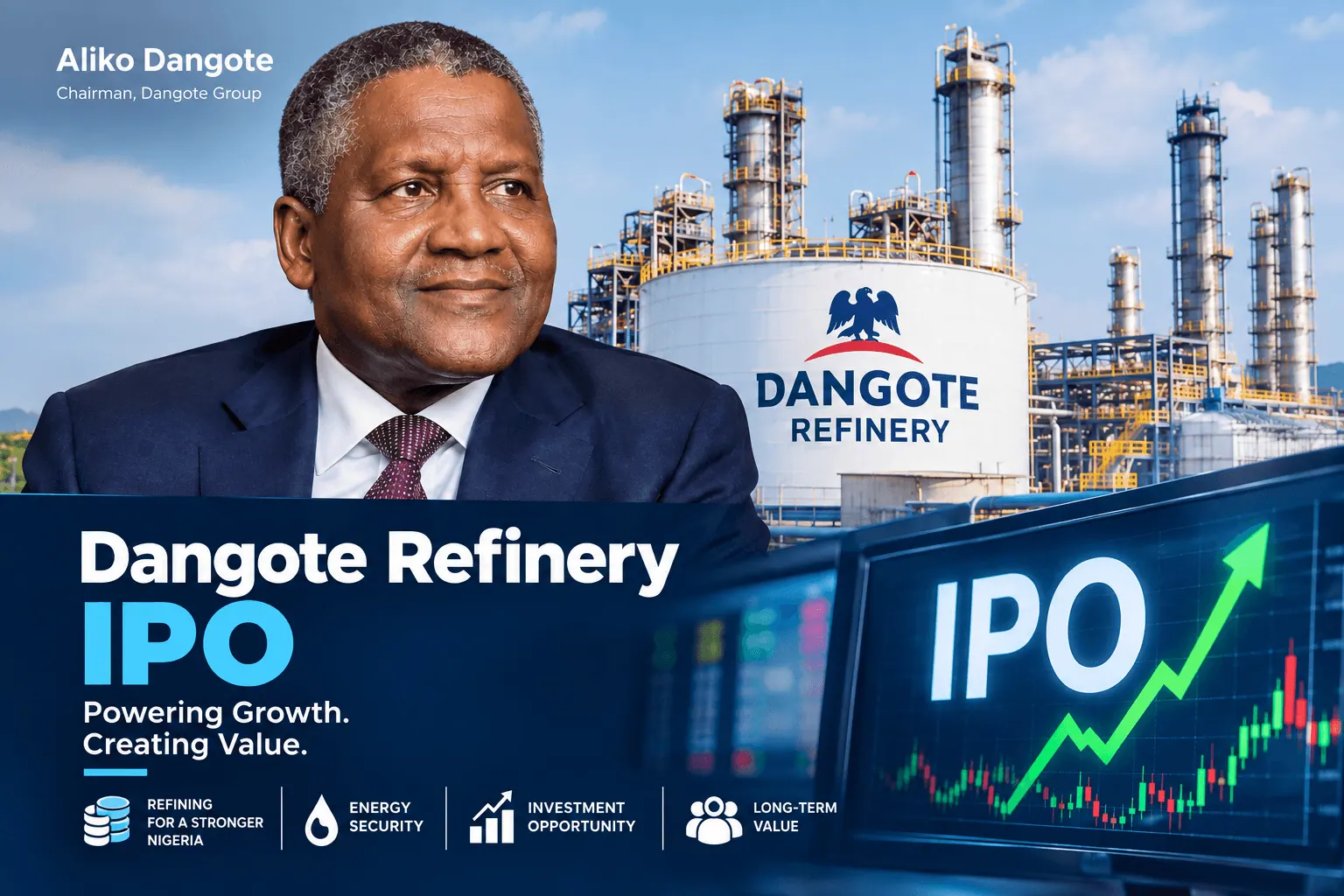
Nigeria's refining industry is drawing fresh scrutiny from capital markets as Dangote Petroleum Refinery advances toward a public listing, intensifying pressure on regulators and oil producers to guarantee crude supply. The industry's growth and economic value will be discussed at the Nigeria Oil Refining Summit 2026, set for September 28-30 in Lagos. The summit, themed "Refining for Value: Linking Upstream Supply to Downstream Demand," is hosted by the Crude Oil Refinery-Owners Association of Nigeria.
The summit arrives as Dangote refinery's move toward an initial public offering pulls global investors deeper into a sector long defined by fuel imports and idle state-owned plants. This shift has reframed refining as an asset class rather than just an infrastructure project, raising the stakes for Nigeria to prove the economics behind its refining buildout can hold up under investor scrutiny. The Dangote IPO has brought capital markets into the refining conversation, said Kunle Odusola-Stevenson, event director of NORS.
At the center of the conversation is crude supply, the input refiners say remains their biggest operational risk. Nigeria has installed substantial new refining capacity in recent years, but without predictable, commercially priced feedstock from domestic producers, that capacity cannot consistently translate into output, energy security, or foreign-exchange savings. The issue will anchor the summit's opening session, which will gather upstream producers, refiners, and regulators.
Confirmed speakers at the summit include Adegbite Falade, chairman of the Independent Petroleum Producers Group, and Matthew Bouyer, chairman of the Oil Producers Trade Section. Senior representatives from the Nigerian Upstream Petroleum Regulatory Commission, Seplat Energy, Renaissance Africa Energy, Aradel Holdings, Dangote Refinery, Pillar Oil, and NNPC Ltd will also attend. The summit aims to examine how Nigeria can attract capital, strengthen commercial linkages, and convert refining capacity into lasting economic value.
Organisers frame the summit's task plainly: Nigeria already has the refining capacity; what it needs now is the commercial architecture to make that capacity pay off. That means linking crude producers to refiners, refiners to fuel markets, and capital to projects investors consider bankable. The three-day event will bring together refiners, upstream producers, regulators, investors, development finance institutions, traders, and infrastructure providers.
The summit will position NORS 2026 as a barometer of how far Nigeria's refining ambitions have moved from installed capacity toward an investable, integrated industry. Oladehinde Oladipo, a skilled energy analyst, provides a blend of market intelligence, financial analysis, and industry insight. His expertise spans Nigeria's energy sector and macro economy, offering informed technical rudiments for policy-making and private directions.
The Nigeria Oil Refining Summit 2026 will take a comprehensive approach to addressing the challenges facing the refining industry. With a focus on converting refining capacity into durable economic value, the summit will explore ways to strengthen commercial linkages and attract capital. The event aims to provide a platform for stakeholders to discuss the industry's future and work toward a more integrated and investable refining sector.
Key points
- The Dangote IPO has brought capital markets into the refining conversation.
- Crude supply remains the biggest operational risk for refiners in Nigeria.
- The summit aims to examine how Nigeria can attract capital, strengthen commercial linkages, and convert refining capacity into lasting economic value.