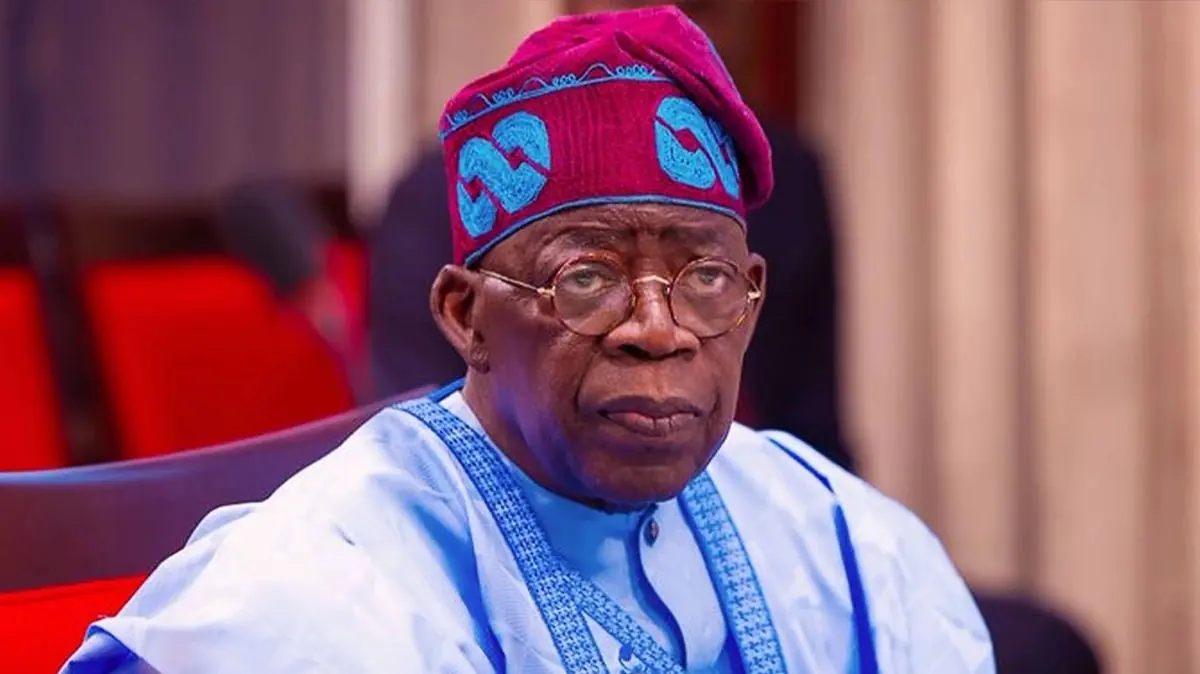
President Bola Tinubu's administration has been undertaking significant reforms to address Nigeria's economic challenges since May 2023. The Economist recently claimed that Nigerians dislike their President, but this claim has been disputed as it overlooks the monumental task of national salvage undertaken by the Tinubu administration. The administration has been working to transform the country's economic ecosystem, which was on the precipice of total sovereign bankruptcy when President Tinubu took office.
President Tinubu inherited a broken economic ecosystem with a massive financial leak in the fuel subsidy regime, which operated as a monumental financial drain, feeding the insatiable greed of a parasitic portfolio oil mafia while mortgaging the future of generations. The Nigerian economy also groaned under multiple, distorted foreign exchange windows that bred corruption and choked legitimate enterprise. Debt service-to-revenue ratios hovered near a staggering 95%, leaving the treasury virtually empty.
To address these structural contradictions, President Tinubu summoned the political courage to confront them head-on. The administration decisively terminated the burdensome fuel subsidy on Day One, stopping the bleeding of national resources and saving the federation trillions of Naira. The rationalisation of the forex market removed systemic arbitrage, boosted foreign portfolio investments, and saw trade surpluses and external reserves rebound robustly.
The implementation of the Nigerian Education Loan Fund (NELFUND) has transformed the academic landscape, with hundreds of thousands of indigent students now pursuing higher education without the burden of tuition. This has earned deep appreciation from students and parents nationwide. Additionally, the administration has championed and secured financial autonomy for local governments, bringing governance directly to the grassroots.
President Tinubu's administration has also introduced measures to cushion millions against inflationary pressures, including the upward review of the national minimum wage to a dignified floor, targeted palliatives, and the deployment of mass-transit Compressed Natural Gas (CNG) buses to cut commuter costs. Furthermore, the administration has laid the foundation for genuine national food sovereignty and rural economic revitalisation through massive fertiliser distributions, agro-loans, and the deployment of modern farming equipment.
Despite these efforts, external commentators have continued to criticise President Tinubu's administration, claiming that Nigerians harbour blind hatred for him. However, this claim collapses when considering the everyday reality of citizens who have benefited from the administration's policies. Many Nigerians recognise a leader doing the heavy, foundational lifting to clean up decades of accumulated governance debris.
Nigeria's political and economic ecosystem is admittedly complex, shaped by security challenges and global economic headwinds. However, external commentators' attempts to reduce this complex sovereign nation to a caricature of helpless misery do a disservice to the truth. President Bola Tinubu remains a master strategist whose bold, unyielding policy posture has put the nation on an irreversible path toward sustainable growth, fiscal independence, and enduring prosperity.
Key points
- President Tinubu's administration has implemented significant reforms to address Nigeria's economic challenges.
- The administration has terminated the fuel subsidy and rationalised the forex market to boost economic growth.
- Despite criticism, President Tinubu's policies have earned appreciation from citizens, particularly students and parents who have benefited from the Nigerian Education Loan Fund.