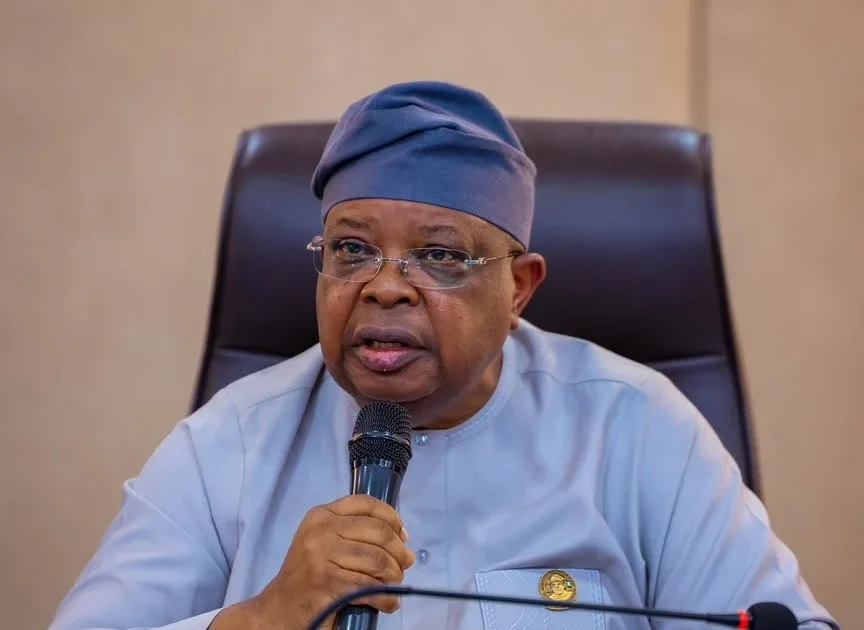
Nigeria's power sector crisis has continued to defy solutions despite various reforms, including privatization, tariff reforms, and market restructuring. The Minister of Power, Joseph Tegbe, has identified the problems as extending from gas supply through generation, transmission, and distribution. He noted that only 27% of GenCos' bills are being paid, while DisCos suffer aggregate technical, commercial, and collection losses of 30 to 40%.
The Minister's diagnosis is considered substantially correct, but the challenge lies in implementing the necessary solutions. Tegbe ruled out another electricity tariff increase, acknowledging that previous hikes have not yielded the desired results. Nigerians have already endured substantial increases, yet millions still pay for electricity they do not reliably receive. Businesses spend $14 billion yearly running generators to bridge the gap, resulting in significant economic losses.
The World Bank estimated Nigeria's annual economic losses from unreliable power at about N7 trillion to N10 trillion, equivalent to roughly 5.0 to 8.0% of GDP. The country is paying a real and expensive tariff in lost production, abandoned investments, reduced working hours, damaged appliances, higher business costs, unemployment, and diminished household welfare. The 2013 privatization was expected to unleash private capital and commercial discipline but did not produce the promised transformation.
Executive Director and Convener of PowerUp Nigeria, Adetayo Adegbemile, assessed that after two decades of reforms under different policy regimes, the crisis persists due to institutional and incentive failures. The government must be wary of announcing another grand reform without an equally serious implementation machine. NERC's April 2026 operational factsheet showed 13,625MW of installed grid-connected capacity but only 4,286MW available for dispatch, or a plant availability factor of just 31%.
In the second quarter of 2025, aggregate distribution losses stood at 37.92%, 17.38 percentage points above the allowed efficient-loss target, producing an estimated N158.05 billion revenue loss during the quarter. Tegbe's own figures show that some immediate interventions can make a difference, such as the 375MW Alaoji plant returning to service after three years offline and transformers at Apapa, Ijora, Alausa, and Lekki unlocking 672MW of transmission capacity.
The Minister's proposed concentration on the Lagos, Enugu-Port Harcourt, and Abuja-Kaduna-Kano transmission corridors, technical audits, a Transmission Super Grid, better utilization of existing generation, bilateral contracting, and improved reporting is considered directionally sensible. The power sector needs a government-led rescue of the system before another round of private-sector expectations. This does not mean returning electricity generation and distribution permanently to government ownership.
The government must restore the physical and commercial foundations upon which private investment can operate, prioritizing the grid. Nigeria cannot have a credible electricity market while transmission remains a bottleneck vulnerable to equipment failure, vandalism, and system instability. The government must establish a transparent, funded program to restore grid capacity, replace obsolete equipment, reinforce critical substations and lines, modernize system operations, and enforce security around strategic infrastructure.
Key points
- The Nigerian government must demonstrate sustained political will to address the power sector crisis.
- Effective implementation of reforms is crucial to resolving the crisis.
- The government must prioritize the grid and establish a transparent program to restore grid capacity.