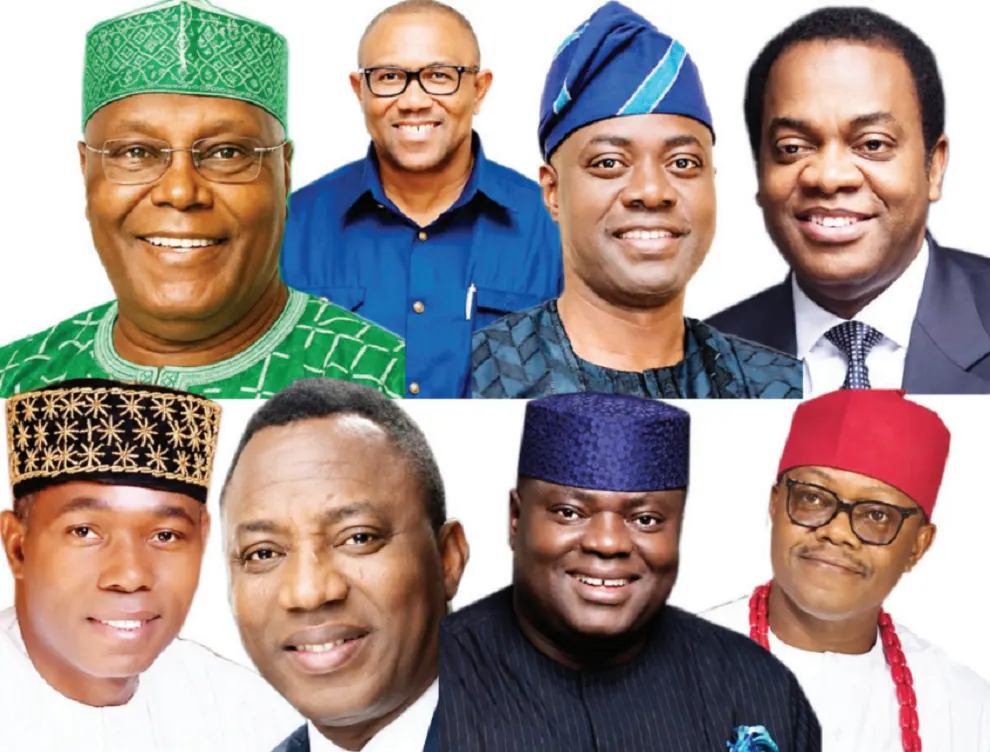
The opposition's push to forge a coalition ahead of the 2027 general election in Nigeria may be dead on arrival. Despite the country's socio-economic challenges, including inflation and high food costs, the opposition remains fractured. The ruling All Progressives Congress (APC) has expanded its territory, controlling 31 of Nigeria's 36 state governments, giving it a structural dominance. This has provided the APC with vast sub-national patronage networks and immense logistical reach.
The 2023 presidential election saw Bola Ahmed Tinubu capture the presidency with roughly 37 per cent of the national vote, with over 60 per cent of participating voters casting their ballots for alternative platforms. However, heading into the 2027 election, forging this anti-incumbent majority into a cohesive electoral bloc is fundamentally detached from political and legal reality. The opposition is trapped in a dilemma of competing interests, with individual figures prioritising personal political survival and regional leverage over a collective strategy.
A group led by Prof. Pat Utomi plans to convene closed-door consultations and a tactical retreat with shortlisted opposition presidential candidates and party leaders in Ibadan, Oyo State. The initiative aims to build consensus around a single presidential candidate drawn from a disparate assemblage of nine political platforms. However, political analysts view this initiative as an exercise in futility due to the statutory windows for official candidate nominations and substitutions having closed.
Under the Electoral Act 2026, the legal architecture governing Nigerian elections leaves zero room for late-stage institutional realignments. The opposition parties subscribing to the Utomi-led arrangement cannot execute a legally recognised merger or unite their party machineries. At best, this late-stage push can achieve a patchwork, informal alliance, which introduces a fatal operational hazard: the non-transferable ballot leak.
An informal candidate withdrawal invariably creates widespread voter confusion, with votes still being cast for the withdrawing candidate's printed party logo. These votes will not be assigned or transferred to the consensus choice, counting as separate, valid votes for the withdrawing platform. This sheds crucial percentages to ballot leakage while the unified governing party sweeps the ward totals.
Compounding this structural flaw is a fundamental operational contradiction: the proposed Ibadan arrangement concerns only the presidential election. Even if a fragile consensus were reached at the top of the ticket, the constituent opposition parties would still field competing candidates for all other elective positions. This includes governorships, Senate, House of Representatives, and State Houses of Assembly.
The opposition's inability to form a cohesive coalition may guarantee the ruling APC's victory in the 2027 general election. With the opposition fractured and the APC structurally dominant, the incumbent party's mandate may be secure despite the country's socio-economic challenges. The outcome of the 2027 election will depend on various factors, including the opposition's ability to regroup and reorganise.
Key points
- The opposition's push to form a coalition is hindered by statutory deadlines and contradictions in lower-level electoral contests.
- The ruling APC's structural dominance and control of 31 state governments provide it with a significant advantage in the 2027 election.
- The opposition's inability to form a cohesive coalition may guarantee the ruling APC's victory in the 2027 general election.