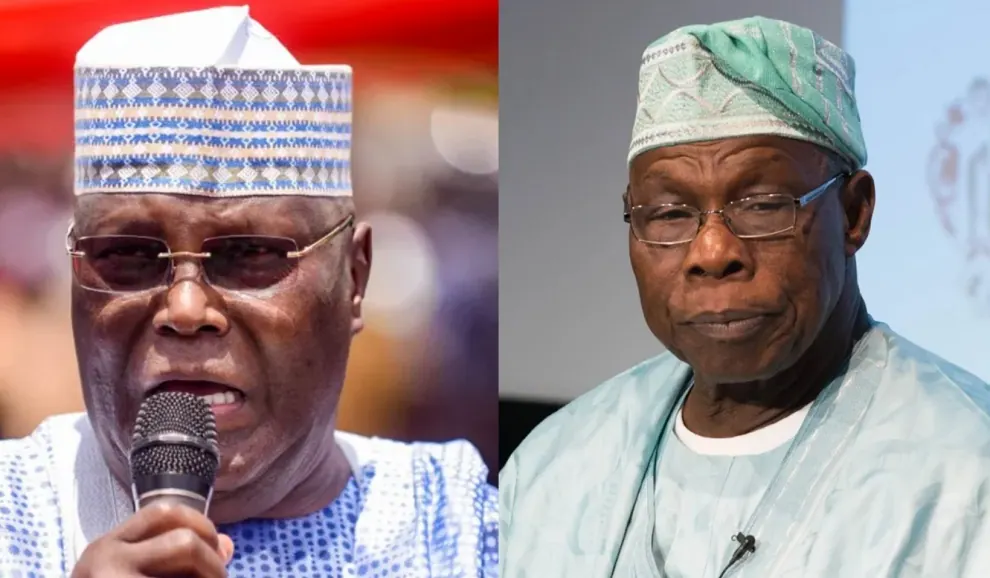
Nigeria's opposition parties are struggling to build effective campaign structures ahead of the 2027 general election. The Nigeria Democratic Congress (NDC), led by Peter Obi and Rabiu Kwankwaso, has been embroiled in a dispute over a 59-member Presidential Campaign Council announced by the Obi-Kwankwaso Movement, also known as the OK Movement. The NDC has dissociated itself from the structure, citing the party's authority to constitute and announce its own campaign council.
The OK Movement's decision to establish a campaign council has sparked a debate over the boundaries between a political party's authority and a support movement's independence. The NDC's National Leader, Seriake Dickson, has described the OK Movement's decision as "nonsensical," emphasizing that support groups should not create structures that compete with the party's official campaign machinery. However, the OK Movement's leaders argue that they are an independent political organization with their own structures.
The dispute has now been addressed by Obi himself, who has publicly backed the party's primacy over the movements. Speaking on national television, Obi stated that he was not involved in forming the OK Movement campaign council and agreed with Dickson's position that the NDC is the political party. The OK Movement and other support groups, he said, should support the party rather than perform its role.
The NDC itself has not yet inaugurated its official presidential campaign council, citing advanced consultations. Obi and Kwankwaso have been authorized to nominate principal officers, including the director-general, campaign spokesman, and finance directors, in consultation with the party leadership. Akin Osuntokun, former director-general of Obi's 2023 presidential campaign, argues that the OK Movement effectively moved into a vacuum created by the delay in constituting the official NDC campaign council.
Osuntokun believes that independent support groups do not necessarily threaten the party structure and can be complementary to it. He maintains that support groups can remain independent, while NDC members who belong to them would still be subject to the party's rules and discipline. Chief Chekwas Okorie, a political analyst, takes a broader view, arguing that a presidential campaign organization must accommodate many people and groups, including those outside the party.
Okorie recalls the Obidient Movement, which operated outside the formal Labour Party machinery in 2023, and the Kwankwasiyya Movement associated with Kwankwaso. He believes that the coming together of these networks around the NDC ticket did not transform them into statutory party arms. Austin Aigbe, a pro-democracy and human rights activist, also sees the OK Movement's council as a positive development, encouraging more groups to come together and support the NDC candidates.
The challenges facing Nigeria's opposition parties in building effective campaign structures highlight the complexities of coalition building and management. As the 2027 general election approaches, the opposition will need to navigate these challenges to mount an effective campaign. The NDC and other opposition parties must balance the need for inclusivity and coordination with the risk of confusing support with authority.
Key points
- The Nigeria Democratic Congress (NDC) has dissociated itself from a 59-member Presidential Campaign Council announced by the Obi-Kwankwaso Movement.
- The dispute highlights the challenges of coalition building and management in Nigeria's opposition politics.
- Peter Obi has publicly backed the NDC's primacy over support movements, emphasizing the party's authority in the campaign structure.