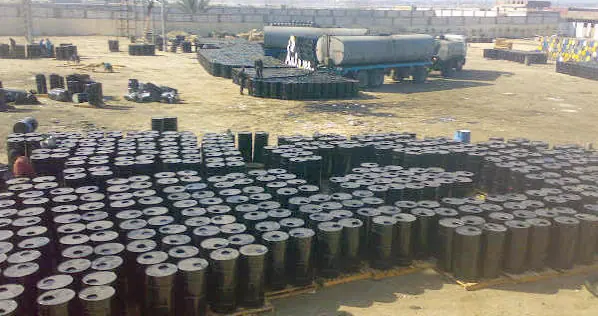
The planned start of bitumen production in Ondo State, Nigeria, in 2020 was stalled due to the COVID-19 pandemic. Femi Akarakiri, Senior Special Assistant on Energy and Mineral Resources to the Governor of Ondo State, Lucky Aiyedatiwa, disclosed this in an interview. According to Akarakiri, the pandemic caused delays and setbacks for many companies involved in the project. As a result, things had to restart from scratch.
The Ondo State government has secured two entities that began exploration at the end of last year. The government is now moving from exploration into the mining lease process. Akarakiri stated that actual mining can begin once the mining lease is obtained from the Mining Cadastral Office and exploration is complete. Production will not start until mining gets underway.
Akarakiri addressed concerns about competition from the Federal Government's adoption of concrete pavement for road infrastructure in Nigeria. He noted that both bitumen and concrete have their applications. While the Federal Government has adopted concrete pavement for its roads, states may still require asphalt for paving, and bitumen will find a role in that.
The bitumen industry is expected to create a huge haulage industry, as mined materials will need to be moved to processing areas and products will need to be transported to end-users across the country. The industry will also generate ancillary jobs, including housing, schools, and service stations. Akarakiri believes the bitumen industry can rival the oil and gas industry in terms of job creation and revenue generation.
The bitumen deposit in Ondo State can be found in Irele, Ilubirin, Kajola, and part of Okitipupa. The industry is expected to create jobs locally, save foreign exchange, and produce bitumen at a much cheaper rate than imported ones. Akarakiri also mentioned that there are 64 other uses derived from bitumen, including synthetic diesel, felt, and paint mixtures.
The proposed Olokola free trade zone is another significant project in Ondo State. The state is working to ensure that the project is well-accepted and that local communities are taken care of. Dangote is leading the development of the free trade zone, and Ondo State is pleased to have them back on board.
Akarakiri sees no issues with Ogun State's participation in the free trade zone, as it is a jointly owned initiative between Ondo and Ogun. Both states will share the benefits, making it a mutually beneficial arrangement. The bitumen industry is expected to have a significant impact on Nigeria's economy, with the potential to create thousands of jobs and generate substantial revenue.
Key points
- COVID-19 pandemic stalled bitumen production in Ondo State, Nigeria, which was initially planned for 2020.
- The bitumen industry is expected to create a huge haulage industry and ancillary jobs, including housing, schools, and service stations.
- The industry will generate significant revenue, create jobs locally, and produce bitumen at a much cheaper rate than imported ones.