Nigeria's efforts to attract private-sector investment in refining, gas processing, and other midstream and downstream petroleum businesses are being hindered by infrastructure deficits, shortages of technical skills, and high financing costs. Industry stakeholders discussed these challenges at the inaugural Petroleum Technology Development Fund (PTDF) Journal Summit 2026 in Abuja. The summit brought together operators, regulators, lawmakers, and academics to examine private-sector participation in the petroleum value chain. The challenges facing Nigeria's oil sector were highlighted as major constraints affecting the economics of petroleum projects.
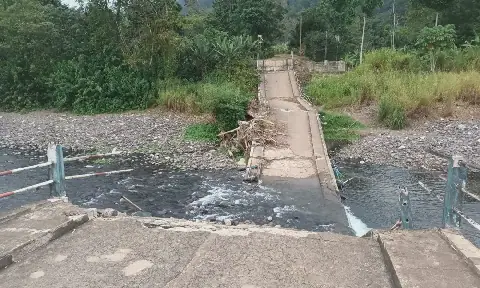
The Managing Director/Chief Executive Officer of Waltersmith Petroman Oil Limited, Oladapo Filani, identified infrastructure, human capital, and financing as major constraints. He noted that Nigeria's challenge was no longer about producing skilled professionals but retaining them and creating opportunities for them to apply their expertise. Filani stated that the country still faces constraints in gas gathering and processing, pipelines, storage and terminals, distribution infrastructure, refining support infrastructure, and product logistics. These challenges have resulted in higher operating costs, supply disruptions, lower asset utilisation, and weaker investment economics.
Filani called for greater use of shared infrastructure, including pipelines, gas processing, storage, power, and logistics facilities, to serve multiple operators and end users. He also identified gas as an input for power generation, refining, fertiliser production, petrochemicals, compressed natural gas, liquefied natural gas, and gas-based manufacturing. Filani emphasised the need for stronger collaboration between PTDF and private-sector operators to address technical and human-capital gaps. The sector requires engineers, project managers, process specialists, and commercial professionals capable of operating increasingly complex petroleum assets.
The Executive Secretary of PTDF, Prof. Shuaibu Shehu Aliyu, stated that investors are increasingly interested in refining, gas processing, logistics, storage, and petroleum-products distribution. However, they face financing, infrastructure, regulatory, technology, and technical-capacity challenges. Aliyu noted that investment and infrastructure alone would not unlock the sector's potential without appropriate policies, technical capacity, technology, research, and collaboration among government, industry, and academia. He emphasised the need for research supported by PTDF to move beyond publication towards practical application, intellectual property development, and commercialisation.
Minister of State for Petroleum Resources (Gas), Ekperikpe Ekpo, identified infrastructure gaps, high financing costs, project-development risks, regulatory bottlenecks, and limited access to reliable energy infrastructure as constraints to private investment. He called for investment in gas processing, transportation, and distribution infrastructure, alongside improved collaboration among government, investors, financial institutions, and technology providers. Ekpo also emphasised the need for policy consistency, more efficient regulatory processes, improved security of critical infrastructure, innovative financing, and greater indigenous technological capacity.
Minister of State for Petroleum Resources (Oil), Heineken Lokpobiri, noted that private-sector participation is necessary for the development of the petroleum sector. He stated that reforms are aimed at improving regulatory certainty, and increased upstream activity would require corresponding investment in transportation, storage, refining, and markets. The Chairman of the Senate Committee on Petroleum Resources (Upstream), Senator Eteng Williams, emphasised that private capital remains important for infrastructure, technology deployment, and the expansion of refining, gas processing, petrochemicals, and distribution.
Deputy Chairman of the House Committee on Petroleum Resources (Training Fund/PTDF), Ajilo Umar, urged the government to provide policy stability and called on the National Assembly to strengthen legislation and oversight. He also urged financial institutions to provide longer-term capital for petroleum projects. The stakeholders' discussions highlighted the need for a collaborative approach to address the challenges facing Nigeria's oil sector and unlock its full potential. The PTDF Journal Summit 2026 provided a platform for industry stakeholders to share knowledge and expertise.
Key points
- Infrastructure deficits, skills shortages, and high financing costs are major challenges facing Nigeria's oil sector.
- Private-sector participation is necessary for the development of the petroleum sector.
- Collaboration among government, industry, and academia is essential to unlock the sector's potential.