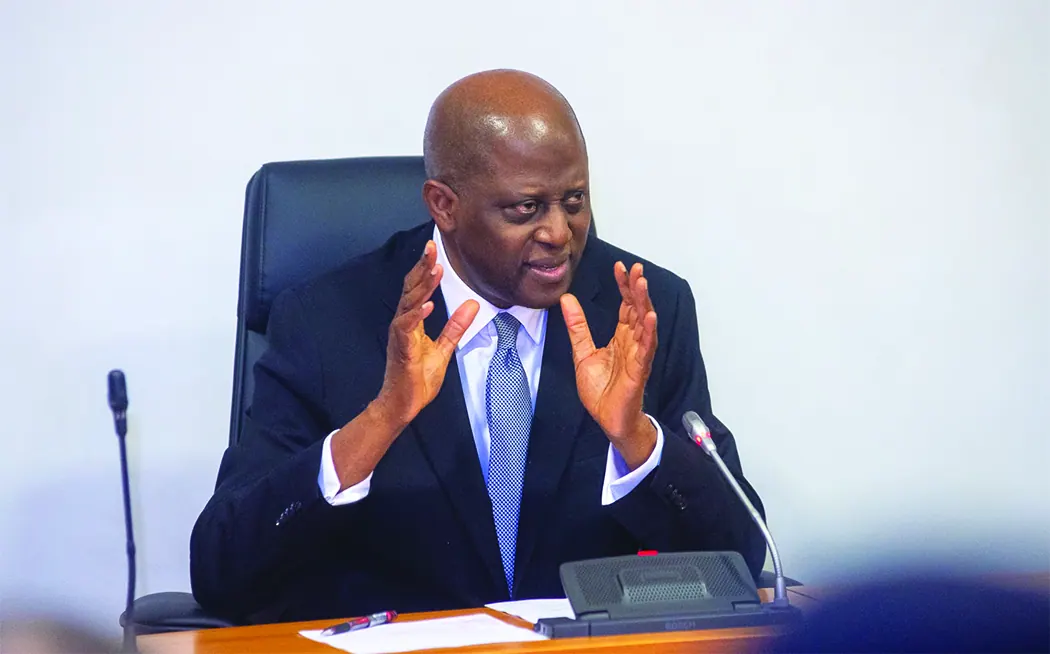
Nigeria's net external reserves have reached a record $46 billion, according to Central Bank of Nigeria (CBN) Governor, Mr. Olayemi Cardoso. This significant milestone was disclosed during the Nigeria-Asia Connectivity Dialogue in Singapore. The achievement reflects a substantial increase from the $34.80 billion recorded at the end of December 2025, marking an improvement in Nigeria's external liquidity position. The growth in net reserves provides insight into the strength of Nigeria's external buffers beyond the gross reserves figure.
The CBN governor highlighted that Nigeria's gross external reserves have also risen to an all-time high of $55.07 billion as of October 8, 2026. Cardoso attributed the accumulation of reserves to sustained policy discipline, noting that gross reserves had exceeded $55 billion, their highest level in more than 18 years. This achievement is a result of consistency and discipline in approach, according to Cardoso. The increase in reserves is expected to support confidence in the naira and Nigeria's ability to meet external payment obligations.
The improvement in Nigeria's external reserves is significant because it provides an indication of the country's reserve position after accounting for specified foreign-currency liabilities and obligations. The net reserves figure represents an increase of approximately $11.2 billion from the previous year. This growth is crucial for foreign exchange transactions, making them more predictable for investors. As a result, investors' confidence in the Nigerian economy is expected to increase.
Cardoso emphasized that stronger external buffers have made foreign exchange transactions more predictable for investors. He stated that the stability of the foreign exchange market, coupled with the increase in reserves, provides investors with the confidence to plan and execute transactions. The CBN governor's comments suggest that the current economic policies are yielding positive results, which may attract more foreign investment into the country.
Diaspora remittances have been identified as an important contributor to reserve accumulation, helping to strengthen Nigeria's external buffers and resilience. Cardoso acknowledged the role of remittances in rebuilding the country's reserves. The continued growth in remittances and foreign exchange inflows is crucial for sustaining the current level of reserves and maintaining stability in the currency market.
The recent figures come after gross reserves rose to $54.08 billion on September 3 and $54.61 billion by September 14, reflecting sustained growth in the country's external assets. The improvement in reserves has been a result of consistent policy implementation and macroeconomic management. However, the durability of these gains will depend on continued foreign-exchange inflows and sustained stability in the currency market.
The increase in Nigeria's net external reserves and gross external reserves is expected to have a positive impact on the economy. The stability of the foreign exchange market and the increase in reserves are likely to boost investor confidence and attract more foreign investment into the country. The CBN's policy discipline and the growth in diaspora remittances have been instrumental in achieving this milestone.
Key points
- Nigeria's net external reserves have reached a record $46 billion, driven by policy discipline and diaspora remittances.
- The country's gross external reserves have risen to an all-time high of $55.07 billion as of October 8, 2026.
- The improvement in reserves is expected to support confidence in the naira and Nigeria's ability to meet external payment obligations.