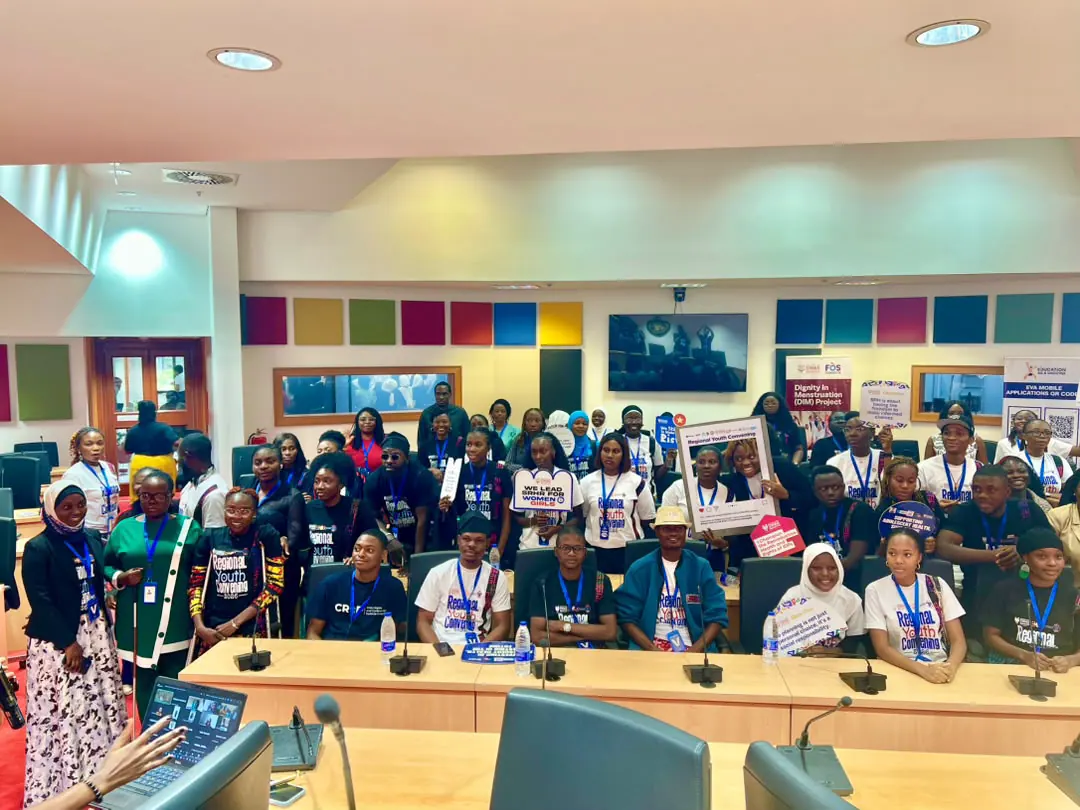
The Federal Government of Nigeria and stakeholders in youth development have stressed the importance of investing in the health, education, skills, and economic opportunities of young people to drive sustainable development in Africa. This call was made at the Regional Youth Convening on Health and Development 2026, organized by the Stand With A Girl (SWAG) Initiative, held at the United Nations House in Abuja. The event brought together young leaders and stakeholders from Nigeria, Ghana, Sierra Leone, Cameroon, The Gambia, and Liberia.
Representing the Minister of Youth Development, Comrade Ayodele Olawande, the Permanent Secretary of the ministry, Dr. Maryam Ismaila Keshinro, emphasized that youth development should be viewed as a strategic investment rather than a social intervention. She stated that young people can only contribute meaningfully to national and regional development when they have access to quality healthcare, relevant education, skills, and economic opportunities.
Dr. Keshinro identified several key issues that require sustained attention, including mental health and psychosocial wellbeing, sexual and reproductive health and rights, nutrition, substance use, HIV and other infections, gender-based violence, and menstrual health. She stressed that a productive generation cannot be built without a healthy generation. The Minister also highlighted the need for young people to acquire digital literacy, technical and vocational skills, financial literacy, entrepreneurship, and innovation capabilities.
The Minister called for stronger regional cooperation, noting that challenges confronting young people, such as unemployment, migration, climate change, insecurity, digital risks, and economic vulnerability, increasingly cut across national boundaries. He also advocated for meaningful youth participation in policy processes, emphasizing that young people should move beyond being consulted to becoming active participants in policy design, implementation, monitoring, and accountability.
UNFPA Nigeria Resident Representative, Ms. Muriel Mafico, noted that West and Central Africa is home to approximately 170 million people aged 10 to 24, representing about one-third of the region's population. However, she cautioned that a youthful population will not automatically translate into a demographic dividend without deliberate investment in health, education, safety, skills, and opportunities for young people.
Ms. Mafico cited several challenges facing young people in the region, including child marriage, teenage pregnancy, female genital mutilation, maternal mortality, and gender-based violence. She urged governments and development partners to strengthen adolescent-responsive primary healthcare, sexual and reproductive health services, financing, data systems, and accountability. She emphasized the need for collective action to address these challenges.
Stakeholders at the event, including the Executive Director of SWAG, Margaret Bolaji-Adegbola, and NextGen@SWAG Academy Fellow from Ghana, Rebecca Adengbono, called for stronger collaboration among stakeholders and the inclusion of young people from rural communities and those affected by poverty, disability, and other vulnerabilities in policies and programs affecting their lives. They emphasized the need for institutionalized accountability and financing of innovative solutions to improve outcomes for young people.
Key points
- The Nigerian government and stakeholders stress the need for investment in youth health, education, and skills to drive sustainable development in Africa.
- The Regional Youth Convening on Health and Development 2026 highlights challenges facing young people, including unemployment, migration, and climate change.
- Stakeholders call for stronger collaboration, institutionalized accountability, and financing of innovative solutions to improve outcomes for young people.