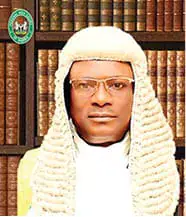
Concerns are growing over the conduct of Justice Peter Odo Lifu of the Federal High Court in Abuja. Questions have arisen about case assignments, judgment timing, and the integrity of judicial processes. Recent rulings have put the independence of Nigeria's judiciary under scrutiny, raising fears about public trust in the legal system. Justice Lifu, appointed to the National Industrial Court in 2013 and later to the Federal High Court in 2018, has a reputation for being dismissive of frivolous applications.
However, his recent actions, particularly regarding political party matters, have sparked controversy. In June 2026, he ordered the deregistration of the African Democratic Congress and several other parties, a ruling that was later overturned by the Court of Appeal. The appellate court condemned Lifu's actions as a "form of judicial impertinence," noting he ignored evidence of the parties' electoral success and failed to adhere to a stay order issued by the same court.
Further complicating matters, Lifu also invalidated the ADC's presidential primary less than a day after a significant rally, leading to accusations of political bias. While some of his rulings have been upheld, such as a decision involving the Labour Party, the backlash from his controversial decisions on the ADC has heightened suspicions surrounding his judicial conduct. Nigeria's Chief Justice, Justice Kudirat Kekere-Ekun, warned against judges engaging in "forum shopping" and undermining judicial integrity due to political pressures.
The Nigerian Bar Association also raised concerns about judicial overreach into party affairs. Prominent legal figure Professor Chidi Anselm Odinkalu has called attention to Lifu's ability to produce a lengthy judgment while reportedly recovering from a stroke, suggesting outside influences may have contributed to the ruling. He criticized the Chief Judge of the Federal High Court, Justice John Tsoho, for assigning politically sensitive cases to Lifu.
Critics argue that a background in political science should not enable disregard for judicial protocol. Concerns about Lifu's rulings, particularly against opposition parties, are accumulating alongside petitions to the National Judicial Council for review. Observers argue that a judiciary perceived as politically influenced undermines its role in fairly adjudicating electoral disputes.
If public confidence in judicial integrity continues to erode, it could threaten the foundations of democracy in Nigeria. The National Judicial Council faces pressure to address these issues decisively, ensuring that judicial conduct serves the public rather than political ends. The Council's response will be crucial in determining the future of Nigeria's judiciary and its role in upholding democratic principles.
The controversy surrounding Justice Lifu's rulings highlights the need for greater transparency and accountability within Nigeria's judicial system. As the country prepares for future elections, the judiciary's role in ensuring a fair and impartial process will be closely watched. The outcome of the National Judicial Council's review and the implementation of measures to prevent similar controversies will be critical in restoring public trust in the judiciary.
Key points
- Justice Lifu's rulings have sparked concerns over judicial integrity and public trust in Nigeria's judiciary.
- The National Judicial Council faces pressure to address issues decisively and ensure judicial conduct serves the public.
- The controversy highlights the need for greater transparency and accountability within Nigeria's judicial system.