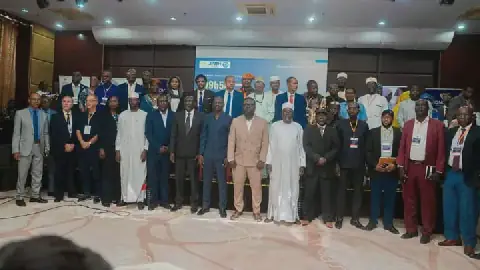
The World Health Organization (WHO) has issued a warning to Nigeria, urging the country to increase its domestic financing to combat HIV. The warning was issued during a four-day conference organized by the National Agency for the Control of AIDS (NACA) in Abuja. According to the WHO, over 90% of Nigeria's HIV spending comes from external funding, which poses a risk to the country's HIV prevention programs.
Nigeria has made significant progress in reducing new HIV infections, with a 52% decline between 2010 and 2025. However, the country still recorded around 64,000 new infections in 2025. The WHO's Dr. Akudo Ikpeazu emphasized that the country's reliance on external funding is unsustainable and that Nigeria must invest more in its national programs to ensure the continuity of prevention services.
The WHO's warning comes at a time when international resources for health are becoming scarce. After years of massive mobilization of funders, African countries are facing a difficult equation: maintaining gains while gradually assuming the financing of their programs. Nigeria, as the largest economy on the continent, has limited budget margins due to tax pressure and competing priorities.
The transition recommended by the WHO involves integrating HIV prevention into public budgets, health systems, and supply chains. This would enable national institutions to assume current expenses while external partners focus on innovation and capacity building. The issue goes beyond the financial aspect, with the WHO advocating for an expansion of the coverage of preventive interventions.
According to the WHO, 89% of new infections in adults concern the general population, which calls for programs that also integrate key populations, adolescents, young people, and children. Mother-to-child transmission remains a major challenge, with around 10,000 children infected with HIV every year in Nigeria. Strengthening the integration of screening, pre-exposure prophylaxis (PrEP), IST management services, and maternal care is becoming imperative.
The WHO's objective is to transform progress into sustainable national capacities to accelerate the reduction of new infections by 2030. The demographic dimension plays a significant role in the equation, with young people representing over 60% of Nigeria's population. Their involvement in HIV elimination efforts is therefore crucial.
A multisectoral approach involving governments, development partners, and communities is necessary to combat the epidemic. The representative of the UN Population Fund (UNFPA) emphasized that the fight against HIV cannot be limited to the health sector alone. A controlled financial transition, combined with a global approach, will determine Nigeria's ability to preserve its gains and sustainably reduce new infections.
Key points
- Nigeria must increase domestic financing to combat HIV
- Over 90% of Nigeria's HIV spending comes from external funding
- The country aims to reduce new infections to below 5,000 by 2030