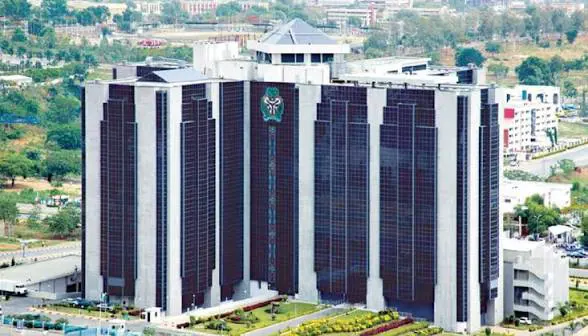
The Federal Government of Nigeria is grappling with the lending crisis in the country's banking system, which has been attributed to high lending rates and stringent conditions. The Central Bank of Nigeria (CBN) controls the monetary policy rate (MPR), which currently stands at 27%. This rate has been deemed too high for normal business operators, with Aliko Dangote, president of the Dangote conglomerate, stating that industrialisation cannot take place with lending rates at 30%.
The high lending rates have been cited as a major factor contributing to the high production costs experienced by manufacturers. The Manufacturers Association of Nigeria (MAN) recently complained that high lending rates accelerate the cost of production, forcing its members to hike the cost of their products. However, bankers dismiss the claim, contending that the cost of funds is a negligible factor in the cost of production.
Prime lending rates, applicable to highly rated conglomerates, currently stand at a minimum of 31%, while micro, small, and medium enterprises (MSMEs) face even higher rates, around 46%. This disparity has resulted in few banks lending to MSMEs, which create more jobs than conglomerates accessing funds at lower rates. The high cost of funds, coupled with other factors like high evacuation costs and energy costs, remains a dominant factor in the cause of inflation.
President Bola Ahmed Tinubu recently urged banks to lend to businesses at affordable rates, stating that a credible banking system cannot exist indefinitely where businesses cannot obtain affordable credit. He lamented that for years, financial institutions have been measured by balance sheet growth and shareholders' returns, but now, they must be asked what they are doing for the real economy.
The CBN has kept the MPR at 27%, despite the inflation rate tumbling to 15.4%. The lending rate benchmark has caused a crisis in the economy, and the Federal Government must implement fiscal policies to lower inflation rates to single digits to compel the CBN to reduce the MPR. This, experts believe, is the only way the president's demand for affordable lending rates can be realised.
Another critical lending problem in Nigeria's banking system is banks' heavy dependence on government securities. Banks invest most of their funds in Federal Government Treasury Bills, starving businesses of funds for investment in ventures that create jobs and grow the economy. The president has urged banks to move away from this dependence and advance loans to businesses that will create jobs and grow the economy.
The heavy bias for government securities is due to their risk-free nature and high yields. Federal government debt instruments are risk-free, and the federal government has exceptional powers for debt settlement. Additionally, the high yields in government debt instruments are irresistible, making them more attractive to banks than loan requests from the business community.
Key points
- High lending rates in Nigeria hinder business growth and job creation.
- The Federal Government and business leaders are urging banks to lend at affordable rates.
- Banks' heavy dependence on government securities starves businesses of funds for investment.