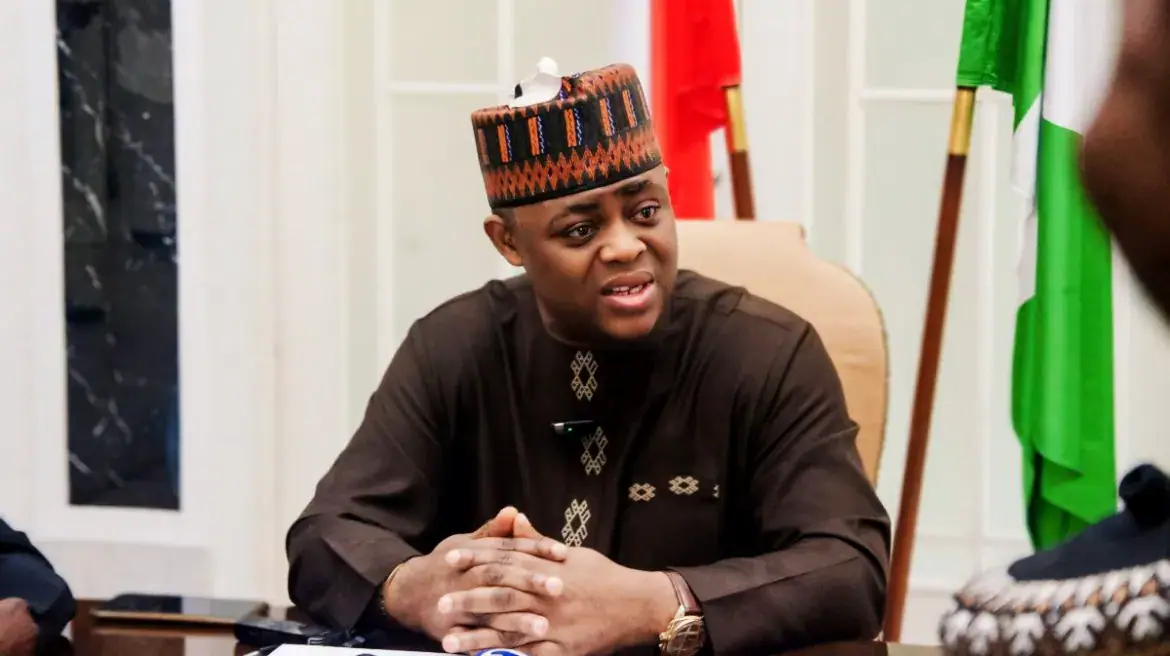
Nigeria's newly appointed High Commissioner to South Africa, Femi Fani-Kayode, has been involved in a diplomatic controversy just days after assuming his responsibilities in Pretoria. The incident began with a speech delivered during the presentation of his letters of credence at the Sefako Makgatho Presidential Guest House in Pretoria on November 13, 2026. The speech has been criticized for its tone and content, which some have described as insensitive to South Africa's history and politics.
Fani-Kayode's speech reminded his hosts of Nigeria's significant material, financial, and political support for South Africa's liberation from apartheid. While Nigeria's contributions to the anti-apartheid struggle are well-documented, the manner in which they were referenced has been questioned. South Africa's liberation struggle is a deeply significant part of its national identity, and the dominant historical narrative emphasizes the sacrifices of the South African people, the African National Congress, and its liberation leaders.
The High Commissioner also invoked African historical personalities, including Nelson Mandela, Patrice Lumumba, and Muammar Gaddafi, while expressing admiration for President Ramaphosa's leadership. The inclusion of Gaddafi was seen as a potentially sensitive diplomatic choice, given his controversial legacy. Mandela and Lumumba are remembered for their roles in the struggle against apartheid and colonial domination, while Gaddafi's reputation in Western diplomatic and media circles is markedly different.
Fani-Kayode's praise for the African National Congress has also been criticized, given that the party no longer holds a majority in the South African government. In the May 2024 general election, the ANC received just 40.18% of the national vote, losing its parliamentary majority for the first time since the establishment of democratic government in 1994. The ANC remains the largest party, but it no longer exercises power independently.
The physical interaction between Fani-Kayode and President Ramaphosa has also attracted criticism, with video footage showing the High Commissioner displaying a degree of physical familiarity with the South African President, including touching or patting his shoulder. A formal credentials ceremony is governed by expectations of decorum, personal space, and respect for the office of the receiving head of state.
The incident has led to a formal démarche by South Africa's Department of International Relations and Cooperation on November 17. Retired Nigerian ambassador Ogbole Amedu Ode has also questioned the appropriateness of the shoulder-patting incident, highlighting the importance of diplomatic protocol in protecting the dignity of the offices involved.
The controversy has raised questions about Fani-Kayode's political judgement, diplomatic temperament, and understanding of the South African political and media environment. As a former diplomat noted, an ambassador's responsibility is to protect his country's dignity without creating unnecessary confrontations with the government to which he is accredited.
Key points
- Fani-Kayode's speech and actions have sparked a diplomatic row between Nigeria and South Africa.
- The incident has highlighted the importance of diplomatic protocol and cultural sensitivity in international relations.
- The controversy has raised questions about Fani-Kayode's suitability for the role of High Commissioner to South Africa.
Reporting sources
- Fani-Kayode’s Diplomatic Blunder in South Africa: How Not to be an envoy · The Tanzania Times – News from Tanzania, Africa, World, Breaking News, Weather, Environment and Climate Change